 Society
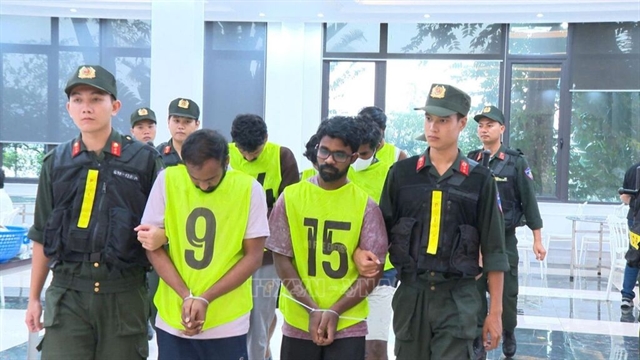
84 individuals investigated for transnational online frauds
1.
 |
| Reaching into a cold box, a nurse arranges some of the 9,000 doses of human rabies vaccine donated by WHO to help save lives in the high-risk provinces of Phú Thọ and Tuyên Quang. — Photo from Tuyên Quang Quang CDC |
HÀ NỘI — The World Health Organisation (WHO) has donated 9,000 doses of human rabies vaccine to protect people bitten by rabid dogs in two high-risk provinces in the northern region --Phú Thọ and Tuyên Quang.
The post-exposure prophylaxis (PEP), valued at US$100,000 (about VNĐ2.6 billion), aims to shield vulnerable populations, particularly ethnic minority groups and children, who are disproportionately affected by rabies. Rabies is 100 per cent fatal once symptoms appear but entirely preventable with timely PEP.
WHO recently delivered the vaccines to the Centres for Disease Control (CDC) in Tuyên Quang and Phú Thọ, following close coordination with the National Institute of Hygiene and Epidemiology (NIHE), Provincial People’s Committees and the Ministry of Health. The donation was made possible through financial support from Gavi, the Vaccine Alliance.
WHO Representative in Việt Nam Dr Angela Pratt said: “This donation is more than a delivery of vaccines — it is a call to action. No one should die from rabies because they cannot afford the vaccine. We encourage the authorities to make PEP available and accessible to all, especially the poorest and most vulnerable.”
The donation is part of a broader effort to reduce rabies deaths, which have risen for four consecutive years. In 2024 alone, 89 people died from rabies in Việt Nam — nearly half of them children.
“To end rabies deaths, dog vaccination — the most cost-effective strategy to stop transmission at its source — must be accessible, affordable and enforced nationwide. We urge stronger intersectoral collaboration, across human health, animal health and environmental sectors, to eliminate rabies through a One Health approach,” Dr Pratt added.
Human rabies vaccines are not covered by social health insurance and cost around VNĐ1.5 million for a full five-dose course.
WHO remains committed to supporting Việt Nam’s National Programme for the Prevention and Control of Rabies (2022–30) and calls on all stakeholders to accelerate efforts toward the global goal of Zero by 2030 — ending human deaths from dog-mediated rabies.— VNS
Society
 Society
 Society
 Society
 Society
 Society
 Society
 Society
 Society
 Society
 Society
 Society
 Society
 Society
 Society