 Politics & Law
SBV to curb property price inflation, enforce lending rate rules
1.
|
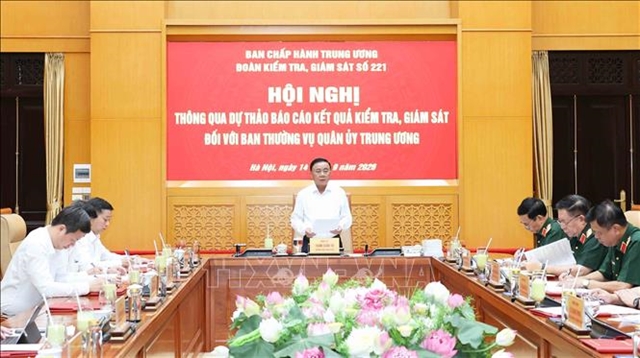
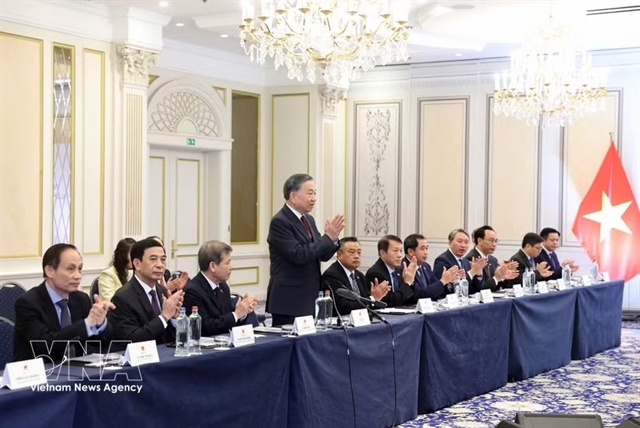
| Politburo Member and Standing Member of the CPV Central Committee’s Secretariat Trần Cẩm Tú speaks at the conference. VNA/VNS Photo |
HÀ NỘI — Inspection team No. 221 under the Communist Party of Việt Nam (CPV) Central Committee’s Politburo and Secretariat held a conference in Hà Nội on Monday to approve a draft report on the third round of inspection of the Standing Committee of the Central Military Commission.
Politburo Member and Standing Member of the CPV Central Committee’s Secretariat Trần Cẩm Tú, who heads the team, chaired the event.
Nguyễn Long Hải, Member of the Party Central Committee, Standing Vice Secretary of the Party Committee of Central Party Agencies and the team's deputy head, presented a summary of the draft report on the inspection and supervision results.
After hearing feedback, Tú said the Central Military Commission, its Standing Committee and Party committees across the army had focused on disseminating and following the Party Central Committee's guidelines, resolutions, conclusions and regulations thoroughly and promptly.
They also issued specific documents to put those policies into practice within their authority, in line with the army's functions and assigned tasks.
Personnel assessment has been reformed, with the effectiveness of advisory and policy-proposal work and tangible results now serving as the primary yardsticks, he noted.
According to Tú, personnel planning, training, professional development, transfer, rotation, appointment and candidate introduction have, in general, been carried out in a democratic, objective and impartial manner, in accordance with established principles, procedures, and regulations. Policies and benefits for personnel have been implemented fully and in a timely manner, while efforts to attract and make effective use of talented individuals have received due attention and have initially produced positive results.
The protection of internal political security has been given adequate attention and carried out on a regular basis. The appraisal, review, verification, and conclusion of personnel’s political qualifications for personnel-related work have been conducted rigorously and in accordance with procedures and regulations.
Inspection, supervision, and power control in personnel work have also received due leadership and direction, with measures implemented seriously and synchronously, he added.
Digital transformation in personnel management has produced early positive results, with personnel databases being digitised and centralised at the Ministry of National Defence's data centre, laying the groundwork for more effective personnel management ahead.
Tú said the commission's Standing Committee promptly directed Party committees and organisations at all levels to draw lessons and fix shortcomings flagged during the inspection, while following through on conclusions from the Politburo and Secretariat's first two rounds of inspection in 2026.
New requirements for military personnel
Tú said the global and regional picture is shifting fast and growing more complex and unpredictable. Military conflicts, trade competition and non-traditional security threats are weighing heavily on national construction and defence, raising the bar for personnel work, especially building a stronger corps of leaders and commanders at every level.
The Standing Committee was told to keep disseminating the Party Central Committee's guidelines, resolutions, conclusions and regulations, and draw up schemes and plans to carry them out.
It must also direct its advisory and support agencies to regularly review and update a full set of personnel rules and regulations, ensuring they are consistent and clearly assign authority and responsibility, he said.
At the same time, collectives and individuals found to have violated rules or fallen short must be dealt with strictly, thereby promptly screening out and replacing personnel who no longer meet standards or fail to fulfill their duties.
Personnel training in remote and disadvantaged areas should also secure special attention, he added. —VNA/VNS
Politics & Law
 Politics & Law
 Politics & Law
 Politics & Law
 Politics & Law
 Politics & Law
 Politics & Law
 Politics & Law
 Politics & Law
 Politics & Law
 Politics & Law
 Politics & Law
 Politics & Law
 Politics & Law
 Politics & Law