 Politics & Law
Top Vietnamese leader meets with Belgian Senate Speaker, House President
1.
|
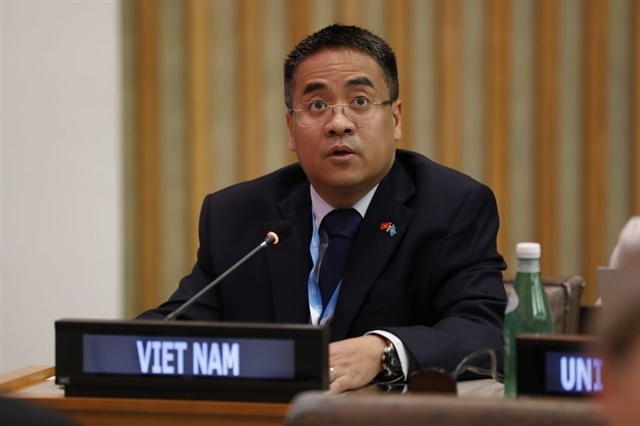
| Minister-Counsellor Nguyễn Hải Lưu, deputy permanent representative of Việt Nam to the UN. — VNA/VNS Photo |
NEW YORK — Việt Nam affirmed support for self-determination and the promotion of the decolonisation process at a joint debate of the Special Political and Decolonisation Committee (Fourth Committee) of the 81st session of the UN General Assembly in New York on October 2.
Minister-Counsellor Nguyễn Hải Lưu, deputy permanent representative of Việt Nam to the UN, said that Việt Nam consistently supports the universal objectives of the decolonisation process and the inalienable right to self-determination of the people of the 17 Non-Self-Governing Territories, in line with the UN Charter, General Assembly Resolution 1514 (XV) and other relevant resolutions.
Việt Nam backs a case-by-case approach that takes into account the historical, political, economic, social and cultural circumstances of each territory, as well as the interests and aspirations of its people, while advancing the decolonisation process through peaceful means, dialogue and cooperation, he said.
Lưu highlighted four key issues, stressing that administering powers should continue to provide full and up-to-date information in accordance with Article 73(e) of the UN Charter; economic activities and resource exploitation must not adversely affect the legitimate interests and well-being of the people.
The UN system should continue supporting sustainable development, healthcare, education, disaster prevention and capacity building; and greater opportunities should be created for education, vocational training and human resource development for people in the territories, he said.
The Vietnamese representative affirmed that drawing on the historical experience of a nation that once endured colonial rule and fought for independence, Việt Nam deeply understands the value of independence, freedom and self-determination.
It is committed to constructive cooperation with the UN, the Special Committee on Decolonisation, administering powers and relevant parties to make substantive progress on the decolonisation agenda.
Participating countries affirmed that the decolonisation process remains incomplete, with 17 Non-Self-Governing Territories still on the UN agenda. They underscored the right to self-determination, the importance of dialogue and cooperation with administering powers, and the need to promote socio-economic development and build the capacity of people in the territories. Several countries also presented their positions on specific issues, including Western Sahara and the Malvinas (Falkland) Islands.
Adopted by the UN General Assembly on December 14, 1960, Resolution 1514 (XV), entitled the Declaration on the Granting of Independence to Colonial Countries and Peoples, affirms the right of peoples to self-determination and laid the foundation for the UN's decolonisation process. — VNA/VNS
Politics & Law
 Politics & Law
 Politics & Law
 Politics & Law
 Politics & Law
 Politics & Law
 Politics & Law
 Politics & Law
 Politics & Law
 Politics & Law
 Politics & Law
 Politics & Law
 Politics & Law
 Politics & Law
 Politics & Law




