 Politics & Law

OPPO Find X10 Pro Max to Debut Globally with MediaTek’s 2nm Flagship Dimensity 9600 Pro
1.
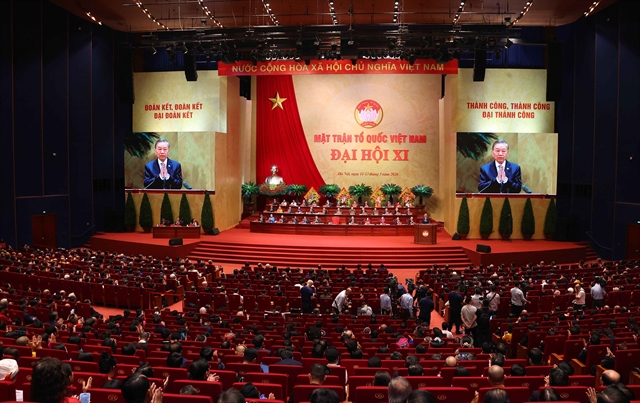 |
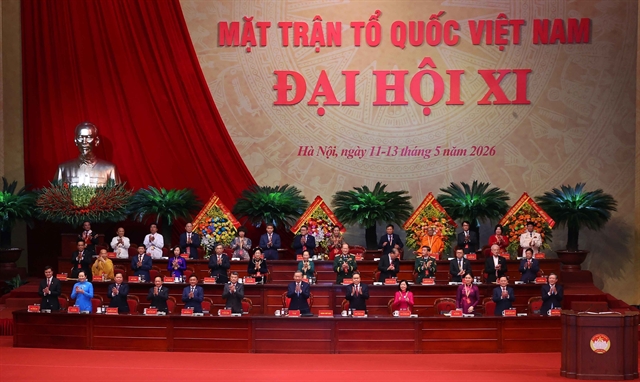
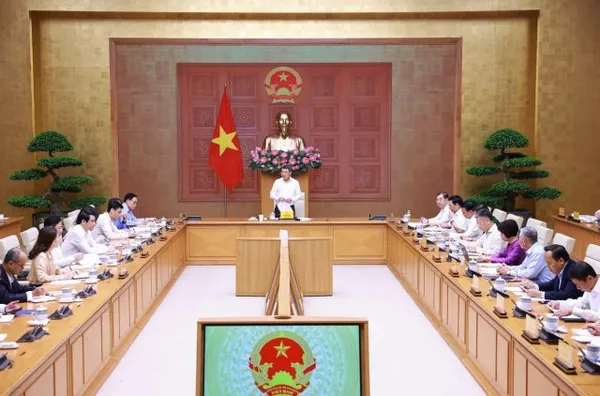
| Party General Secretary and State President Tô Lâm and other leaders attend the opening session. — VNA/VNS Photos |
HÀ NỘI — General Secretary of the Communist Party of Việt Nam and State President Tô Lâm yesterday urged the Việt Nam Fatherland Front (VFF) to renew its methods of mobilisation and strengthen its role in consolidating national unity amid the country’s new development stage.
Speaking at the opening of the 11th National Congress of the VFF for the 2026–2031 tenure in Hà Nội, the Party leader said the congress marked a new phase for the organisation, with a renewed organisational model, broader responsibilities and higher expectations.
The event brought together 1,136 delegates representing the VFF, member organisations, intellectuals, religious and ethnic groups, armed forces personnel and overseas Vietnamese communities.
General Secretary and State President Lâm stressed that the VFF must continue serving as a bridge between the Party, the State and the people while safeguarding legitimate public interests and strengthening the great national unity bloc in support of Việt Nam’s development goals through 2030 and towards 2045.
He said Việt Nam’s history had demonstrated that national unity enabled the country to overcome difficulties and secure major achievements, describing solidarity as a strategic pillar and a key source of national strength.
According to the Party chief, national unity in the new era should not only be seen as a traditional value but also as a driving force for development, helping unlock resources, promote innovation and reinforce social consensus.
He called for respect for legitimate differences and harmonisation of interests while rallying all patriotic Vietnamese people around the shared aspiration of building a peaceful, prosperous and happy nation.
The Party leader praised the VFF and its member organisations for restructuring their apparatus, preparing for the congress and gradually operating under a new organisational model while maintaining stability.
However, he also pointed out weaknesses in the VFF's work, saying it could not properly represent the people if it became too distant from them or failed to listen to their real concerns.
He said the VFF could not be strong if it became detached from the people and genuine innovation would not be possible if change existed only in resolutions and documents.
For the new tenure, the Party chief outlined five major priorities for the VFF.
First, he reaffirmed the principle that the people are the root, stressing that all Party guidelines, State policies and VFF campaigns must originate from the legitimate needs and aspirations of the people and aim to improve their living standards and well-being.
He said the Front should place citizens at the centre of all activities, promote grassroots democracy and strengthen the people’s right to participate in governance and supervision.
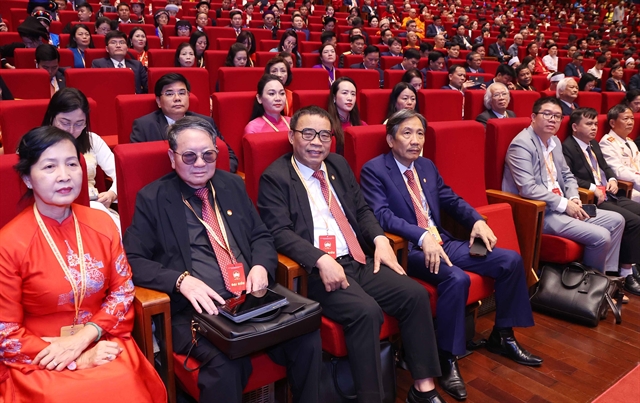 |
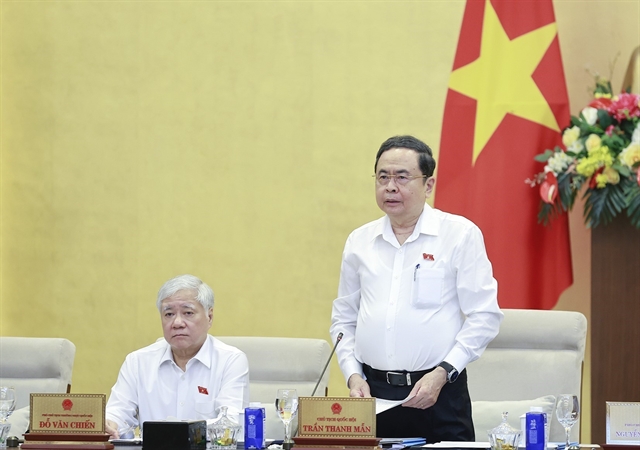
| Delegates at the event. |
Second, he called for renewing methods of mobilisation in response to rapid social changes.
The Party chief said mobilisation efforts could not rely solely on conferences, paperwork and slogans but instead had to be grounded in dialogue, persuasion, practical benefits, exemplary conduct and concrete results.
He urged the VFF to make its programmes and campaigns more practical and measurable, with clear goals, responsibilities and timelines.
He also stressed that the VFF should not replace the role of State agencies or member organisations, nor bureaucratise its own operations. Instead, it should focus on its core functions of coordination, supervision, social criticism and public engagement.
The Party leader highlighted the importance of improving the quality of social supervision and criticism, saying these functions help the public participate in Party and State building and improve policymaking.
According to him, supervision activities should focus on issues of public concern and policies that have significant impacts on people’s lives, while social criticism should begin early in the policymaking process.
He said social criticism was intended to make policies more practical, transparent and humane.
General Secretary and State President Lâm also called for building a modern Front organisation with streamlined operations, grassroots-oriented officials and substantive digital transformation.
He suggested developing digital platforms that allow citizens to submit feedback and recommendations more easily.
Front officials, he added, must possess political integrity, credibility and practical skills in dialogue and persuasion while remaining close to the people and responsive to grassroots concerns.
The Party leader also urged Party committees and authorities at all levels to create favourable conditions for the VFFto fulfil its responsibilities, stressing that the organisation’s recommendations and criticism should be considered an important channel for improving governance.
Immediately after the congress, the VFF Central Committee and member organisations should turn the congress resolution into concrete action plans with clear responsibilities, timelines and measurable outcomes, he said. — VNS
Politics & Law
 Politics & Law
 Politics & Law
 Politics & Law
 Politics & Law
 Politics & Law
 Politics & Law
 Politics & Law
 Politics & Law
 Politics & Law
 Politics & Law
 Politics & Law
 Politics & Law
 Politics & Law
 Politics & Law