 Politics & Law
Vietnamese Prime Minister meets Cambodian National Assembly President
1.
|
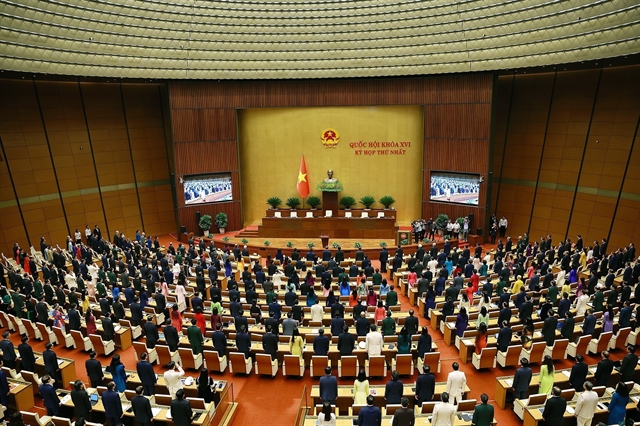
| The 16th National Assembly opens its first session on Monday. — VNA/VNS Photo |
HÀ NỘI — The National Election Council has declared the latest legislative elections a success, with officials highlighting record voter turnout, smooth organisation and a fully elected National Assembly (NA) for the 2026–2031 term.
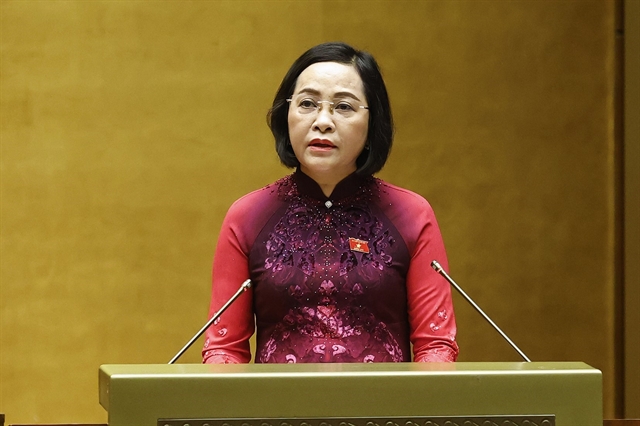
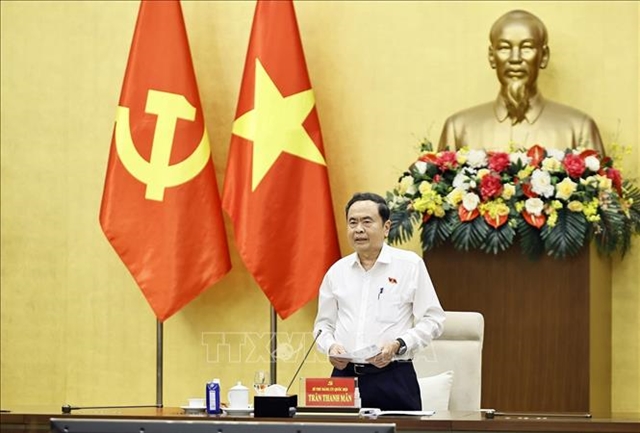
Speaking at the opening session of the new legislature on Monday, Nguyễn Thị Thanh, NA Vice Chairwoman and a council member, said the elections for the 16th National Assembly and People’s Councils at all levels had been very successful, adding that all 500 elected deputies meet the required standards to take office.
The vote, held last month, came shortly after the Communist Party of Việt Nam’s 14th National Congress and was framed by officials as a major political event drawing broad domestic and international attention.
More than 76 million voters cast ballots across 72,000 polling stations, making it the largest election in the country’s history. Turnout reached 99.7 per cent, according to official figures, the highest recorded in recent terms.
Some provinces reported near-universal participation, including Vĩnh Long and Lào Cai, while major urban centres such as Hà Nội and HCM City, despite high population density and frequent migration, also recorded turnout above 99 per cent and completed voting early.
Authorities credited the outcome to extensive preparation and coordination across the political system, from central agencies to local administrations.
The election was conducted under the direction of the NA, the National Election Council and the Government, with support from the Vietnam Fatherland Front and other bodies.
Thanh said the decision to hold the vote earlier than usual, alongside the rollout of a streamlined two-tier local government model, had posed logistical challenges. But she said the process remained on schedule and in line with legal requirements.
She also pointed to the growing use of digital tools, including the national population database and the VNeID identification platform, which she said improved transparency and administrative efficiency throughout the process.
Preparations began months in advance, with party committees and local authorities issuing more than 6,600 documents and setting up dedicated steering bodies to oversee the vote. Election-related organisations were established at all levels and operated under procedures set out in law.
|
| Nguyễn Thị Thanh, NA Vice Chairwoman and a member of the National Election Council speaks at the legislative session on Monday. — VNA/VNS Photo |
Candidate selection and nomination, Thanh said, followed a methodical, democratic and cautious process, while voter lists were compiled and publicly posted in accordance with legal requirements.
Final results were announced in late March. The National Election Council confirmed the election of 500 NA deputies, alongside 2,552 provincial-level People’s Council members and more than 72,000 commune-level representatives.
Thanh said the composition of the new legislature reflects efforts to improve professional capacity and representation, including an increase in full-time deputies.
She described the vote as a large-scale political exercise that demonstrated civic participation and public confidence, with democratic and procedural safeguards maintained throughout, from candidate nomination to vote counting.
Looking ahead, the NA chairwoman has proposed a series of legal and procedural updates. These include revisions to the election law to clarify how complaints are handled and adjustments to rules governing voter registration and candidacy timelines.
The official also recommended changes to the law on local government organisation, including aligning the number of People’s Council members with population size and regional characteristics and potentially increasing representation at the commune level following administrative restructuring.
Further proposals call on the government to standardise election procedures and reporting systems and on the Vietnam Fatherland Front to refine how candidates engage with voters and strengthen post-election oversight.
Thanh said the newly elected bodies are expected to strive to fulfil their tasks to the highest standard, expressing confidence they will meet voters’ expectations in the coming term. — VNS
Politics & Law
 Politics & Law
 Politics & Law
 Politics & Law
 Politics & Law
 Politics & Law
 Politics & Law
 Politics & Law
 Politics & Law
 Politics & Law
 Politics & Law
 Politics & Law
 Politics & Law
 Politics & Law
 Politics & Law