 Politics & Law
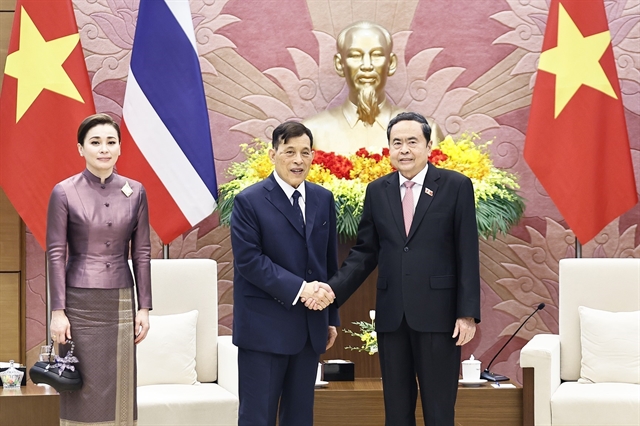
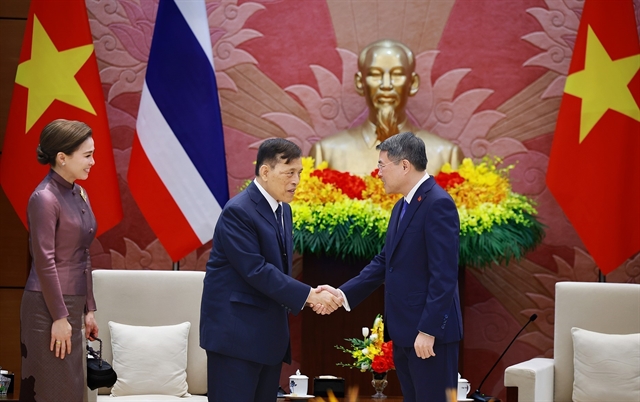
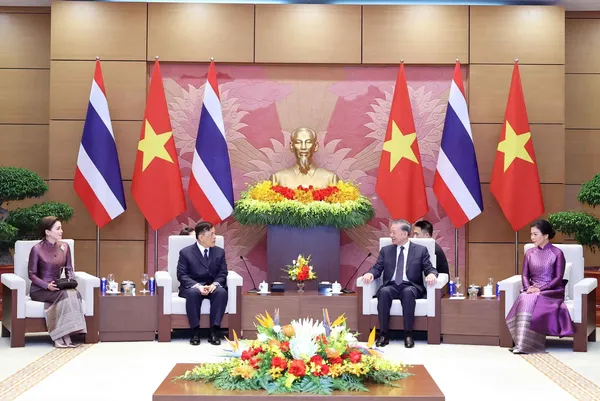
Top legislator meets with King of Thailand in Hà Nội
1.
 |
| Prime Minister Phạm Minh Chính visits the Satellite Control and Operation Centre at the Việt Nam Space Centre. — VNA/VNS Photo |
HÀ NỘI — Prime Minister Phạm Minh Chính on Friday attended the opening of the Việt Nam–Japan Space Vision Forum 2026 and inaugurated the Vietnam Space Centre at Hòa Lạc Hi-Tech Park, marking a significant step in the country’s ambition to strengthen its space science and technology capabilities.
Speaking at the event, the Prime Minister emphasised the guiding principle: “Explore space – Master technology – Strengthen cooperation – Ensure sustainable development – Promote peaceful space.”
Addressing the forum, held from March 12 to 15, Chính said that as Việt Nam enters a new era of development characterised by long-term vision, bold thinking and ambitious action, reaching deep underground, extending to the seas and rising into space, the inauguration of the Việt Nam Space Centre and the organisation of the forum carry special significance.
They mark an important milestone for Việt Nam’s space science and technology sector and open a deeper and more substantive chapter of cooperation between Việt Nam and Japan.
The Prime Minister said the Việt Nam Space Centre is a modern infrastructure complex with a scale and technological sophistication among the most advanced in Southeast Asia.
He expressed appreciation and gratitude to the Government, organisations and enterprises of Japan for their contributions in cooperation with the Government, businesses and people of Việt Nam.
These achievements form a strong foundation for both countries to continue reaching new heights for the prosperity of each nation and for peace, cooperation and development in the region and globally, he said.
Discussion sessions at the forum focus on key topics including satellite data applications in disaster prevention and climate change response, maritime monitoring and the marine economy, smart agriculture, natural resource and environmental management and the standardisation and security of space data. Alongside plenary sessions and business networking events, the forum also features a Việt Nam–Japan space technology exhibition and an Explore Space exhibition.
The forum is expected to become a strategic platform connecting government agencies, research institutes and businesses of the two countries, helping promote the development of a space economy ecosystem in Việt Nam while marking a new step in the deep and comprehensive strategic partnership between Việt Nam and Japan in the era of science, technology and innovation.
At the forum, Deputy Director-General, Manufacturing Industries Bureau, Japan's Ministry of Economy, Trade and Industry Hiroyuki Hatada, Ambassador ITO Naoki and Japanese partners said the Comprehensive Strategic Partnership for Peace and Prosperity in Asia and the World between the two countries is developing strongly and entering a new era. Cooperation in science, technology, innovation and digital transformation, particularly space science and technology, is seen as crucial for rapid and sustainable national development.
Japan also reaffirmed its commitment to deepen cooperation with Việt Nam in the peaceful use of space technology for socio-economic development, disaster prevention and climate change response.
Chính stressed the need for close coordination to launch the LOTUSat-1 satellite by the end of 2027 and ensure its effective utilisation.
Regarding development goals, the Prime Minister said Việt Nam consistently pursues the peaceful development of outer space in compliance with United Nations conventions and international law, serving sustainable development and the interests of the people, businesses and the nation while ensuring independence, self-reliance and international cooperation.
According to the Prime Minister, Việt Nam is continuing to develop and implement major national programmes and projects in space science and technology, focusing on improving Earth observation capabilities, developing a shared satellite data infrastructure and enhancing real-time analysis, warning and operational support.
The development of high-quality human resources in space science and technology also focuses on training personnel in systems, operations, data and information security.
Việt Nam aims to reach a moderately advanced level of space science and technology in Southeast Asia by 2030 and, after 2030, to achieve greater national self-reliance in satellite technology and space data applications addressing global challenges and national security needs.
Introducing specific objectives for infrastructure, technology, applications, economic development and commercialisation, the Prime Minister reiterated the guiding principle: “Explore space – Master technology – Strengthen cooperation – Ensure sustainable development – Promote peaceful space.”
In the coming period, Việt Nam will continue improving institutions, mechanisms and policies governing space activities in line with national conditions and international practices while preparing the scientific and practical foundations for the eventual development of a Việt Nam Space Law.
On the same morning, Chính cut the ribbon to inaugurate the Việt Nam Space Centre, the first high-tech scientific project implemented using Japanese government ODA loans, with total investment of more than VNĐ7 trillion (US$274 million) across an area of 9ha.
The project includes an operations centre, satellite data exploitation and application centre, satellite research and development centre, a ground station system with a 9.3-metre antenna, a technology transfer and human resource development centre, a space museum, a multimedia centre, an international guest house and the Nha Trang Observatory. All facilities have been completed and put into operation.
The project aims to build infrastructure for receiving Earth observation satellite technology transfer — including training personnel and manufacturing and launching LOTUSat-1 — while enhancing Việt Nam’s capacity for disaster prevention, climate change response, natural resource management and environmental monitoring using remote sensing data.
So far, the project has completed satellite training programmes in Japan, producing 36 Masters of Space Technology and designing and manufacturing the MicroDragon experimental satellite, which was successfully launched by the Epsilon-4 rocket in early 2019.
The LOTUSat-1 satellite has now been fully manufactured, with its ground system installed and operational teams trained, ready for the operational and application development phase. — VNS
Politics & Law
 Politics & Law
 Politics & Law
 Politics & Law
 Politics & Law
 Politics & Law
 Politics & Law
 Politics & Law
 Politics & Law
 Politics & Law
 Politics & Law
 Politics & Law
 Politics & Law
 Politics & Law
 Politics & Law