 Expat Corner
HCM City police arrest 30 in online gun making, trafficking ring
1.
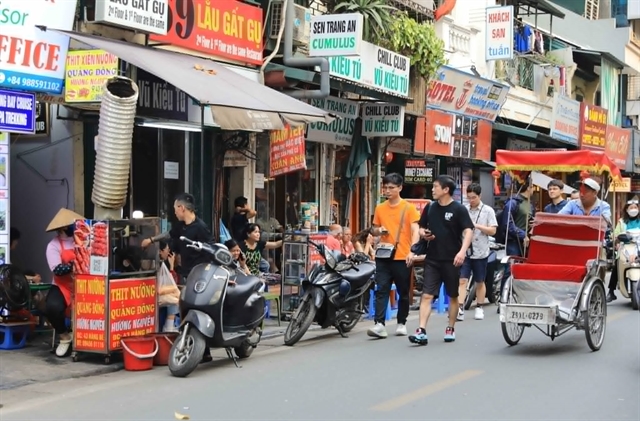 |
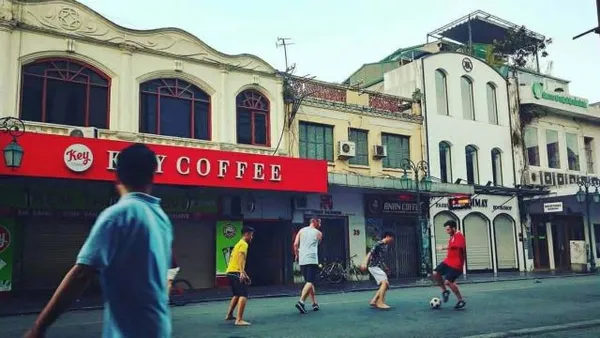
| In the past, pedestrians shared the pavement with all sorts of small businesses. — VNA/VNS Photo |
AF Reeves – @afreeves23
There is an image of Hà Nội that I have come to think of as the city's true face. It can be seen just before 7am: a woman by the side of the road is ladling broth into bowls for people perched six inches from the ground. It can be seen at lunch and late into the evening. Strangers sit shoulder to shoulder, slurps and conversations overlapping, bias flow, matters are resolved. This face hides only from the burning sun of the mid-afternoon.
That scene is now a regulated one. Centralised will and a fresh interpretation of the law have handed authorities the teeth to do what previous campaigns could not. The pavement, long the ungoverned republic of Vietnamese street life, is being brought to heel. It's controversial, to say the least: the latest cut that the cultural fabric of the city must make to pay for the price of progress. The Government is determined to modernise the urban experience of its capital.
Yet the spilling, sprawling, stool-strewn nature of Vietnamese street life is the very thing that has drawn outsiders in for decades. From Bourdain to the Michelin Guide, their monologues and blurbs have waxed lyrical about the famed stools and the otherworldly experience that can be found upon them. The aesthetic is then exported, romanticised, sold back to tourists in travel magazines and Instagram reels as a shorthand for entrepreneurial energy and a city that refuses to slow down. From the outside, it looks like character. To others, it's unregulated chaos.
Many of my Vietnamese friends share the same quiet unease. They love the city's pace. They love the sense that a day can be lived outside, dawn broth to dusk bia. They worry, as I do, that something specific to Hà Nội is being smoothed away in the name of order. How strange it is to find oneself socially conservative on the other half of the planet. One wonders what it means to be progressive in Việt Nam.
We have seen these crackdowns before. Pavements have been 'municipalised' on roughly an annual cycle for as long as I have lived here, and within months they have always been reclaimed. This time feels different. AI-powered cameras now do the watching. The new tech is cheaper, more efficient and without any of the caffeine-driven determinations of local law enforcement.
One wonders whether somewhere between the romanticism and the regulation there is a middle ground. Zoning. Peak hours during which a stool is welcome and outside of which it is not. A licence regime that distinguishes between a vendor who has fed a neighbourhood for thirty years and a chancer flogging knock-off sunglasses in front of a pharmacy.
Here, though, I check myself. There is something deeply unsavoury, an almost colonial subtext, about 'expats' telling a country that fought hard for the right to govern itself which bits of its culture should be preserved for our viewing pleasure. Việt Nam does not owe me a pavement stool at any time of day. But I do wonder how many sacrificial lambs the cultural flock can really afford to lose. And how much time the shepherds actually spend out at pasture.
Expat Corner
 Expat Corner
 Expat Corner
 Expat Corner
 Expat Corner
 Expat Corner
 Expat Corner
 Expat Corner
 Expat Corner
 Expat Corner
 Expat Corner
 Expat Corner
 Expat Corner
 Expat Corner
 Expat Corner


.jpg)
.jpg)


