 Economy



Project to build big-data legal database approved
1.
|
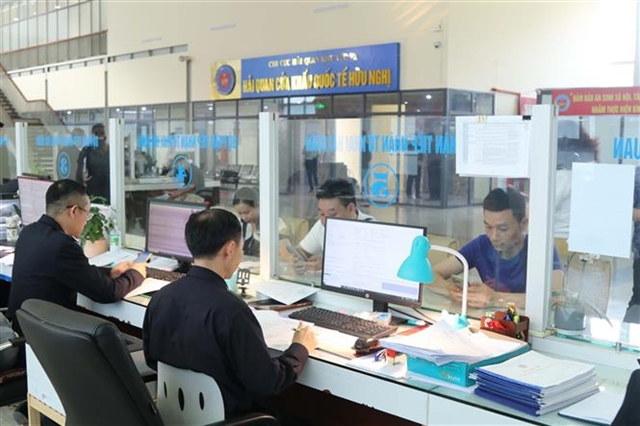
| Customs officers work at Hữu Nghị International Border Gate, Lạng Sơn Province. — VNA/VNS Photo Quang Duy |
HÀ NỘI — Việt Nam’s customs authority is removing a wide range of cumbersome administrative procedures and business conditions in a push to accelerate customs clearance and support the business community.
The drive includes a comprehensive review of customs procedures, with a stronger shift towards digital data use and the elimination of manual verification processes that have long delayed cargo clearance.
Under a Ministry of Finance decision issued in April, customs procedures are being redesigned to allow authorities to use shared national databases to verify enterprise identity, legal status and compliance records instead of requiring paper documents.
The customs sector said the move would improve transparency, reduce administrative burdens, and help authorities assess compliance risks more accurately through digital systems.
Several tax and import procedures have already been fully digitalised, including incentives for the IT and automobile supporting industries under Government decrees issued in 2023. The reforms also simplify tax exemption procedures and remove overlapping documentation requirements.
The customs authority is also cutting six administrative procedures linked directly to import-export activities under a Government resolution issued early this year.
One notable change is the simplification of procedures for temporarily suspending customs enforcement measures against financially troubled firms, helping maintain goods circulation and production activities.
Authorities are additionally reviewing key regulations governing duty-free business operations, bonded warehouses and transit goods management to shift more strongly from pre-check to post-check mechanisms.
The National Single Window mechanism is also being upgraded to ensure all specialised inspection procedures are conducted electronically, while revisions to regulations on electronic customs declarations aim to strengthen the legal validity of digital data in economic transactions.
According to the Customs Department, the reforms are expected to create new momentum for Việt Nam’s import-export sector, strengthen the country’s competitiveness, and improve its attractiveness to global investors. — VNS
Economy
 Economy
 Economy
 Economy
 Economy
 Economy
 Economy
 Economy
 Economy
 Economy
 Economy
 Economy
.jpeg) Economy
Economy
 Economy
 Economy