 Life & Style

AI and EV Boom Draws $690 Million in Advanced Materials Investment Plans to Thailand
1.
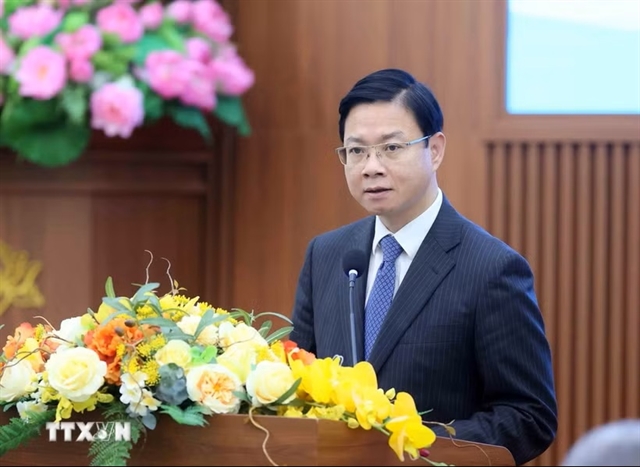 |
| Deputy Minister of Foreign Affairs Ngô Lê Văn, also Chairman of the Việt Nam National Commission for UNESCO. — VNA/VNS Photo |
HÀ NỘI — Deputy Minister of Foreign Affairs Ngô Lê Văn, who is also Chairman of the Việt Nam National Commission for UNESCO, has spotlighted Việt Nam's role as host of the Asia-Pacific Dialogue on Heritage and Authenticity.
Văn told the press that the event was the region's leading high-level policy dialogue, drawing world leaders and heritage experts. It tackled one of the core, long-term issues under the World Heritage Convention and produced four major outcomes.
The most notable was the adoption of the Hà Nội Document on Heritage and Authenticity, which marks a shift in conservation mindset and methodology in the region and the world. For the first time, a clear Asia-Pacific perspective was written into the global discussion, building on the 1994 Nara Document and the 2025 Nairobi Document. Lazare Eloundou Assomo, director of the UNESCO World Heritage Centre, called the adoption an important milestone in the international community's shared commitment to the 1972 World Heritage Convention.
Second, Việt Nam played a key role in launching and guiding the process. As host and co-chair, it shaped both the agenda and the global heritage policy discussion. In the opening session, Minister of Foreign Affairs Lê Hoài Trung outlined four priorities. They included judging authenticity while respecting cultural diversity, and honouring responsibility to history and future generations, including through digital technology and AI. Placing communities and stakeholders at the core, and translating awareness into action rounded out the priorities, which all appeared in the document. At the closing session, Assomo noted that the global heritage community benefitted greatly from this landmark contribution by Việt Nam.
Third was the emphasis on policy grounded in practical experience. For the first time, a policy dialogue on authenticity was tied directly to a specific conservation event, namely the September 29 groundbreaking for the project to preserve, repair and restore Kính Thiên Palace, along with field visits to Tràng An and Tam Chúc. Apart from discussing concepts, participants saw Việt Nam's approach at the Thăng Long Imperial Citadel, which Văn described as a model of cooperation, safeguarding authenticity, raising outstanding universal value and balancing conservation with development.
Foreign participants called Việt Nam a "particularly meaningful destination" for the dialogue, saying the link between heritage conservation and the country's socio-economic strategy offers a vivid practical example.
Fourth was organisational capacity. Hosting the dialogue in Hà Nội and Ninh Bình showed Việt Nam can run major international events and positions as a trusted partner and destination for cultural and heritage initiatives and multilateral dialogue, boosting its standing and soft power.
Văn said the successful cooperation with UNESCO, and the adoption of the Hà Nội Document in the 50th anniversary year of Việt Nam-UNESCO ties, underscored the country's new role in multilateral and cultural diplomacy.
He recalled that in 1981, in Hà Nội, the UNESCO Director-General urged the international community to help save the ancient capital of Huế, when Việt Nam was still struggling with severe post-war hardship. Forty-five years later, also in Hà Nội, Việt Nam, UNESCO and international experts drafted a strategic heritage document together, illustrating the country's development and the depth of the half-century partnership.
It also showed Việt Nam's capacity and credibility in initiating, connecting and shaping major strategic and policy issues at global and regional levels. The World Heritage Centre's proposal that Việt Nam host the dialogue reflected UNESCO's confidence in the country, he added.
Together with Việt Nam's initiative on the International Decade of Culture for Sustainable Development 2027–2036, adopted by the UN General Assembly, the Hà Nội Document shows Việt Nam's growing contribution in both policy direction and professional expertise, including in developing international standards on culture and heritage.
The dialogue was also an exercise in cultural diplomacy aimed at creating space and pooling resources for national development, Văn said. It put into practice the orientations of the 14th National Party Congress, Resolution 80-NQ/TW on Vietnamese cultural development, Resolution 06-NQ/TW on foreign policy orientations, and Resolution 26-NQ/TW on making tourism a spearhead economic sector in the new era. The goal is to convert cultural resources into direct support for national development goals, soft power, and the country's standing.
According to Văn, the value of the Hà Nội Document lies in whether it can be put into practice. Việt Nam will roll it out at the global, regional and national levels at the same time.
Globally, Việt Nam, as Vice Chair of the World Heritage Committee, will work with the committee chair, the World Heritage Centre and advisory bodies, such as ICOMOS, ICCROM and IUCN, to bring the outcomes to the committee's 49th session in Istanbul, Türkiye in 2027. The aim is for the document's recommendations to help refine the Operational Guidelines for the Convention and make the World Heritage List more balanced, representative and credible.
Regionally, Việt Nam will pursue three proposals made at the dialogue, including an Asia-Pacific heritage cooperation network; regular regional training courses, run with UNESCO, for young heritage professionals; and keeping the dialogue as a standing regional forum. When Vietnam hosts APEC in 2027, it will weave cultural and heritage messages into the agenda as a bridge among economies, supporting sustainable tourism, creative industries and people-to-people exchanges.
Nationally, the Government will direct ministries, agencies and localities to seriously follow up on the outcomes and study building the document's recommendations into the enforcement of culture and heritage laws and policies. Priorities include assessing authenticity on scientific evidence; combining physical, documentary and oral sources, the surrounding environment and community knowledge; clearly identifying what has been retained, changed or lost in conservation and restoration; building conservation requirements into planning and project development; and ensuring communities are involved from the start and are the main beneficiaries.
The document will also serve as a direct reference for nomination dossiers now in preparation, including Óc Eo – Ba Thê, Cổ Loa, Củ Chi Tunnels, Con Moong Cave and Vân Long – Kim Bảng – Tam Chúc. Authorities will also step up efforts to translate and distribute it to heritage management boards, research institutes, universities and communities, so it becomes shared knowledge and encourages public involvement in conservation.
Văn said the Thăng Long Imperial Citadel is a sacred national symbol and the seat of continuous political power in Việt Nam for 13 centuries, which makes the Kính Thiên Palace groundbreaking especially significant. After 15 years of persistent research and cooperation, particularly over the past three years, the World Heritage Committee, for the first time in the Convention's nearly 55-year history, agreed to allow changes to the existing state of a property's core zone. This year marked a historic milestone, with decisive progress toward supporting reconstruction of the palace.
Việt Nam secured valuable support from UNESCO, member states and international experts throughout, he said. The World Heritage Centre and ICOMOS gave extensive advice during dossier preparation. Committee members praised Việt Nam's openness, seriousness, responsibility and scientific approach, as well as its full delivery of commitments since the site was inscribed in 2010, its compliance with international recommendations and the Convention, and its contribution to raising the site's outstanding universal value.
Assomo and ICOMOS experts said the citadel matters not only to Việt Nam but to the world, since the case is unprecedented and raises new questions about heritage development. They called it a "remarkable achievement" that opens new approaches to conserving and upholding World Heritage values.
Assomo said it is a model of cooperation among a member state, UNESCO and its advisory bodies, an example for other countries and a contribution to human civilisation. International ambassadors and delegates viewed the experience as invaluable knowledge to be shared widely with other member states, he added.
The outcome was achieved thanks to guidance from Party and State leaders, along with teamwork between Hà Nội, the Ministry of Foreign Affairs, the Việt Nam National Commission for UNESCO, the Ministry of Culture, Sports and Tourism, and both local and international scientists.
Looking ahead, Văn urged Việt Nam to fulfil the World Heritage Committee's commitments and recommendations and the site's vision, deepen cooperation with UNESCO, ICOMOS and international experts, and carry out conservation, repair and restoration on a scientific basis while safeguarding authenticity, integrity and outstanding universal value. The efforts will help recreate the nation's history, draw on the collective strength built over thousands of years and foster pride in the country's roots, while meeting the aspirations of present and future generations. — VNA/VNS
Life & Style
 Life & Style
 Life & Style
 Life & Style
 Life & Style
 Life & Style
 Life & Style
 Life & Style
 Life & Style
 Life & Style
 Life & Style
 Life & Style
 Life & Style
 Life & Style
 Life & Style