Life & Style

Top Vietnamese leader receives Denmark’s highest-ranked honour
1.
|
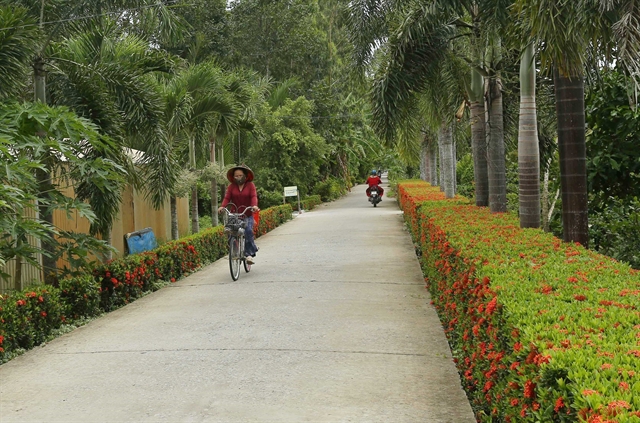
| A street in Cần Thơ City's rural area. VNA/VNS Photo Duy Khương |
HÀ NỘI — A nationwide contest to identify Việt Nam’s Best Rural Tourist Destination 2026 has been launched by the Ministry of Agriculture and Environment (MAE), aiming to honour and promote outstanding rural tourism models that celebrate local identity, benefit communities and support sustainable development.
The contest is part of the cooperation programme between the MAE and the Ministry of Culture, Sports and Tourism to promote effective and sustainable agricultural and rural tourism during 2024–30.
It is also aligned with the National Target Programme for 2026–35 and Việt Nam’s Tourism Development Strategy to 2030, reinforcing efforts to make rural tourism a key driver of sustainable rural development.
The contest targets rural destinations distinguished by their rich cultural heritage, attractive tourism products, scenic landscapes, ecological environment and the effective use of agricultural and traditional craft village values.
Beyond natural beauty and tourism resources, the competition places strong emphasis on destination management, service quality and the fair distribution of tourism benefits to local communities.
Eligible entries are rural tourist destinations selected and officially nominated by provincial-level People's Committees.
To qualify, a destination must have a clearly defined geographical area within a commune-level administrative unit, possess distinctive rural tourism resources, have an established management body and active community participation, and be capable of providing sustainable tourism products and services for visitors.
The destinations will be assessed based on four groups of criteria: distinctive tourism products; community values and benefits; sustainable development and risk management; and tourism promotion and digital transformation.
The selection process will combine scores awarded by the judging panel based on submitted dossiers and supporting documents, as well as on-site assessments, with votes from the public through an application and selected social media platforms.
The 2026 contest features two categories. The 'Việt Nam’s Best Rural Tourism Destination' category is open to five destinations selected by the judging panel in accordance with the contest rules.
The 'Việt Nam’s People’s Choice Rural Tourism Destination' category will recognise three destinations receiving the highest number of public votes.
Winning destinations will receive certificates from the Organising Committee, contest trophies and cash prizes in accordance with current regulations.
The contest also aims to establish the 'Việt Nam’s Best Rural Tourism Destination' award as a recognised brand, while creating a network for destinations to connect, share experience and promote rural tourism collectively. It also seeks to gradually link Việt Nam’s rural tourism destinations with international rural tourism networks.
Up to two nominations
Under the Organising Committee’s guidelines, each province or centrally run city may nominate a maximum of two entries. The provincial or municipal Department of Agriculture and Environment, or Department of Culture, Sports and Tourism, is tasked with taking the lead and coordinating with relevant departments and agencies to review and select destinations, and support them in preparing their entries.
The selection process must be open and objective, ensuring that nominated destinations are representative and exemplary, with the potential to generate wider impact.
Entries must be submitted by October 15 in accordance with the Organising Committee’s guidelines. The assessment, public voting and judging are expected to be completed by November 30. The awards ceremony is scheduled to take place as part of the opening ceremony of the 2026 Việt Nam OCOP Festival in Hồ Chí Minh City, from December 3 to 6.
Through the contest, effective and distinctive rural tourism models are expected to gain greater recognition, promotion and replication, helping better leverage the value of agriculture, traditional craft villages, ecological landscapes and cultural heritage.
The initiative is also expected to create additional livelihoods, raise local incomes and contribute to building more liveable rural areas. — VNS
Life & Style
 Life & Style
 Life & Style
 Life & Style
 Life & Style
 Life & Style
 Life & Style
 Life & Style
 Life & Style
.jpg) Life & Style
Life & Style
 Life & Style
 Life & Style
 Life & Style
 Life & Style
 Life & Style