 Life & Style
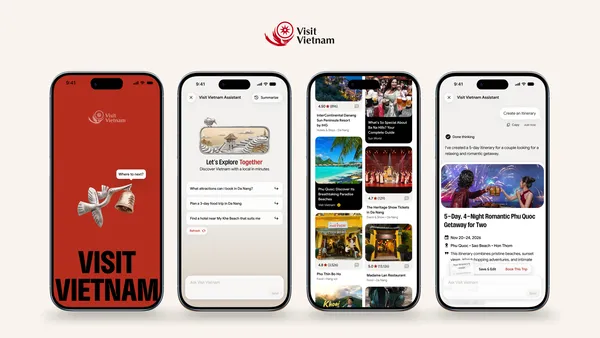
Visit Vietnam app to showcase AI-powered platform at ITB Asia 2026
1.
HÀ NỘI — Building a digital ecosystem, developing a national database and applying AI are becoming key drivers of competitiveness, paving the way for a more modern, smart and sustainable tourism industry in Việt Nam.
|
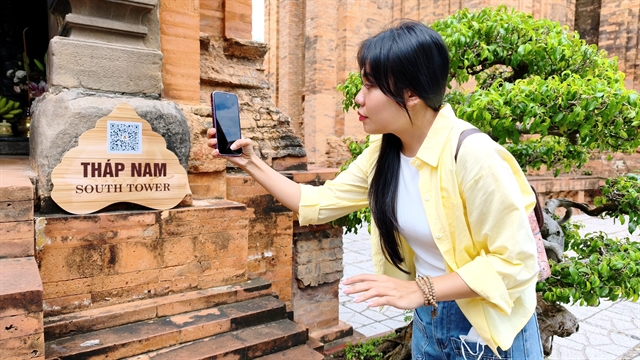
| Visitors scan a QR code to learn more about the Bà Pô Po Nagar Towers, a special national relic in Bắc Nha Trang Ward, Khánh Hòa Province. — VNA/VNS Photo |
New era of data-driven tourism
In his message marking World Tourism Day 2026 on September 27, UN Secretary-General António Guterres stressed that AI is transforming how travellers choose destinations, how the tourism industry operates and how experiences are designed. Technology can support small businesses, improve service quality and create new opportunities.
However, Guterres warned that without proper oversight and direction, AI could concentrate tourists in a small number of destinations and platforms, leaving many other destinations with significant potential at risk of being left behind.
He also stressed that technology must serve people. Tourism workers, local communities and emerging destinations should work together to shape the sector’s future.
This requires investment in digital skills training, broader access to technology and ensuring that innovation benefits destinations and tourism communities.
Over the past two decades, the tourism industry has undergone two major waves of transformation, from globalisation and market expansion to digital transformation and the adoption of new technologies.
Today, tourism is no longer simply about experiences, emotions and exploration, but has become an industry driven by data, technology and adaptability. In this context, digitalisation plays an important role in improving management efficiency, optimising visitor experiences and contributing to the protection of tourism resources.
Digital transformation trends
According to Dr Nguyễn Anh Tuấn, Director of the Institute for Tourism Economics under the Việt Nam Tourism Association, three clear digital transformation trends are emerging globally.
|
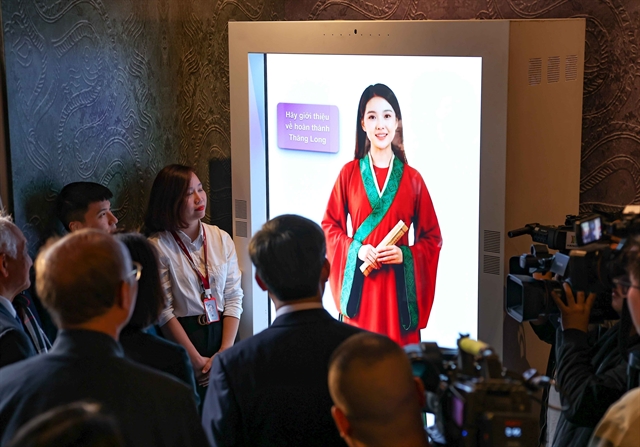
| An AI virtual receptionist uses artificial intelligence, facial recognition cameras and motion sensors to interact with visitors at Thăng Long Imperial Citadel Heritage Site. — VNA/VNS Photo |
The first is a shift from digitising individual processes and services to building integrated national digital tourism ecosystems.
Rather than simply selling tours online, promoting destinations on social media or using hotel management software, many countries have developed national tourism data platforms, smart destination management systems and ecosystems connecting authorities, businesses and travellers.
Under this trend, data is becoming a new resource for the tourism industry.
The Government does not replace businesses but acts as an enabler of the digital ecosystem, creating conditions for different stakeholders to jointly harness and develop data resources.
The second trend is the emergence of AI as a core technology for the tourism industry of the future. It can be applied across various areas, including analysing visitor behaviour, forecasting demand, personalising promotional activities and providing 24/7 multilingual customer support.
The third trend is the development of smart tourism in tandem with green and sustainable growth, creating a 'dual transition' trend. Technology is used not only as a technical tool but also to help regulate visitor numbers, reduce pressure on resources, prevent overcrowding at destinations, optimise energy use and manage traffic and services.
Building national digital tourism ecosystem
In Việt Nam, Politburo Resolution No. 26-NQ/TW, dated August 22, 2026, on developing tourism into a spearhead economic sector in the new era, sets a target of establishing by 2030 a comprehensive smart tourism ecosystem, a national tourism database and a national digital tourism platform.
Looking at the current situation, the tourism sector has made initial progress in digital transformation. Many businesses have adopted online travel agency (OTA) platforms, digital marketing and online sales. Some localities have developed digital maps and tourism information portals, introduced e-ticketing and established smart operation centres.
However, overall, Dr Tuấn said digital transformation and AI adoption still face several limitations, including the lack of a unified data ecosystem and fragmented AI applications, which remain largely focused on promotion and communications.
Digital transformation capacity also varies among businesses, particularly small and micro enterprises, which account for a large share of the tourism sector. Financial and human-resource constraints, along with limited data connectivity, make it difficult for many businesses to access and apply new technologies.
In addition, the tourism sector still lacks sufficiently strong mechanisms and policies to drive coordinated digital transformation.
Based on the current situation, Tuấn proposed four major directions.
First, Việt Nam should build a national digital tourism ecosystem with open data and multi-stakeholder connectivity among authorities, businesses and travellers.
It should also step up AI applications in market forecasting, service personalisation and, particularly, destination management. AI adoption should focus on addressing practical challenges facing the tourism industry rather than being limited to communications and promotion.
In addition, the development of smart tourism must go hand in hand with green growth. Digital transformation should support the efficient use of resources, reduce environmental pressures and enhance destination sustainability, while also promoting comprehensive transformation within businesses, from product sales to operations.
Small and medium-sized enterprises need support in terms of resources, training and data connectivity so they can participate in the digital ecosystem and adopt AI, improving business efficiency and competitiveness.
Tuấn stressed that in the digital era, competitive advantages increasingly depend on the ability to harness data and technology and effectively organise the digital ecosystem.
For tourism, he said, faster development requires accelerated digital transformation, while sustainable growth calls for smart and responsible use of AI. To move further, the sector must begin with new thinking, new institutions and new actions.
The Việt Nam National Authority of Tourism is currently developing a national tourism data ecosystem under the '1+1+34+N” model, comprising one – the Ministry of Culture, Sports and Tourism; one – the Ministry of Public Security; 34 – provinces and centrally run cities; and N – relevant ministries, agencies, businesses and organisations.
Under the model, the central level develops shared platforms, while localities are responsible for developing, updating and using data locally. Businesses participate by connecting to the system and developing services based on standardised data.
The model is expected to help prevent fragmented investment and the creation of isolated, poorly connected systems, while ensuring that data is regularly updated and directly supports management, operations and tourism product development.
Data standardisation provides a foundation for the tourism sector to build a coordinated digital ecosystem, enabling the use of artificial intelligence and big data analytics to forecast demand, identify potential markets, assess the effectiveness of promotional activities and improve destination management.
According to the Việt Nam National Authority of Tourism, amid increasingly intense competition among destinations, effectively harnessing advances in science, technology and digital transformation will help Việt Nam’s tourism sector improve service quality, enhance competitiveness and develop in a modern, smart and sustainable direction.
This will also provide a foundation for the tourism industry to make a breakthrough in the digital era and contribute to realising the goal of making tourism a spearhead economic sector of the country. — VNS
Life & Style
 Life & Style
 Life & Style
 Life & Style
 Life & Style
 Life & Style
 Life & Style
 Life & Style
 Life & Style
 Life & Style
 Life & Style
.jpg) Life & Style
Life & Style
 Life & Style
 Life & Style
 Life & Style