 Life & Style
HCM City honours fallen soldiers with solemn musical tribute
1.
|
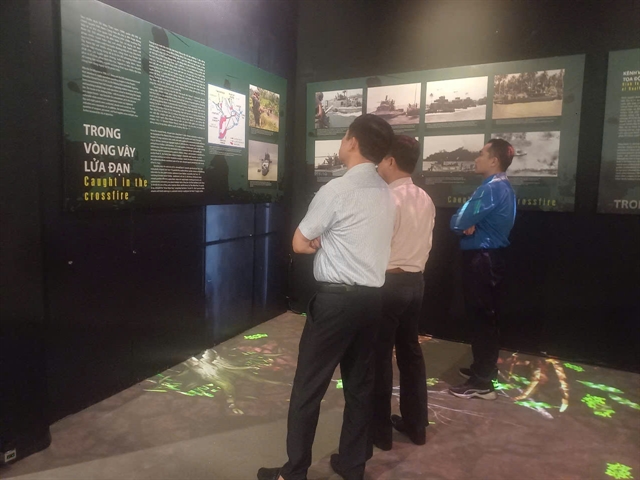
| Exhibition Youth: from the Trường Sơn Trail to the Legendary Route 1C opens at the Vietnamese Women's Museum in Hà Nội. VNS Photos Thanh Hà |
HÀ NỘI — A courageous generation spent their youth on the front lines, contributing to the nation's independence, peace, and reunification.
Now their stories, images and artefacts are featured in a special exhibition in Hà Nội.
Entitled Youth: from the Trường Sơn Trail to the Legendary Route 1C, the exhibition takes the public back to those unforgettable years.
The Trường Sơn Trail, or the Hồ Chí Minh Trail is not just a route but also a strategic military transport network connecting the North and the southern battlefields and a junction for the three Indochinese countries during their struggle for national independence.
Through the resistance war, the US Air Force and the former Sài Gòn administration's army launched more than 151,800 air raids, raining millions of tonnes of bombs and ammunition down on the trail, surpassing the total tonnage of bombs used in the World War II.
Facing the world's most modern and powerful military at time were not only the soldiers but also the young volunteers, civilian labourers and residents on the frontline. They took part in opening roads, ensuring transport operations and carrying reinforcement supplies.
Route 1C was a strategic supply line of paramount importance, vital for reinforcing the southwestern battlefield during the resistance war against the US. The route began at Lò Gò-Xa Mát National Park (Tây Ninh Province) and ran along the Việt Nam-Cambodia border, serving as an enduring link from the rear bases to the front lines.
From 1966 to 1975, the Youth Volunteer Force at Route 1C transported over 13,000 tonnes of weapons, food and medical supplies to the battlefield. It was also the site of more than 200 battles that put over 3,000 enemy troops out of action, playing a vital historical role.
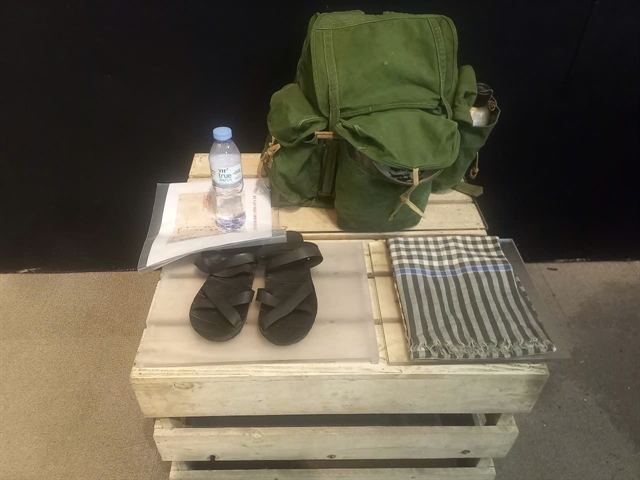
|
| Artefacts belonging to former Youth Volunteers and veterans. |
Many sacrificed their lives, while hundreds of others were wounded. The unit received the title of Hero of the People's Armed Forces in 2011.
Speaking at the opening ceremony of the exhibition on August 25, Vice President of the Central Committee of the Việt Nam Fatherland Front Trần Thắng said the exhibition was not merely a cultural and historical event but also a journey back to the past, which was part of the nation's history. It was the time, amid the rain of bombs and a storm of bullets, that countless Vietnamese people fought for the country's independence.
He believed that it wasn't just about the trail and the route itself, with glorious victories, troops and supply lines, but also about the youth, dreams and momentous choices of so many people.
The exhibition comprises three themes presenting as a journey of memory, from the initial steps of youth setting out, through the years of living and fighting on the front lines, to the enduring bonds of comradeship that continue beyond the war.
Đoàn Ngọc Ánh, former deputy political commissar of the Nguyễn Việt Khái III Company, said: "I joined the Youth Volunteer Force at the age of 16 to carry heavy loads of 20-30kg through forests and across streams along Rout 1C to supply the battlefield.
"There were marches where we had to go hungry for three or four consecutive days, whenever we encountered any edible wild vegetables, we gathered and ate them to keep going.
"In our youth, being able to devote ourselves to the Fatherland was our greatest joy and pride.
"We just marched and fought like that, completely forgetting all the hardships, shortages and dangers."
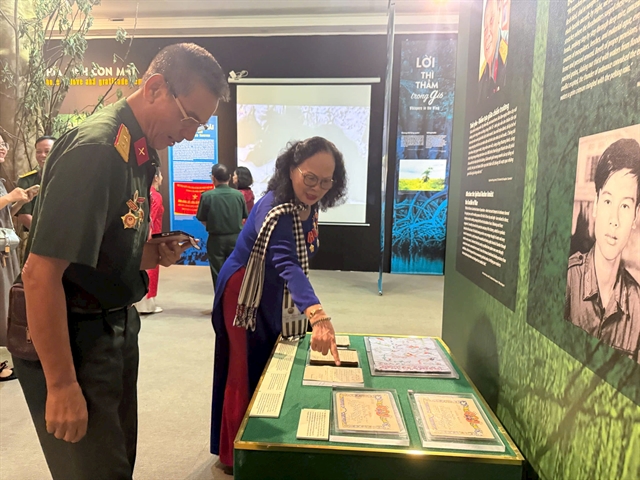
|
| Veterans and former youth volunteers are moved as they view the artefacts. |
Lâm Thị Minh Tâm, former deputy political commissar of Company 4, Route 1C, said she decided to join the force at age 16 after witnessing the enemy burning down homes, arresting and beating her parents, and spraying Agent Orange to destroy the forests.
“My parents refused to let me go, fearing I was too young to accomplish anything," Tâm said.
"They told me that if I left, I should never come back. But I was equally determined: I would not return until the war was over.
"Our life there was really tough, especially for women. In the rainy season, we soaked through mud for days on end, while the dry season brought a lack of clean water and a host of skin ailments.
There were times we went hungry for days or suffered from severe malaria, yet we remained determined to hold our place on the trail."
The exhibition runs until October 25 at the Vietnamese Women's Museum, No 36 Lý Thường Kiệt Street, Hà Nội. — VNS
Life & Style
 Life & Style
 Life & Style
 Life & Style
 Life & Style
 Life & Style
 Life & Style
 Life & Style
 Life & Style
 Life & Style
 Life & Style
 Life & Style
 Life & Style
 Life & Style
 Life & Style