 Life & Style

Việt Nam, EU and Belgium seek deeper, practical cooperation
1.
|
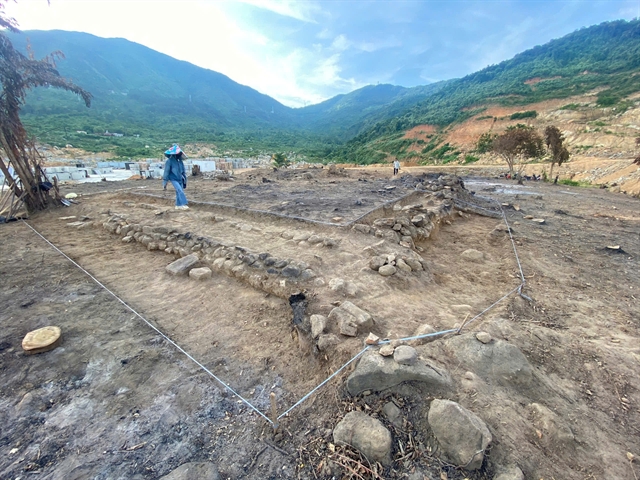
| Foundation structures of the Chơn Sảng Garrison and Nam Chơn Station, two important military defensive posts on the Hải Vân Pass in Đà Nẵng, during archaeological excavations. Photos courtesy of the Đà Nẵng Management Board of Monuments and Landscapes |
ĐÀ NẴNG – Archaeologists have discovered foundation structures for two important military defensive posts on the Thiên Lý (North-South) route through the Hải Vân Pass in Đà Nẵng that are believed to date to nearly 200 years ago, during the Nguyễn Dynasty.
The Đà Nẵng Management Board of Monuments and Landscapes said preliminary evidence also links the sites, the Chơn Sảng Garrison and Nam Chơn Station, to regional defence during the resistance to attacks on Đà Nẵng by the French-Spanish coalition that began in 1858.
|
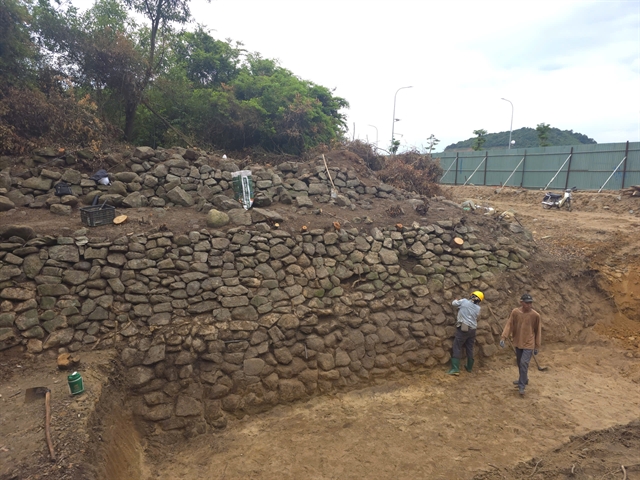
| A section of stone wall uncovered in excavations at the foot of the Hải Vân Pass. |
The 45-day excavations at the foot of the pass exposed sections of outer ramparts, stone walls, dikes, defensive ditches, stone-reinforced terraces and architectural foundations, along with 964 artefacts.
They were conducted jointly by the Đà Nẵng Management Board of Monuments and Landscapes and the Institute of Archaeology under the Việt Nam Academy of Social Sciences.
Archaeologists found that the two military posts played a key role in protecting the North-South road under the Nguyễn Dynasty. They had been shown on a military map of Đà Nẵng’s defences from the reign of King Tự Đức, who ruled from 1847 to 1883, listed in French as fort royal de Nam Kin (Nam Chin) and fort de Kien-Chang (Chin Song) along with the famous fort du Mamelon (Định Hải).
|
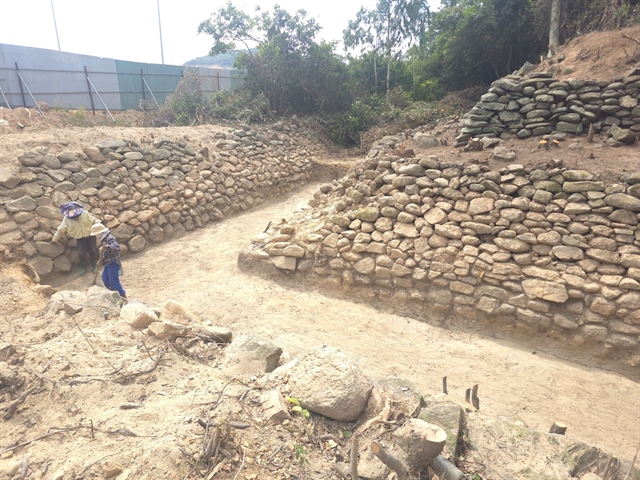
| Workers at the archaeological site at the foot of the Hải Vân Pass. |
Experts agreed that foundation structures in a 600sq.m excavated area remained mostly untouched, and the two military posts were clearly referred to in different independent historical sources, including ancient maps and archival documents.
Chơn Sảng Garrison is believed to have been used to control the road to the southwest, as guard posts were recorded at the western and southern corners of the excavated site.
Meanwhile, a section of the Nam Chơn Station foundation was partly impacted by shrubs and the roots of larger trees, resulting in cracks and other damage to the surviving structures. A concrete water tank and a well, which were built in the area during the 1980s, still remain, according to the report.
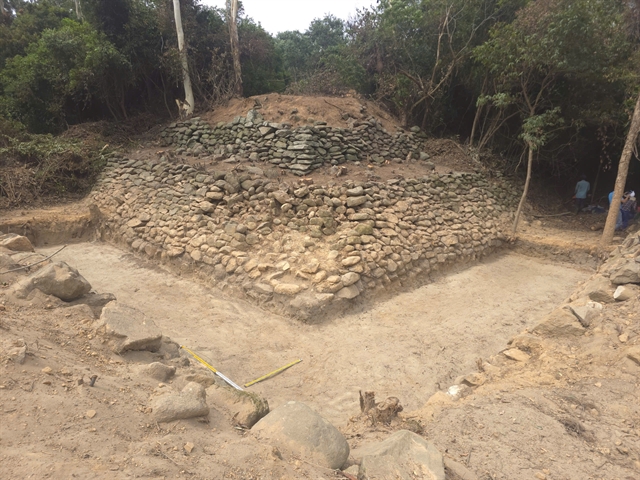
|
| A section of a stone-reinforced military structure at the foot of the Hải Vân Pass in Đà Nẵng was excavated between May and July. |
According to Dr Phạm Văn Triệu, who led the excavation, preliminary dating of the material and foundation structures of the two military posts show that they mostly belong to the 19th century Nguyễn Dynasty.
The excavation was conducted from May 25 to July 8, and its findings provide important evidence for further study of the sites.
Triệu recommended that the two new sites be protected under the heritage law, while further surveys and expanded excavations are needed to prepare scientific dossiers for heritage recognition.
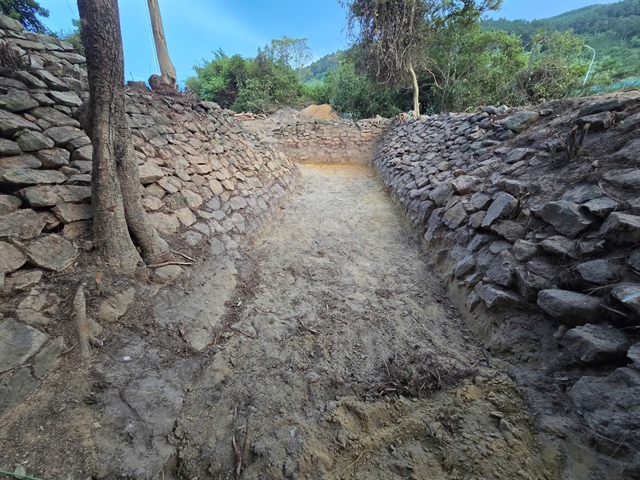
|
| A trench belonging to the military post is exposed after archaeological excavations. |
The two sites are close to the Hải Vân Gate, a military fortification complex of brick-built gates from the King Minh Mạng (1791-1841) era around 1826. It was recognised as a national historical and architectural relic in 2017.
The Điện Hải Citadel, a National Special Relic, and An Hải fortress were built as military outposts to control and defend the strategic seaport gateway on the Hàn River in the 19th century, during the reign of King Gia Long. — VNS
Life & Style
 Life & Style
 Life & Style
 Life & Style
 Life & Style
 Life & Style
 Life & Style
 Life & Style
 Life & Style
 Life & Style
 Life & Style
 Life & Style
 Life & Style
 Life & Style
 Life & Style