 Life & Style
Incentive policies drive robust sales growth for automobile sector
1.

|
| Film director Phan Đăng Di. — Photo courtesy of DANAFF |
Released in 2011, Bi, Đừng Sợ! (Bi, Don’t Be Afraid!) became a notable moment in Vietnamese independent cinema for its unconventional storytelling. Set in Hà Nội, the film follows a young boy named Bi as he navigates the subtle fractures and quiet loneliness within a multi-generational family. Eschewing linear narrative tropes or overt explanations, the film adopts a restrained observational style built on suggestion rather than exposition.
Sixteen years later, once labelled "hard to watch," the film no longer stands in isolation as a point of controversy. Instead, it has become part of a broader cinematic conversation in which earlier works are reassessed through more reflective and contextual perspectives.
Naïve but pure beginnings
Reflecting on the re-screening of his brainchild after a long hiatus, director Phan Đăng Di expressed deep nostalgia. However, he said what he finds most compelling is the opportunity to place his work alongside its contemporaries within a structured framework.
“When a film is positioned next to others from the same period, it gains context and enters into a dialogue. At that point, one isn't just revisiting a single work, but looking back at how Vietnamese cinema moved, reflected and engaged with social issues,” he said.
|
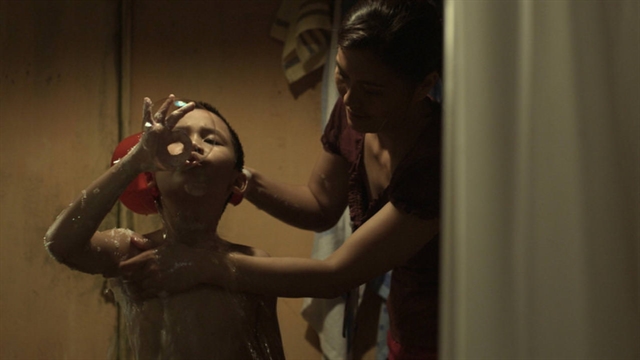
| A scene from Bi, Đừng Sợ (Bi, Don’t Be Afraid) by director Phan Đăng Di. — Photo courtesy of Acrobates Films |
Looking back on his directorial debut, he describes the journey as "naive" yet memorable. At the time, he and his crew were largely young newcomers, school friends entering the industry for the first time. This was balanced by the participation of esteemed veterans including People’s Artist Trần Tiến and Meritorious Artist Mai Châu. Their gentle, professional and reverent attitude towards the craft helped shape the young director’s understanding of the profession.
The production was also a trial by fire from the absolute flexibility required to work with a first-grader to the exhaustion of filming under a mix of artificial and natural rain.
Yet for director Di, cinema is not about eliminating difficulties; it is about how we navigate through them.
From its inception, Bi, Don’t Be Afraid! reached international shores. Starting as a project at the Busan International Film Festival, it moved through L’Atelier (Cannes) and received support from the Berlin International Film Festival World Cinema Fund before officially competing in International Critics’ Week (Cannes) and travelling to 60 international festivals. This journey led the director to realise that cinema is, in essence, a vast space for dialogue without borders.
|
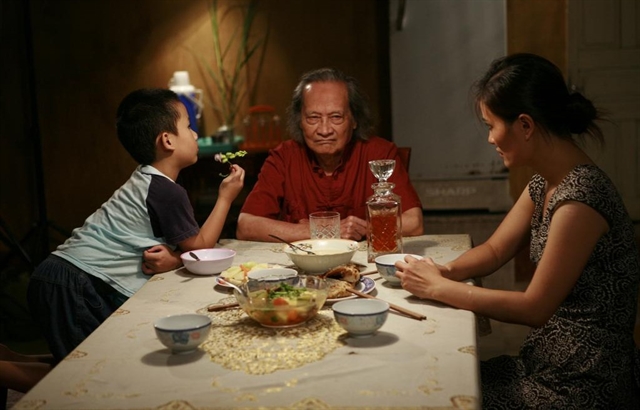
| A scene from Bi, Đừng Sợ (Bi, Don’t Be Afraid) by director Phan Đăng Di. — Photo courtesy of Acrobates Films |
Cinema beyond explanation: A space for reflection
Addressing past controversies over the film’s challenging nature for audiences, Di expressed understanding. He acknowledged the film diverged from the familiar conventions of the time but maintained that he never intended to challenge viewers. His sole objective was to remain honest to his own experiences and emotions.
“When a film doesn’t explain everything, it forces the audience to participate in the viewing process. I believe cinema should retain that capacity, to act as a space for the viewer to think,” he said, reaffirming his artistic philosophy.
Assessing modern audience tastes, Di noted a clear shift. With easier access to global cinema, barriers to difficult-to-watch films have lowered. However, he said the downside of the digital age is growing impatience. Audiences increasingly crave fast, direct content that demands little depth. This presents a dilemma for filmmakers: adapt to survive or remain steadfast in artistic depth.
According to him, the key lies in finding equilibrium.
When asked why Vietnamese cinema appears to struggle to keep pace globally, he pointed to a core bottleneck: the lack of a robust ecosystem.
While the market and audience exist, the foundation for nurturing long-term cinematic projects remains fragmented. In his view, cinema is not just the glamour of box-office results but an entire machinery operating quietly in the background.
Di also viewed the films of previous generations as a testament to a professional attitude that does not shy away from reality, bravely addressing major social issues with a strong sense of responsibility.
“Moving forward is not just about creating the new, but about preserving the seriousness and responsibility that previous generations once held,” he concluded. — VNS
| Bi, Don’t Be Afraid!, directed by Phan Đăng Di, is set to be screened as part of the The face of Vietnamese Cinema after 40 Years of Đổi Mới (Renewal) programme at the 4th Đà Nẵng Asian Film Festival (DANAFF 2026). The programme features 17 landmark works of Vietnamese cinema, spanning from the late 1980s to the 2000s, offering audiences a comprehensive retrospective of the industry's evolution throughout the country's 40-year journey of Renewal. |
Life & Style
 Life & Style
 Life & Style
 Life & Style
 Life & Style
 Life & Style
 Life & Style
 Life & Style
 Life & Style
 Life & Style
 Life & Style
 Life & Style
 Life & Style
 Life & Style
 Life & Style