 Life & Style
Việt Nam has five Halal certification bodies recognised by Malaysia
1.
|
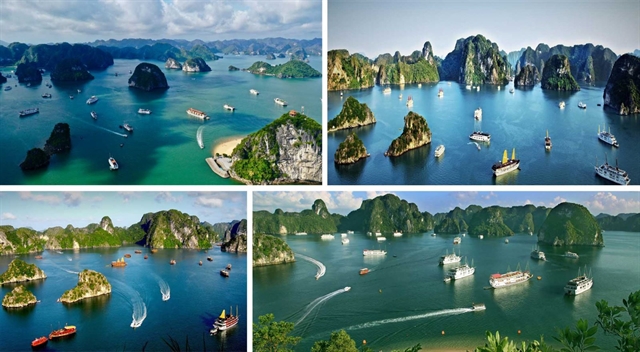
| Hạ Long Bay, in the northern province of Quảng Ninh, remains a special attraction for foreign tourists to Việt Nam. — Photo baotintuc.vn |
HÀ NỘI — Việt Nam's tourism sector has outlined growth scenarios with key tasks and solutions for both 2026 and the following five-year period, according to Việt Nam National Authority of Tourism (VNAT) Director Nguyễn Trùng Khánh.
Based on an analysis of global and domestic economic conditions, VNAT has mapped out two growth scenarios for 2026 and three longer-term scenarios through 2031.
Việt Nam's tourism industry has reaped record growth figures in the first quarter of the year. The country has seen over 6.7 million foreign arrivals, a 12.4 per cent increase compared to the same period last year, and an estimated 37 million domestic tourists, reaching total revenue of about VNĐ267 trillion.

|
| An official (right) from Đà Nẵng's Department of Culture, Sports and Tourism extends greetings to foreign tourists. — VNA/VNS Photo Trần Lê Lâm |
However, Khánh said that uncertain global conditions pose major challenges, particularly geopolitical tensions in the Middle East resulting in high fuel prices and higher air transport and tourism service costs.
Indirect impacts of these higher costs on consumer sentiment, tourist expenditure and business activities are obvious, according to the VNAT director.
Rising airfares, disruptions to international flights, a global trend of tightening spending and fierce competition from other Southeast Asian countries regarding visa policies, promotion and stimulus programmes are also emerging, Khánh said.
Against this backdrop, the official highlighted outstanding opportunities, such as foreign tourists shifting to safer, closer and more affordable destinations; an increase in the number of tourists from nearby markets; and the chances for Việt Nam to further confirm its brand as a safe, friendly and attractive destination.
VNAT has analysed the current world context, developing two growth scenarios for 2026, according to Khánh.
|
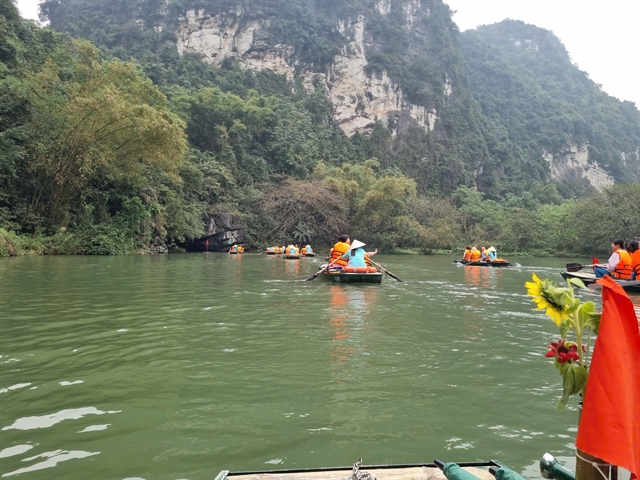
| Tourists are ready to explore a cave during a boat tour through the Tràng An tourism site in Ninh Bình Province. — VNS Photo Vân Trang |
In the more positive scenario, if the global situation is stabilised quickly, conflicts controlled and support measures effectively implemented, the sector can strive to achieve the Government-assigned targets of 25 million foreign visitors, 150 million domestic tourists and total revenue of VNĐ1.12 quadrillion.
Under a more negative scenario involving a prolonged geopolitical conflict, continuous global economic decline or the emergence of natural disasters and epidemics, the sector is projected to reach approximately 22.5 million international arrivals and 130 million domestic tourists.
In the latter case, Việt Nam would welcome about five million foreign visitors and 35 million domestic tourists in the second quarter, while in the third quarter these figures would reach approximately 4.8 million and 35 million, respectively.
The country would welcome about 5.9 million foreign and 23 million domestic visitors in the fourth quarter under the more negative scenario.
Meanwhile, in the longer term VNAT has developed three growth scenarios over the next five years through 2031.
The most conservative scenario projects an increase in international visitors of approximately 8-10 per cent per year, reaching around 35-38 million visitors by 2030.
A more typical or 'fundamental' scenario targets an increase of 12-15 per cent per year, aiming for 40-45 million foreign visitors by 2030.
Finally, the most positive long-term scenario sees breakthroughs in visas, aviation and digital transformation. Foreign visitors could increase by 15-18 per cent per year, with the industry striving to reach 45-50 million arrivals by 2030.
To realise these objectives, Khánh said the whole sector must focus on implementing tasks in the short, medium and long term.
|
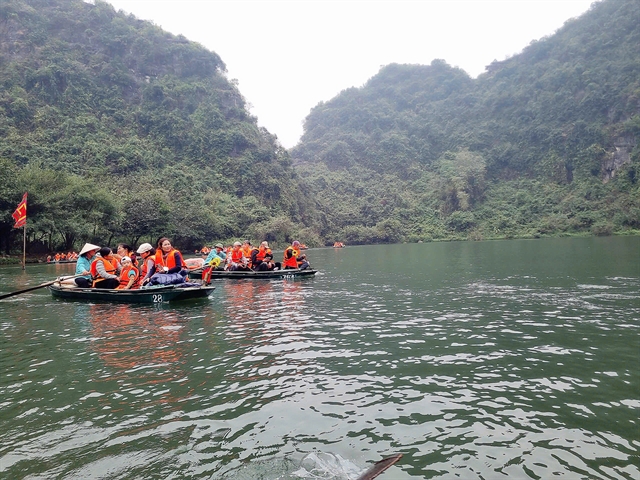
| A boat tour through the famous Tràng An tourism complex in the northern province of Ninh Bình. — VNS Photo Vân Trang |
In the short term, VNAT has vowed to continue reviewing the implementation of the Politburo's Resolution 08 on developing tourism into a key economic sector and the Government's Resolution 82 on accelerating tourism recovery and development effectively and sustainably.
At the same time, it should also focus on carrying out Prime Minister's directives and instructions, as well as accelerating the amendment of the 2017 Tourism Law, amending related decrees and finalising the plan to develop tourism into a key economic sector in the new era.
Priority will also be placed on improving visa policies to make them more convenient and flexible for potential markets and high-spending visitor segments. VNAT also recommends launching nationwide tourism stimulus programmes and establishing Vietnamese tourism promotion offices in key overseas markets.
In the medium and long term, the sector will continue to improve institutional operations, develop infrastructure, link products, strengthen digital and green transformation, enhance effective State management and encourage the competitiveness of tourism businesses.
According to the VNAT director, Việt Nam lacks large-scale businesses to compete globally.
Around 4,000 international travel businesses are currently operating in the country, but over 90 per cent of them are small and micro-enterprises, Khánh said.
At a recent working session with VNAT, Deputy Minister of Culture, Sports and Tourism Hồ An Phong said the tourism sector has recently emerged as a bright spot in the country’s socio-economic landscape, playing a pioneering role in driving recovery.
However, as it enters a new development phase, the scope for extensive growth is narrowing, requiring a fundamental shift in mindset, governance and approaches to targets.
“In the initial period after the COVID-19 pandemic, high growth rates were expected due to a low base and strong market rebound. But as the sector expands, maintaining high growth becomes much more difficult. Growth must increasingly rely on quality, efficiency and real value added,” he said.
In this context, the sector can no longer focus solely on visitor numbers, but must shift towards economic contribution, growth quality and overall efficiency. The key is not just how many visitors arrive, but how much they spend and how long they stay.
Focus must also be placed on examining how tourism benefits other sectors, its contribution to GDP and the sustainability of tourist destinations.
The industry needs to restructure its products towards high-quality goods, increase the proportion of 4- and 5-star accommodation and develop premium resort products, high-quality entertainment, specialised tourism transport and value-added services.
Phong highlighted the clear effectiveness of open and flexible visa policies, describing them as a key lever for market expansion.
However, he stressed that any proposal to broaden visa policies must be carefully prepared, with detailed impact assessments for each market segment and each level of visa exemption, to ensure practical effectiveness and a good foundation to advise the Government.
Việt Nam has gradually expanded its tourism promotion into regions including South America, South Asia and emerging markets.
India is growing exponentially and the Russian market is recovering rapidly, while East Asia remains a core source of international arrivals.
Amid global uncertainties, prioritising nearby markets with strong recovery potential and convenient connectivity is considered an appropriate strategy. — VNS
Life & Style
 Life & Style
 Life & Style
 Life & Style
 Life & Style
 Life & Style
 Life & Style
 Life & Style
 Life & Style
 Life & Style
 Life & Style
 Life & Style
 Life & Style
 Life & Style
 Life & Style