 Life & Style
Viettel’s Unitel in Laos a symbol of Việt Nam-Laos friendship: Prime Minister
1.
|
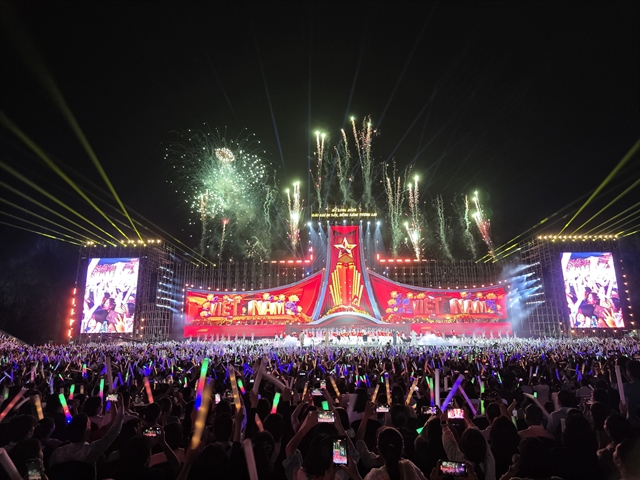
| The Hạ Long Concert 2025 attract more than 30,000 attendees. — VNA/VNS Photo Thanh Vân |
QUẢNG NINH — Transforming large-scale concerts into distinctive tourism products is not only an economic challenge but also a solid step towards affirming Quảng Ninh position as a hub for cultural industries linked with the heritage of the mining region.
The northern coastal province is advancing a development model that integrates cultural industries with heritage economy and sustainable tourism.
Transformation in mindset
With a breakthrough mindset and strategic vision, Quảng Ninh is concretising the Politburo’s Resolution No. 80-NQ/TW on the development of Vietnamese culture through practical actions. With the goal of making culture a solid spiritual foundation and an endogenous driving force, Quảng Ninh has chosen to develop cultural industries closely linked with heritage-based economy and sustainable tourism.
Guided by the Politburo’s Resolution No. 80-NQ/TW on the development of Vietnamese culture, Quảng Ninh is translating cultural development policies into concrete actions, with a focus on integrating cultural industries, heritage-based economy and sustainable tourism.
The province aims to build culture as a core driving force of development, with cultural industries and the creative economy contributing around 9 per cent of GRDP by 2045.
Vice Chairwoman of the provincial People’s Committee Nguyễn Thị Hạnh said the locality is developing a modern cultural ecosystem where people are at the centre and serve as both the subject and driving force of development; and cultural values are embedded across all aspects of society, contributing to improved governance and public well-being. The province also targets becoming a regional cultural and artistic hub and an attractive destination in Asia and the world.
Quảng Ninh also plans to allocate at least 2 per cent of its annual budget to culture and promote stronger public–private investment in modernising cultural infrastructure.
Innovation in heritage tourism development
In 2025 and early 2026, the province hosted a series of large-scale concerts, including Hạ Long Concert 2025, Quảng Ninh – Heroic Mining Land, Countdown 2026, attracting tens of thousands of spectators per event. Most tickets were offered free to residents and visitors.
Each concert is designed as a cultural narrative reflecting Quảng Ninh’s history, cultural identity, and people. Events such as “Quảng Ninh – Heroic Mining Land” marking the 89th anniversary of the traditional day of mine workers and the coal-mining sector, music served as a bridge connecting the heroic past of miners with the rhythms of modern life.
Director of the provincial Department of Culture, Sports and Tourism Nguyễn Việt Dũng said the concerts have drawn large numbers of domestic and international visitors, while staging events by Hạ Long Bay has created a unique cultural space, where the values of the World Natural Heritage site are celebrated through modern sound and lighting technology, as well as boundless artistic creativity.
To transform concerts into sustainable tourism products, local authorities have demonstrated professionalism in operations. The entire ticket registration system has been digitised with QR code verification, combined with cross-checking through citizen identification cards and the VNeID application to prevent fraud and ensure fairness for audiences.
Quảng Ninh is also strengthening human resources, with a target that 80 per cent of cultural officials will be trained in digital transformation and cultural industry by 2026. This has helped build confidence among cultural investors and major artists in choosing Quảng Ninh as a destination for their performance tours.
A key highlight in implementing Resolution 80 is Quảng Ninh’s commitment to financial resources. The locality plans to allocate at least 2 per cent of its annual state budget expenditure to the cultural sector, with gradual increases in line with practical needs. This serves as an important “lever” for implementing major initiatives such as projects for developing heritage economy and night-time economy, enhancing the value of Hạ Long Bay heritage.
Looking ahead, the province aims to attract 22 million tourists in 2026 and become a leading cultural and artistic destination in Asia by 2030. Upcoming events, including the Thanh Âm Kỷ Nguyên Mới (Sound of a New Era) concert, are expected to further boost tourism ahead of the summer season.
Quảng Ninh is not simply hosting events to increase visitor numbers, but building a cultural ecosystem where heritage becomes a resource, art becomes a driver, and tourism serves as a bridge to global audiences, Hạnh stated. — VNA/VNS
Life & Style
 Life & Style
 Life & Style
 Life & Style
 Life & Style
 Life & Style
 Life & Style
 Life & Style
 Life & Style
 Life & Style
 Life & Style
 Life & Style
 Life & Style
 Life & Style
 Life & Style