 Life & Style
Businesses struggle to retain talent in the age of AI
1.
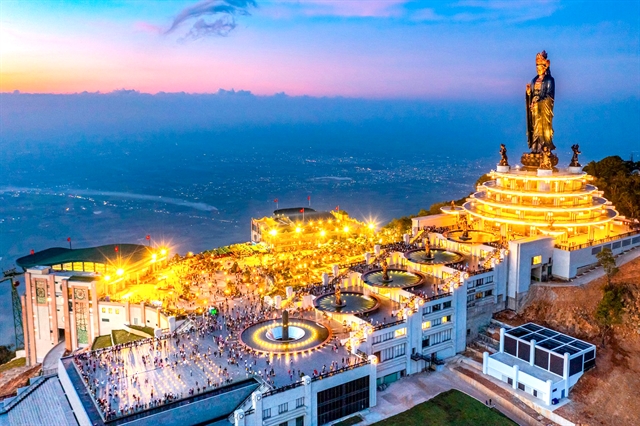 |
| Tây Ninh is diversifying its offerings and accelerating digital transformation, with the aim of welcoming 10 million visitors in 2026. — Photo baobinhphuoc.com.vn |
TÂY NINH — Tây Ninh province is stepping up efforts to develop cultural tourism by diversifying products, enhancing digital transformation and strengthening regional linkages, aiming to welcome 10 million visitors by 2026.
The southeastern province is gradually reinventing itself on Việt Nam’s tourism map by diversifying its offerings and accelerating digital transformation, with the aim of welcoming 10 million visitors in 2026.
In this strategy, enhancing promotion and strengthening linkages in the development of cultural tourism products has been identified as a central direction, providing momentum for the province to break through and elevate its standing as a destination.
New experiences
To realise its vision of sustainable cultural tourism development, Tây Ninh is focusing on renewing its products, improving the quality of visitor experiences, and fostering seamless connections between cultural, historical and natural values.
According to the provincial Department of Culture, Sports and Tourism, a key priority is the development of distinctive tourism products, with “spiritual culture” and “historical culture” as core pillars.
In particular, the Bà Đen Mountain National Tourist Area is now positioned as a “new symbol of Việt Nam’s spiritual tourism”, linked with the Cao Đài Holy See and a network of historical and cultural sites to form a cohesive experience chain.
At the same time, the province is promoting indigenous cultural values such as the Chhay-dăm drum dance, đờn ca tài tử, bóng rỗi performances, and traditional festivals recognised as national intangible cultural heritage.
These efforts contribute to offering visitors a continuous journey from spiritual exploration to cultural and historical discovery.
In addition, “back-to-the-roots” tourism and educational tours are being further developed, with highlights including the Special National Relic Site of the Central Office for South Việt Nam, combined with the natural ecosystem of Lò Gò–Xa Mát National Park.
Here, the integration of historical experiences with modern technologies, such as sound and light effects and 3D mapping, brings history to life, making it more engaging and accessible, particularly for younger audiences.
Trần Minh Quân, a visitor from Hồ Chí Minh City, expressed his impression of the renewed approach at heritage sites: “The use of technologies such as light shows, sound and visual storytelling makes history more vivid and easier to grasp. It reflects a shift in Tây Ninh’s tourism approach, from mere sightseeing to immersive experiences.”
Community-based and green tourism are also being promoted, linked to traditional craft villages such as Trảng Bàng dew-dried rice paper and Tây Ninh chilli salt production, as well as specialised agricultural areas producing custard apples and melons.
These are complemented by natural ecosystems in the buffer zone of Lò Gò–Xa Mát National Park, the Vàm Cỏ Đông River, and the Đồng Tháp Mười (Plain of Reeds) wetlands.
Together, these elements are shaping a diverse tourism ecosystem that harmonises cultural, natural and local life experiences.
Nguyễn Thu Hà, a visitor from Hà Nội, shared that Tây Ninh exceeded her expectations: “It is not only about spiritual tourism. I also visited rice paper craft villages, enjoyed local cuisine and explored remarkably distinctive natural landscapes.”
Alongside product development, Tây Ninh has organised familiarisation and press trips, inviting travel agencies, media outlets, travel bloggers and content creators to experience the destination.
These activities serve as important bridges to promote the province’s tourism image in a vivid and effective manner across modern media platforms.
Nguyễn Thành Thanh, Deputy Director of the provincial Department of Culture, Sports and Tourism, said the sector has devised a plan to stimulate cultural tourism in 2026.
The plan aims to enhance the promotion of the province’s land, people and distinctive cultural identity, thereby strengthening brand recognition while linking economic development with the preservation of historical and cultural values.
The plan is also intended to create early momentum for the tourism sector, contributing to the implementation of targets set out in the provincial Party Congress Resolution for the 2025–2030 term.
Tây Ninh continues to affirm its position as an “impressive spiritual and cultural destination”, with key highlights including the Bà Đen Mountain National Tourist Area, the Cao Đài Holy See and the Special National Relic Site of the Central Office for South Việt Nam.
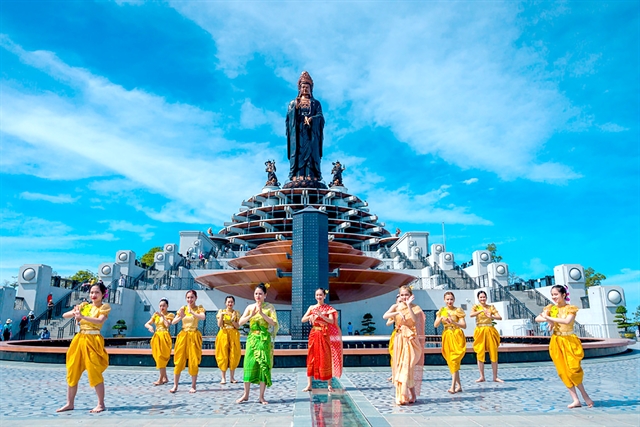 |
| Tây Ninh is famous for the Bà Đen Mountain National Tourist Area. — VNA/VNS Photo |
Digitalising tourism information
Alongside product diversification and experience enhancement, Tây Ninh is accelerating digital transformation as a breakthrough solution to improve promotional effectiveness and boost the competitiveness of its tourism sector.
According to the provincial Department of Culture, Sports and Tourism, in parallel with product development, particular attention is being paid to digital transformation in tourism.
Plans include the continued digitisation of historical and cultural sites, traditional festivals, craft villages and local cuisine, as well as the development of data systems for promotion on digital platforms.
Nguyễn Thành Thanh noted that the application of technology, particularly artificial intelligence (AI), is being stepped up in communication planning and content production across platforms such as websites, TikTok, Facebook and YouTube.
This approach enables the province to reach diverse visitor segments, especially young people and international tourists who increasingly seek information and travel experiences through digital channels.
Digitalisation efforts will continue to be intensified in 2026 under the leadership of the Tourism Promotion Centre, in coordination with relevant agencies.
This is regarded as a key solution to enhance promotional efficiency while laying the groundwork for a smart tourism ecosystem, allowing visitors to easily access information, select services and optimise their travel experiences.
Beyond this, Tây Ninh is strengthening tourism linkages with other localities in the Southeast region, particularly HCM City, to develop inter-regional tours such as the “Green Heritage Route” and “Back-to-the-Roots Border Tourism”.
These connections not only expand tourism space but also add value to products and encourage longer visitor stays.
At the international level, Tây Ninh is actively participating in promotional activities organised by the Tourism Promotion Organisation for Global Cities (TPO), thereby expanding markets, promoting its destination image and enhancing its position on the global tourism map.
With a comprehensive approach encompassing product development, digital transformation and enhanced promotion and linkages, Tây Ninh aims to welcome around 10 million visitors in 2026, including 200,000 international arrivals and 9.8 million domestic tourists, with tourism revenue projected at approximately VNĐ8 trillion (US$326.5 million).
These targets reflect not only ambition but also a strong commitment to making tourism a key economic sector contributing to the province’s sustainable development. — VNS
Life & Style
 Life & Style
 Life & Style
 Life & Style
 Life & Style
 Life & Style
 Life & Style
 Life & Style
 Life & Style
 Life & Style
 Life & Style
 Life & Style
 Life & Style
 Life & Style
 Life & Style