 Life & Style
Việt Nam, Google seek closer cooperation on AI, digital economy
1.
|
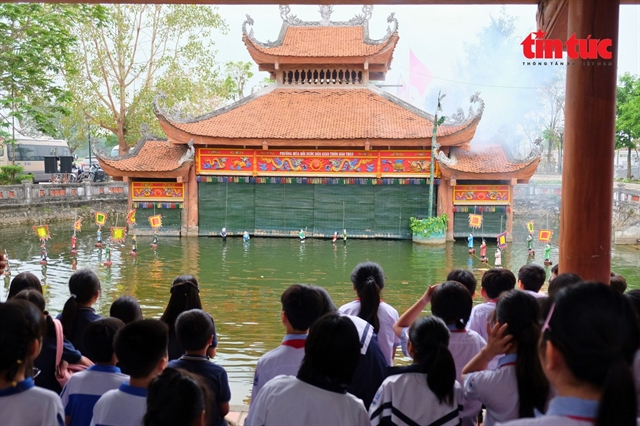
| Students are captivated by the unique water-stage theatre space at Đào Thục village. — Photos baotintuc.vn |
HÀ NỘI — As Việt Nam accelerates its cultural development under Resolution No 80-NQ/TW, innovative models that bridge heritage preservation with creative industry growth are becoming increasingly vital.
At Đào Thục water puppetry village, a pioneering 'complex cultural industry' initiative is offering a compelling example – transforming intangible heritage into high-value cultural products while bringing tradition vividly into modern education.
Rather than treating heritage as something to be preserved behind glass, the model repositions it as a living resource – one that can generate economic value, inspire creativity and deepen cultural identity, particularly among younger generations.
From textbooks to lived experiences
|
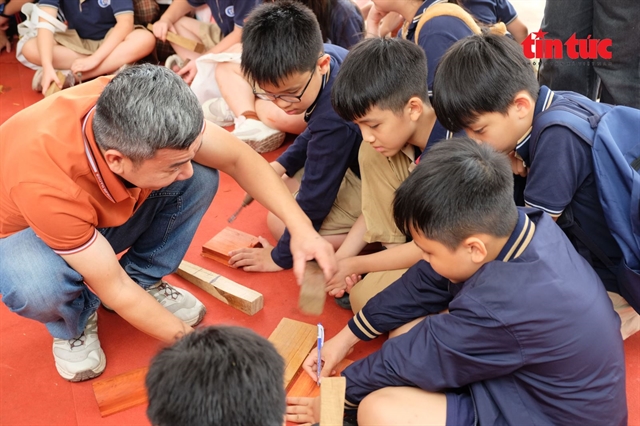
| Students attentively learn how to use traditional wood-carving tools under the guidance of artisans. |
For many students, traditional arts such as chèo (Vietnamese traditional opera with satirical storytelling), ca trù (ceremonial chamber music featuring poetic singing) and tuồng (classical theatre with elaborate costumes and stylised acting) have long existed only in textbooks.
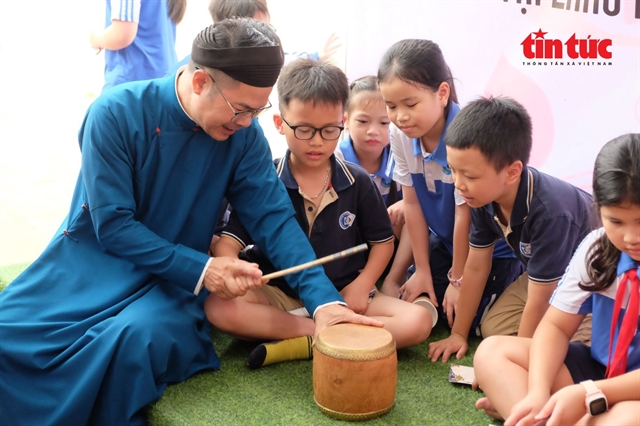
At Đào Thục village in Thụy Lâm Commune, that gap is being bridged through direct interaction. Each water puppetry performance, folk game and craft activity becomes a vivid, hands-on lesson, allowing students to connect knowledge with lived experience.
Nguyễn Bảo Anh, a Grade 3 student from Đoàn Thị Điểm Symphony Primary School, was delighted to find herself immersed in a peaceful rural setting of banyan trees, rice fields and communal houses.
She said she and her classmates had eagerly anticipated the trip from the moment it was announced. Previously, she had only encountered traditional arts through books or classroom lectures. This was her first time watching a live water puppetry show, touching the puppets and experiencing local cultural practices firsthand.
|
| A hands-on experience introduces children to traditional ca trù musical instruments. |
Sharing a similar sense of pride, Đinh Thị Mai Phương, an eighth grader from Thụy Lâm Secondary School, said the programme offered her a deeper understanding of traditions she had grown up around.
While actively participating in activities, she also listened closely to stories about the history of her hometown. For her, the experience underscored the responsibility of younger generations to preserve and promote cultural heritage.
The enthusiasm of students like Bảo Anh and Mai Phương highlights the effectiveness of this experiential approach. When heritage becomes something tangible, appreciation and pride grow naturally.
Reimagining heritage as cultural products
Long regarded as a cradle of traditional performing arts, Thụy Lâm Commune is now embracing innovation to ensure its heritage continues to thrive.
At Đào Thục, the shift from standalone performances to a chain of interactive experiences allows visitors to engage with culture in a more holistic way. The programme unfolds like a journey through layers of local heritage, featuring tuồng performances from Lương Quy, chèo from Vân Hà and ca trù singing from Lỗ Khê, alongside folk games and traditional crafts.
|
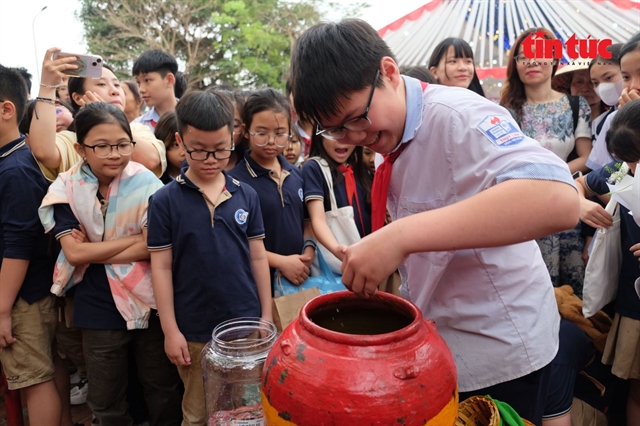
| The folk game of catching loaches in jars sparks curiosity and excitement among students. |
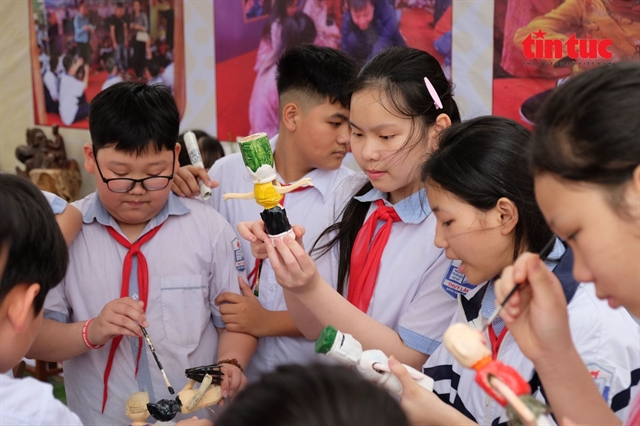
Visitors can try wood carving in Thiết Ứng village, paint water puppets in Đào Thục, or take part in lively folk games such as catching loaches in jars or traditional cooking contests. Through this interconnected system, heritage is elevated into a complete cultural service that meets both educational and recreational needs.
From an educational perspective, principal of Thụy Lâm Secondary School, Đào Xuân Sinh, stressed the importance of experiential learning in heritage education. He noted that the school regularly integrates cultural heritage into lessons, extracurricular activities and school events.
He added that cooperation between the school and local authorities ensures students have frequent opportunities to directly engage with traditional culture. The Đào Thục model, he said, not only enhances knowledge but also helps shape students’ character and foster a deep-rooted love for their cultural origins.
|
| Painting puppets also nurtures children’s interest in visual arts and creativity. |
From a cultural management standpoint, deputy head of the Cultural Heritage Management Division under the Hà Nội Department of Culture and Sports, Bùi Thị Hương Thủy, described the initiative as a practical step in bringing cultural development policies into reality.
She emphasised that the model aims to turn heritage into a shared community asset, enabling local people to both benefit from and actively participate in its preservation. The department, she affirmed, will continue working closely with local authorities to refine and expand the model in the future.
The programme is part of a city-level research project on promoting intangible cultural heritage for cultural industry development in Hà Nội, implemented by the Faculty of Cultural Industries and Heritage under the VNU’s University of Interdisciplinary Studies and Arts.
Its success demonstrates the strong potential of transforming heritage into high-quality tourism and educational products – offering a sustainable pathway for traditional villages like Đào Thục to preserve their identity while adapting to modern life. — VNS
Life & Style
 Life & Style
 Life & Style
 Life & Style
 Life & Style
 Life & Style
 Life & Style
 Life & Style
 Life & Style
 Life & Style
 Life & Style
 Life & Style
 Life & Style
 Life & Style
 Life & Style