 Life & Style
NA President’s visit expected to boost Việt Nam–China ties across multiple fields
1.
 |
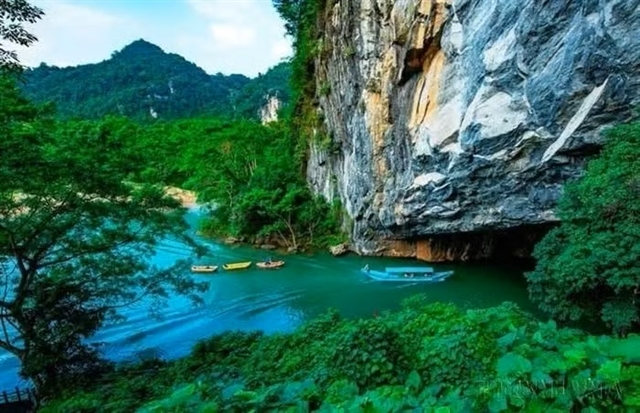
| Established in 2021, the Lạng SơnGeopark features a diverse and rich system of geological heritage.— VNA/VNS Photo |
LẠNG SƠN — Nestled within the Lạng Sơn UNESCO Global Geopark, Hữu Liên Commune has reinvented itself, from a remote and agriculture-dependent area framed by rugged limestone terrain into a fast-rising tourism hub where ethnic communities are seeing steady gains in income and living standards without compromising the environment.
A fresh tourism model in the highlands
Hữu Liên now features more than 250 rock-climbing routes, ranging from 5a for beginners to 9a for elite climbers, drawing young adventurers and international visitors alike. The commune’s “awakening” has turned geological heritage into a durable livelihood for local ethnic groups while preserving its pristine landscape.
The shift began in 2012, when VietClimb founder Jean Verly and international partners identified Yên Thịnh’s potential as comparable to renowned climbing destinations such as Krabi of Thailand and Yangshuo of China. Early routes were established, bolts installed, and a new adventure-tourism pathway opened in what was once a poor mountainous area.
For first-time climbers like Đặng Văn Du, reaching the summit is transformative, an experience he described as pushing past personal limits.
Nguyễn Quang Hòa, Chairman of the Hữu Liên Commune People’s Committee, said the commune spans more than 6,000 ha with a population of 8,042, set among limestone valleys, primary forests and broad grasslands. Its unspoilt scenery has increasingly attracted domestic and international climbing communities. Once labelled one of Lạng Sơn’s poorest upland areas, Hữu Liên is now emerging as a standout destination for eco-, adventure and community-based tourism of Kinh, Nùng, Tày and Dao ethnic residents.
The local tourism ecosystem has expanded rapidly. Hữu Liên now has 37 accommodation facilities offering over 450 rooms and employing more than 650 workers, including around 470 directly serving visitors, an important engine for job creation and income improvement.
A springboard to higher visibility
In 2025, Hữu Liên’s community-based tourism village won two ASEAN Tourism Awards, providing a major boost to its profile and elevating Lạng Sơn’s community-based tourism on national and international maps. The commune is prioritising brand-building to position tourism as a leading economic pillar, targeting 210,000 visitors and VNĐ67.2 billion (US$2.5 million) in revenue by 2030 while anchoring growth to environmental protection and cultural preservation.
Tourism’s ripple effects are spreading. Lê Văn Quý, head of Yên Thịnh hamlet, opened Phú Quý Homestay in 2022, with foreigners making up about 70 per cent of visitors and average spending of VNĐ400,000 per person on lodging, meals and motorbike rentals. His family’s income from tourism has doubled compared with farming, supplemented by guiding services to nearby waterfalls, stream bathing and camping.
Policy support has accelerated the trend. The Lạng Sơn provincial People’s Council's Resolution No. 19/2025/NQ-HDND, dated July 15, 2025, on some policies for promoting community-based tourism and unlocking the geopark’s value for 2025–2030 offers VNĐ100 million per eligible homestay, encouraging broader participation.
Lưu Bá Mạc, Deputy Director of the provincial Department of Culture, Sports and Tourism, said simplified procedures and an estimated annual budget of VNĐ16.6 billion should make the policies easier to access, encouraging businesses and households to invest in tourism projects.
Rock climbing may have sparked the transformation, but demand for accommodation, cuisine, experiences and cultural exchange has since fostered a mutually reinforcing community-based tourism ecosystem, opening a sustainable pathway out of poverty for ethnic minorities and offering a replicable model for other mountainous regions.
Residents are also receiving training in cooking, hospitality, food safety, fire prevention, guiding skills and foreign languages, alongside upgrades to roads, signage and climbing – trekking maps to improve safe access.
Lương Duy Doanh, Director of Fivestar Travel, said the ASEAN Awards act as a powerful calling card boosting Hữu Liên’s visibility while raising the bar for quality and sustainability. Eco-tourism, he noted, endures only when it delivers distinctive, locally rooted products through professional and long-term approaches, rather than short-term or overly commercial ones. — VNA/VNS
Life & Style
 Life & Style
 Life & Style
 Life & Style
 Life & Style
 Life & Style
 Life & Style
 Life & Style
 Life & Style
 Life & Style
 Life & Style
 Life & Style
 Life & Style
 Life & Style
 Life & Style