 Life & Style

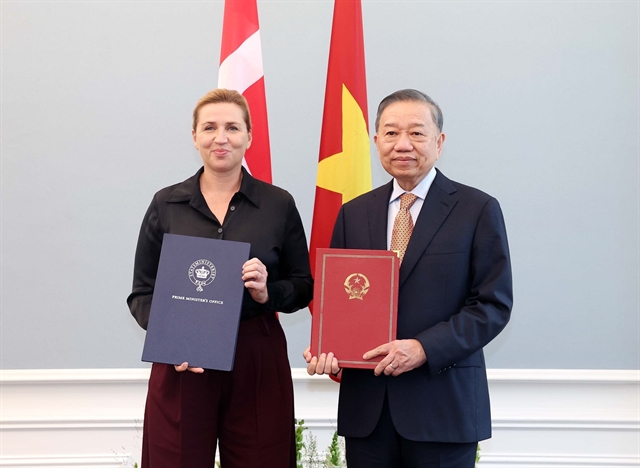
Việt Nam, Denmark issue joint statement on establishment of Comprehensive Strategic Partnership
1.
Dr Kenta Sugiura*
Yến is a two-month-old girl who had no specific issues at birth yet when Yến was one month old, her poo turned greyish-white. However, she was breastfeeding well and gaining weight, so her mother chose not to take her to a doctor.
One day, Yến became irritable and vomited several times, prompting her mother to take her to Family Medical Practice (FMP). The mother informed the paediatrician of her medical history, including her poo colour. The doctor immediately ordered an IV line, blood tests and the administration of vitamin K. In addition, an abdominal ultrasound and a head CT scan were conducted to determine the cause, and Yến was transferred to a children’s hospital.
Poo colour is a good indicator of a child's health!
The baby’s poo colour is one of the signs that can indicate a specific illness. Therefore, it is essential to understand what normal poo looks like.
The first poo passed within 48 hours of birth, known as meconium, is sticky and has a greenish-black colour. During the breastfeeding period, poo gradually shifts from greenish-black to yellow or green, reflecting the colour of bile, a digestive fluid produced by the liver. Occasionally, poo may contain small white particles, which are solidified fat or calcium from breast milk or formula. When the baby starts eating solid foods, poo may shift from green to brown due to the influence of the foods consumed.
In summary, yellow, green and brown baby poo colours are usually not a cause for concern. However, if the poo is primarily white, red or black, it might indicate an underlying condition; please consult a paediatrician.
|
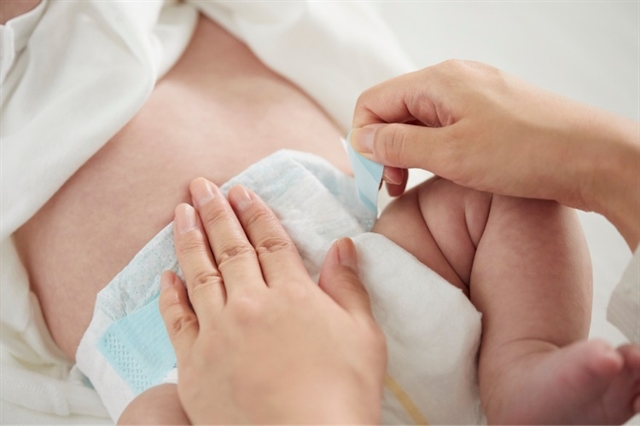
| Changes in a baby’s poocolour can be an early sign of underlying health problems. Photo canva.com |
Watch out for white poo!
White poo, including light beige or grey, is an abnormal baby poo colour and can indicate biliary atresia or liver disease.
Biliary atresia is a condition in which the bile ducts become blocked. When bile cannot flow from the liver to the intestines, the poo appears white and this blockage can also cause jaundice and dark urine. The bile builds up in the liver, potentially leading to liver damage, cirrhosis and even death.
Additionally, the inability to absorb vitamin K due to insufficient bile flow can lead to vitamin K deficiency, increasing the risk of bleeding. Since infants have narrow blood vessels in their brains, this elevates the risk of brain haemorrhage.
White diarrhoea may also be a symptom of gastroenteritis caused by rotavirus. Rotavirus gastroenteritis often causes vomiting and fever and can easily lead to dehydration.
Red or black poo could mean bleeding in the digestive tract!
Red poo may occur after eating foods like dragon fruit, but it can also indicate bleeding in the digestive tract. This abnormal baby poo colour could result from haemorrhoids, Meckel's diverticulum or bacterial enteritis. Additionally, if a child becomes fussy every 15-20 minutes and passes red poo resembling strawberry jam, this may indicate intussusception, where one part of the intestine folds inside another. In this case, it is essential to return the intestine to its normal position as quickly as possible, preferably within six hours.
Black poo can be caused by taking iron supplements, but like red poo, it may also indicate bleeding in the digestive tract. If bleeding occurs in the stomach or duodenum, the blood oxidises due to stomach acid, resulting in poo that appears blackish.
Fortunately, Yến only suffered a mild brain haemorrhage that did not require surgery. After an entire examination at the children’s hospital, she was diagnosed with biliary atresia and surgery was scheduled to be performed immediately once the effects of the bleeding had subsided. Yến managed to survive, but if she had been taken to the hospital when her baby poo colour first turned white, treatment could have been administered before the brain haemorrhage occurred.
Some diseases can be detected based on the baby’s poo colour. So when changing your baby’s nappy, please pay attention to the colour of the poo. If you notice anything concerning your child, including the poo colour, please consult a paediatrician. Family Medical Practice

|
| Dr Kenta Sugiura. Photo courtesy of Family Medical Practice |
*Dr Kenta Sugiura is a Japanese paediatrician at Family Medical Practice Hanoi. Specialising in pediatric emergencies, he is capable of providing care for conditions ranging from mild to severe, including illnesses and injuries. Please feel free to consult him about any concerns regarding your child's health.
FMP Healthcare Group operates medical centres in major cities, including HCM City, Hà Nội and Đà Nẵng, offering consultations with international doctors, check-up centres and emergency ambulance services.
Visit FMP Hanoi 24/7 at 298I Kim Mã Street, Ngọc Hà Ward, Hà Nội.
To book an appointment, please call (024) 3843 0784, or contact via WhatsApp, Viber or Zalo on +84 944 43 1919, or email hanoi@vietnammedicalpractice.com.
Life & Style
 Life & Style
 Life & Style
 Life & Style
 Life & Style
 Life & Style
 Life & Style
 Life & Style
 Life & Style
 Life & Style
 Life & Style
 Life & Style
 Life & Style
 Life & Style
 Life & Style