 Life & Style
Greening Hà Nội's streets
1.
|
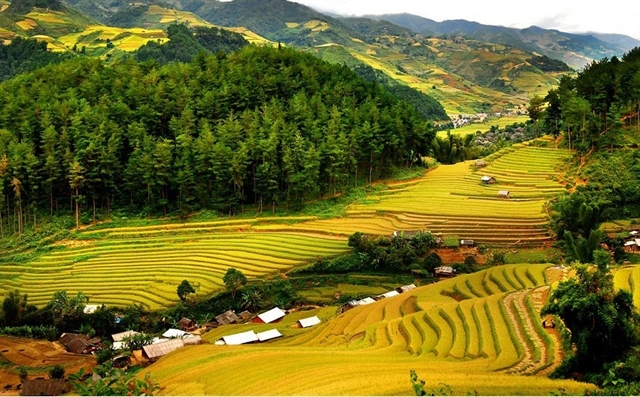
| Mai Châu during the golden rice season. — Photo maichauhideaway.com |
PHÚ THỌ — Tourism meets tradition in Mai Châu Village, where stilt houses, brocade weaving and xòe dances welcome visitors while preserving centuries-old ethnic culture.
Cultural assets drive tourism
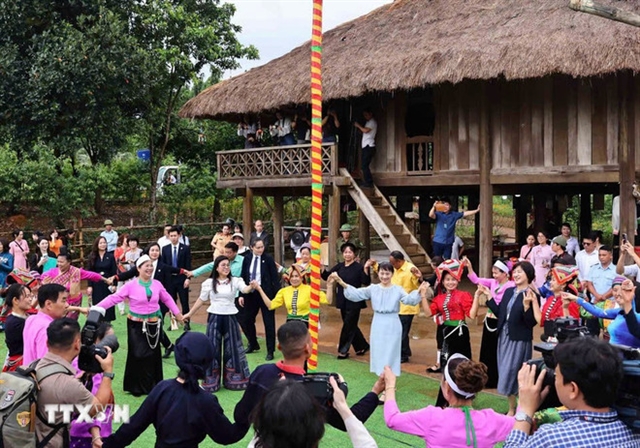
Located in a valley in the northwest, Mai Châu attracts tourists with its stilt houses, traditional xòe dances and brocade weaving. The place, now under Phú Thọ Province, is home to seven ethnic groups, of which the Thái account for nearly 60 per cent. Their cultural practices remain central to the local tourism brand.
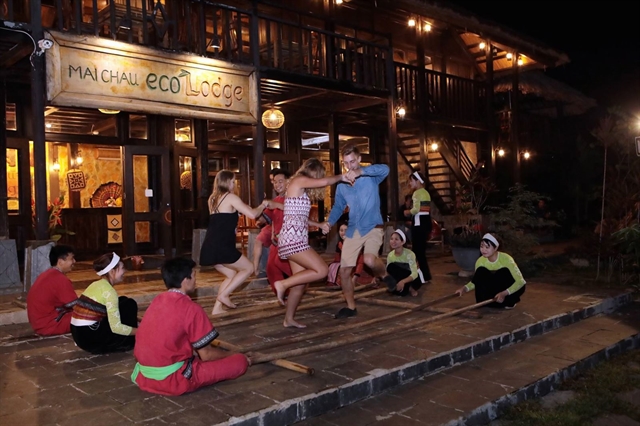
Visitors to Mai Châu can experience cơm lam (bamboo-tube rice), weaving demonstrations, gong performances and traditional lullabies. These activities help promote understanding of ethnic culture and generate income for local households.
Brocade weaving is one of the district’s strongest cultural assets, with more than 300 active looms providing employment for hundreds of workers. Festivals such as Chá Chiêng, Xên Mường and Gầu Tào are organised annually to maintain community traditions and strengthen cultural continuity.
Key destinations include Lác, Pom Coọng, Văn, Hang Kia and Pà Cò hamlets, which have become familiar stops for domestic and international tourists. Lác Hamlet, with more than 700 years of history, is known for maintaining its stilt houses, traditional clothing and customs.
In the first six months of this year, Mai Châu welcomed 471,640 visitors, including 187,530 international tourists, earning VNĐ565 billion (more than US$22 million) in tourism revenue. The district currently has 203 accommodation establishments, including 158 community-based homestays concentrated in major tourist villages.
|
| Visitors experience traditional cultural activities of the Thái ethnic community in Mai Châu. — Photo cattour.vn |
Addressing challenges to ensure sustainable development
Despite positive growth, Mai Châu faces several challenges. Homestay quality is inconsistent, tourism products are often repetitive and transport infrastructure in highland areas remains limited. In some villages, mixed or non-authentic cultural performances have been introduced, raising concerns about cultural dilution.
According to Ngần Văn Tuấn, deputy head of the district’s tourism steering committee, Mai Châu needs to diversify its tourism products and improve competitiveness. The district is expanding eco-tourism and agricultural tourism while strengthening connections with the OCOP programme to highlight regional strengths.
Human resources also require improvement, as many local tourism workers lack professional skills. Training in hospitality services, foreign languages and tourism management is being prioritised to meet rising visitor expectations.
To support long-term development, Mai Châu is reviewing its planning and focusing on high-value, environmentally friendly projects that create jobs for residents. Projects with slow progress will be revoked to attract more capable investors.
Local authorities are also working to develop branded tourism products such as brocade, ethnic cuisine and organic agricultural goods. Training programmes for commune officials, homestay owners and cultural groups aim to ensure that tourism development remains aligned with cultural preservation.
Promotion activities continue under the slogan 'Mai Châu – a friendly, safe and attractive destination.' Enterprises are encouraged to contribute to heritage restoration, preserve intangible cultural values and link tourism with new rural development programmes. Craft villages are supported through access to capital, supply-chain connections and market expansion.
The main challenge for Mai Châu is balancing development with cultural preservation. Local authorities emphasise the need to maintain traditional elements such as stilt houses, ethnic festivals and handicrafts while ensuring tourism growth.
As Mai Châu continues to refine its planning and improve service quality, the district aims to maintain its cultural identity as the foundation for sustainable tourism. — VNS
Life & Style
 Life & Style
 Life & Style
 Life & Style
 Life & Style
 Life & Style
 Life & Style
 Life & Style
 Life & Style
 Life & Style
 Life & Style
 Life & Style
 Life & Style
 Life & Style
 Life & Style

.jpeg)



