 Life & Style
Việt Nam gives top priority to relations with Laos: PM
1.
|
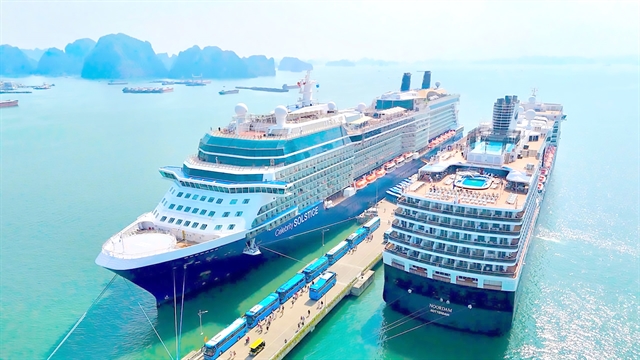
| Cruise tourism is considered a “gold mine” for Việt Nam’s tourism industry. — Photo daidoanket.vn |
HCM CITY — With plans to build three international passenger ports by 2030, HCM City aims to unlock the vast potential of cruise tourism, a “gold mine” that could cement its position as Việt Nam’s premier gateway for high-spending international travellers.
Each year, hundreds of thousands of cruise passengers disembark in HCM City and other destinations across Việt Nam, bringing with them impressive spending power.
Between 2026 and 2030, HCM City plans to invest in three international passenger ports in the former Vũng Tàu area and Khánh Hội to develop cruise tourism and better welcome international visitors.
Cruise tourists with deep pockets
“Cruise passengers have long been a major source of visitors for HCM City’s tourism sector. At Saigontourist alone, they account for nearly 60 per cent of our international clientele each year, with weeks when we receive up to two or three large ships,” Đoàn Thị Thanh Trà, deputy general director of Saigontourist Travel Service Company, said.
Although the city does not yet have a dedicated cruise terminal like Singapore, it still attracts international cruise lines thanks to the use of existing deep-water ports, particularly in the Cái Mép area. Passengers are transferred to the city centre to join sightseeing tours.
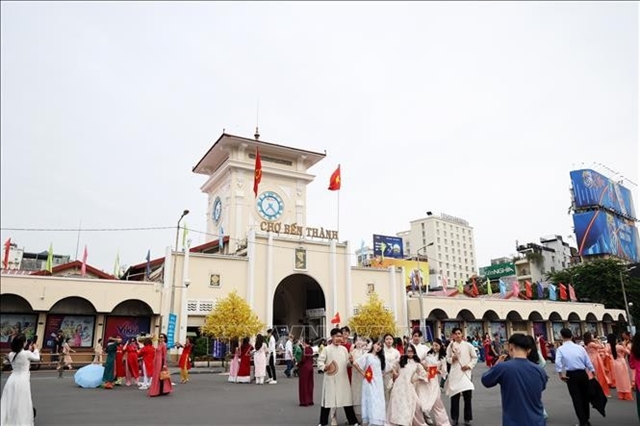
“There are cruises carrying large numbers of tourists from China, Taiwan and Hong Kong. When they arrive in HCM City, up to 40 buses head straight from the port into the city centre, enough to ‘clear out’ Bến Thành Market in no time. Sometimes, stallholders have nothing left to sell,” Trà recalled, highlighting the strong spending habits of cruise tourists.
According to her, these visitors not only generate revenue for the service sector but also play a key role in promoting HCM City’s image on the global tourism map. Being chosen as a stop on major cruise itineraries is already a significant advantage.
However, the lack of a dedicated cruise port remains a limitation, preventing the city from fully capitalising on this lucrative market, a concern that local tourism enterprises have voiced for years.
Officials from the Department of Tourism acknowledged that the Cái Mép-Thị Vải area is primarily a cargo port, not yet zoned for passenger use. To accommodate international cruise ships, the city needs more time to complete infrastructure, train personnel and streamline service procedures.
According to the Prime Minister-approved plan, Cái Mép Port is designated as an international gateway and transshipment hub, while Thị Vải Port will serve regional socio-economic development.
The Ministry of Construction has allowed the continued reception of international cruise ships at selected terminals in the Cái Mép-Thị Vải area until June 30, 2026, giving HCM City time to improve facilities and prepare for stable international cruise operations thereafter.
Following the city’s directive, the Department of Construction is coordinating with relevant agencies to propose priority investment projects for waterway transport, including an international passenger port.
A pre-feasibility report has been submitted for the proposed Vũng Tàu International Cruise Port project, designed to meet the growing demand for sea transport and tourism.
In general, cruise passengers spend only one to two days at each port of call, unlike air travellers who may stay longer.
Yet in Việt Nam, cruise itineraries often extend over four to five days, as journeys typically run from HCM City to central and northern regions, and passengers spend generously along the way.
Cruise tourism is therefore considered a “gold mine” for Việt Nam’s tourism industry.
|
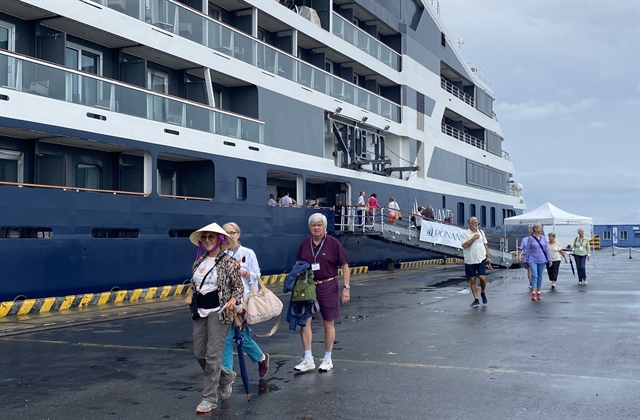
| HCM City remains the country’s most frequent port of call, largely due to cruise routes. — Photo baochinhphu.vn |
Positioning Việt Nam on the global cruise map
Việt Nam already has several cruise ports along its coastline.
In the North, Hạ Long International Passenger Port in Quảng Ninh welcomes visitors touring Hải Phòng and Hà Nội.
In central Việt Nam, ships often dock at Chân Mây in Huế or Tiên Sa in Đà Nẵng, gateways to Huế, Đà Nẵng and Hội An, which are all well-known names on the international cruise circuit.
Yet HCM City remains the country’s most frequent port of call, largely due to cruise routes.
Most ships from the US and Asia operate 30- or 60-day regional itineraries, typically entering Việt Nam from the South. To reach northern ports such as Hạ Long, vessels must pass through Hong Kong or China first, fitting different schedules.
As a result, HCM City serves as the “gateway” introducing cruise visitors to Việt Nam’s dynamic urban culture, cuisine and lifestyle.
To ensure smooth international cruise operations after 2026, the city is preparing pilot plans for the Cái Mép-Thị Vải area through June 2026, while considering upgrades to add passenger functions at existing ports.
“The industry’s biggest wish is for HCM City to have a dedicated cruise terminal designed to serve this unique market, from customs procedures and ground services to premium visitor experiences that meet international standards. With a professional port, we could fully unlock the enormous potential of this market,” said a Saigontourist representative.
However, another travel company representative cautioned that six months, or even a year, is too short to develop a viable cruise business plan, as everything depends on the long-term sales strategies of international cruise lines.
“This is not a market where you can sell today and stop tomorrow. Sudden changes create major risks for both local and foreign partners,” he said.
Dr Justin Matthew Pang, head of Tourism and Hospitality Management at RMIT University Việt Nam, noted that Việt Nam possesses one of the most attractive coastlines in Asia that is well-connected within the region’s cruise network.
The market includes large numbers of travellers from South Korea, Singapore, Japan and India, affluent groups seeking high-end experiences and cultural discovery.
However, he warned that Việt Nam faces tough competition from destinations such as Singapore, Hong Kong and Thailand, which already operate professional cruise ports with standardised services and refined experiences tailored for cruise passengers.
“If Việt Nam can build a strong cruise tourism brand, streamline service procedures and invest strategically, it has every chance of becoming a new star on the global cruise tourism map,” Dr Pang emphasised. — VNS
Life & Style
 Life & Style
 Life & Style
 Life & Style
 Life & Style
 Life & Style
 Life & Style
 Life & Style
 Life & Style
 Life & Style
 Life & Style
 Life & Style
 Life & Style
 Life & Style
 Life & Style