 Economy

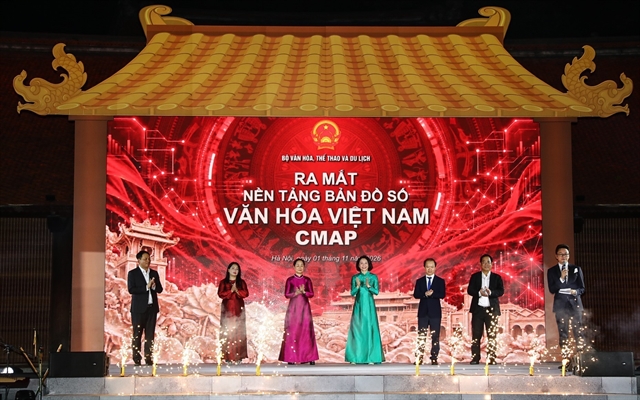
Digital cultural map launched to celebrate Vietnam Culture Day
1.
|
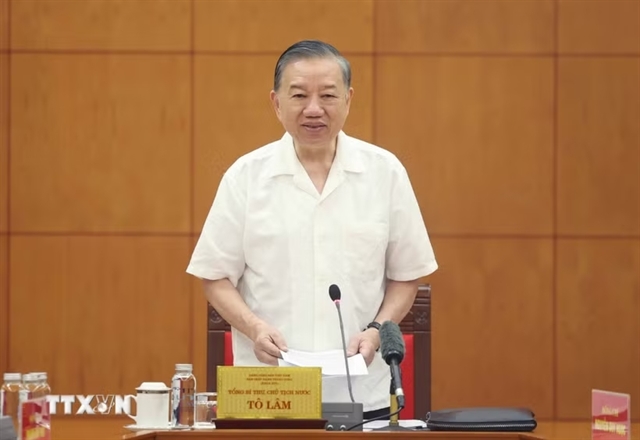
| General Secretary and President Tô Lâm speaks at the meeting. VNA/VNS Photo |
HÀ NỘI — General Secretary and President Tô Lâm on Monday noted the need to shift from developing logistics services toward building national logistics capacity, with an aim of transforming Việt Nam into a key regional and global hub for logistics, transshipment and the distribution of goods.
Chairing a meeting with the Government's Party Committee and relevant agencies to discuss the development orientation for national logistics and logistics infrastructure, Lâm said that logistics development is not merely an issue for a single economic sector. Rather, it concerns the organisational, connectivity and operational capabilities of the entire economy.
It is directly linked to national competitiveness, economic autonomy, resilience and the requirements for ensuring national defence and security, he said.
As the nation pursues a double-digit growth target, logistics must serve as a genuine driver of growth, boosting productivity, reducing costs, expanding the scope for development and unlocking new sources of economic expansion, according to Lâm.
Logistics development must be integrated into the overarching national development strategy, guided and coordinated at the Government level, he said. It cannot be left to a single ministry, sector or individual locality to manage in isolation.
There must be a clearly defined coordinating authority, well-delineated responsibilities for relevant agencies and established mechanisms to address systemic issues, ensuring that the entire framework operates with true efficiency.
Lâm underscored the necessity of having the ambition and determination to transform Việt Nam into a major regional and global hub for logistics, transshipment and goods distribution. This requires a proactive approach to organising and tapping into international cargo flows, not only to support Việt Nam’s own import-export activities, but also to attract goods from other nations for transshipment, warehousing, distribution and the provision of value-added services within Việt Nam.
The country must deepen its involvement in the organisation of regional and global supply chains, converting its geographical advantages into competitive strengths, development resources and a stronger international economic standing. This objective must be concretised through the establishment of logistics centres, trade gateways and international transport corridors that possess genuine competitiveness, carried out via appropriate roadmaps and phased steps.
The goal is to develop a unified, integrated and modern national logistics network, aligned with the reorganisation of the economic landscape and international connectivity. This network should leverage the specific advantages of each region and locality within the broader national framework, while overcoming issues such as fragmented investment, poor connectivity and development constrained by administrative boundaries.
Science, technology, innovation, digital transformation and green development will serve as key catalysts for the modernisation of Việt Nam’s logistics sector, gradually establishing digital and green logistics as a new competitive advantage for the nation.
Policies are needed to encourage the formation of large Vietnamese logistics firms with the capacity to organise international supply chains, transport, transshipment and distribution, while providing integrated, high value-added services, according to the top leader.
He also noted the need to perfect the national logistics network plan based on a multi-hub model. Criteria for selecting the locations and scales of logistics centres should be established, taking into account connectivity advantages, cargo sources, production regions, markets, land availability and investment efficiency. Logistics centres should be categorised according to national level, regional level or specialised hubs.
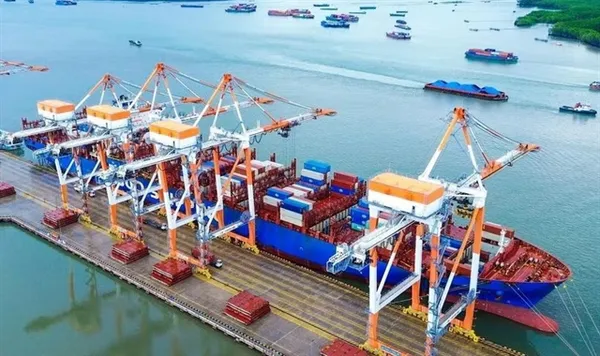
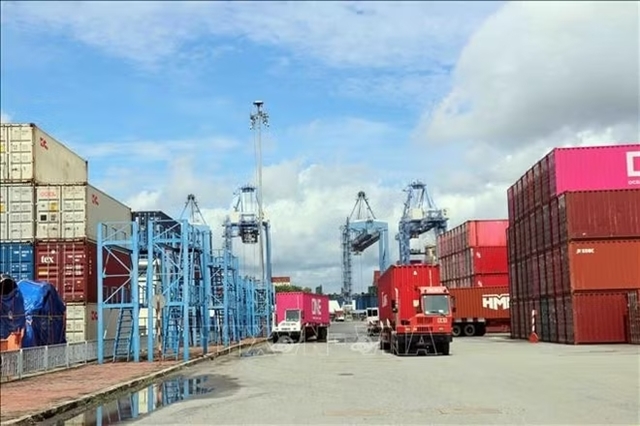
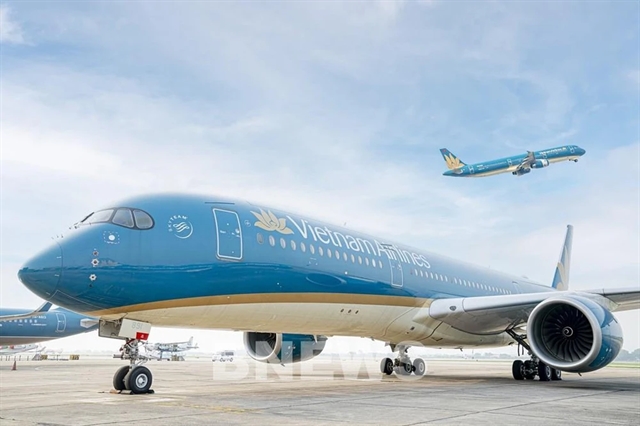
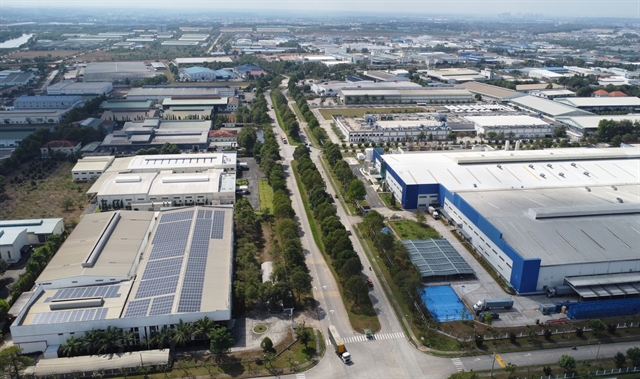
Logistics infrastructure and networks should be developed along economic corridors, prioritising the connection of seaports, airports, cargo terminals and border crossings with industrial zones, production areas and consumer markets.
Aside from promoting digital transformation and the creation of shared logistics data, Lâm called for the development of green logistics and the strengthening of supply chain resilience. — BIZHUB/VNS
Economy
 Economy
 Economy
 Economy
 Economy
 Economy
 Economy
 Economy
 Economy
 Economy
 Economy
 Economy
 Economy
 Economy