 Economy


NA Standing Committee to review 35 draft laws, resolutions at 8th session
1.
|
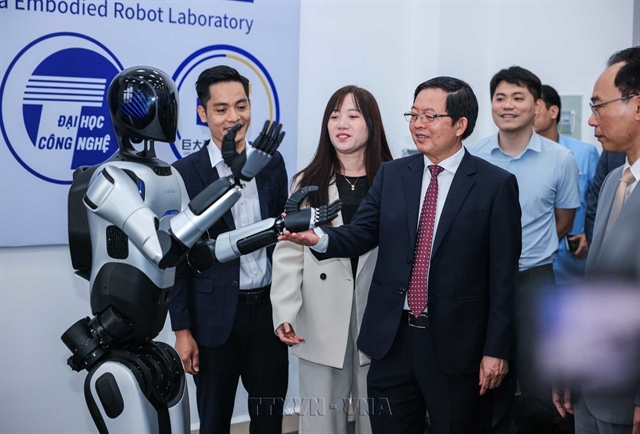
| A humanoid robot interacts with visitors at the Embodied Robot Laboratory of the University of Engineering and Technology, Việt Nam National University Hà Nội. — VNA/VNS Photo |
HÀ NỘI — Hà Nội should selectively invest in universities and establish key laboratories for strategic technologies to strengthen research capacity and encourage businesses to participate in innovation, according to a technology expert.
The proposal is in line with the implementation of Resolution 57-NQ/TW, which identifies science and technology, innovation and digital transformation as key drivers of national development.
Professor Dr Trần Xuân Tú, director of the Institute of Information Technology at Việt Nam National University Hà Nội, said the capital should focus resources on universities with strong research capabilities and develop laboratories that businesses could jointly use to address technological challenges.
Such facilities could help connect academic research with industrial demand, enabling businesses to test technologies and assess their commercial potential before making investment decisions.
In an interview with Việt Nam News, Tú said businesses are generally willing to invest in technologies that could generate immediate profits. However, they might be more cautious about technologies requiring three, five or even 10 years to develop, as the potential returns are less visible.
“Hà Nội should speak with businesses to identify these long-term technological challenges, then develop programmes and invest in research and pilot projects in advance,” he said.
The investment could be channelled through innovation centres or major universities, where researchers and businesses could work together to develop and test technologies.
This approach would help businesses better understand the future potential of technologies they were considering investing in, while allowing universities to align their research with market demand.
Tú also highlighted the need for clearer guidance on accessing the capital’s policies for innovation and technology development.
|
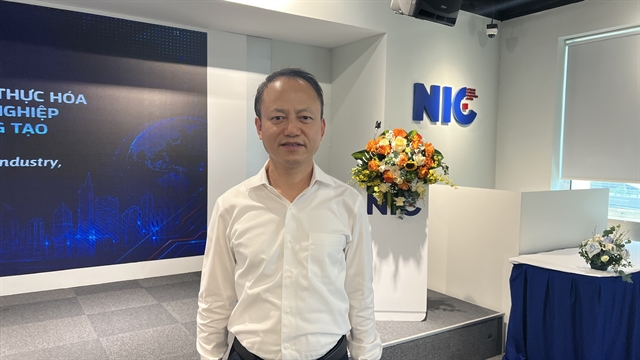
| Professor Dr Trần Xuân Tú, director of the Institute of Information Technology at Việt Nam National University Hà Nội. — VNS Photo Mai Hương |
He said the Capital Law has opened up opportunities for technology development, including controlled testing mechanisms, or sandboxes, for new technologies. However, businesses and research institutions need clearer instructions on how to carry out these policies.
“The next crucial step is to provide guidance for implementation,” he said, noting that even organisations interested in testing new technologies could be uncertain about where to begin and which procedures to follow.
He said stronger cooperation among the State, universities and businesses is essential to building an effective innovation ecosystem.
Businesses should share their practical technological challenges with universities, allowing researchers to focus on problems that industry needs to solve, rather than working separately from market demand.
“The most important thing is to create an environment and trust that enable businesses, universities and the Government to exchange information and cooperate more closely,” he said.
As for personnel, Tú said Việt Nam does not face a major challenge in the quantity of graduates, but rather in the quality of training for core and strategic technologies.
He identified qualified lecturers, modern facilities and laboratories, international cooperation and stronger links between universities and businesses as key factors in improving training quality.
Attracting overseas Vietnamese experts depends not only on financial incentives, but also on providing a research environment where they can pursue their work and create value, he added. — VNS
Economy
 Economy
 Economy
 Economy
 Economy
 Economy
 Economy
 Economy
 Economy
 Economy
 Economy
 Economy
 Economy
 Economy
 Economy