 Economy


AIGS confirms PNJ diamond samples are natural and match declared
1.
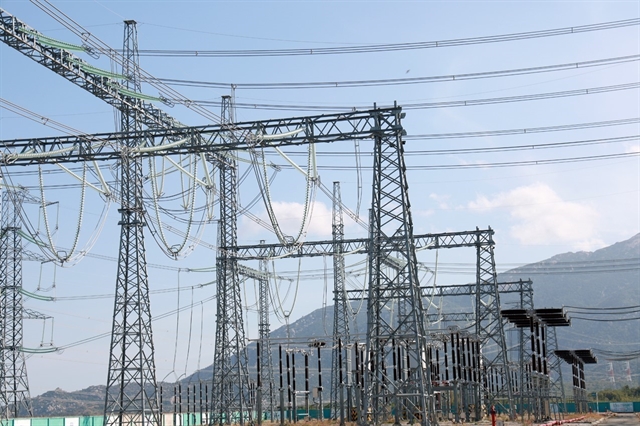 |
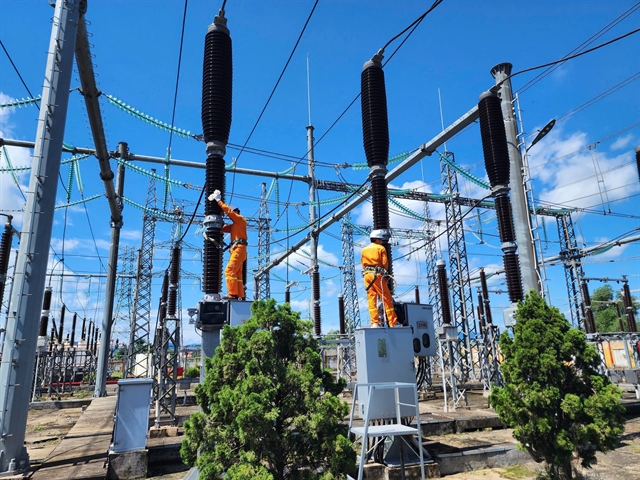
| The 500kW transmission station in Khánh Hòa Province. The Ministry of Industry and Trade plans to separate the country's national power transmission operator from State utility Vietnam Electricity. — VNA/VNS Photo |
HÀ NỘI — The Ministry of Industry and Trade plans to separate the country's national power transmission operator from State utility Vietnam Electricity (EVN) and place it under a ministry body as part of the effort to develop a competitive electricity market.
The proposed restructuring would separate electricity generation, transmission, distribution and retail, Bùi Quốc Hùng, deputy head of the ministry's Electricity Authority of Vietnam, told a press briefing on October 7.
The separation of the National Power Transmission Corporation from EVN is intended to ensure a clearer separation between naturally monopolistic parts of the electricity system and activities that can be opened to competition.
Power transmission and distribution are considered natural monopolies because duplicating networks would be inefficient and constrained by land and infrastructure requirements, while generation and retail can be gradually opened to competition, according to Hùng.
Việt Nam has already separated its National Power System and Market Operator Company from EVN and transferred it to the Ministry of Industry and Trade.
Under a separate EVN restructuring plan, the Government also intends to continue equitising and reducing its stake in five power generation corporations.
The ministry is also considering the establishment of a national strategic power generation corporation, which will initially remain within EVN and could later be separated, according to Hùng. The corporation will operate strategic multi-purpose hydropower plants such as Hòa Bình and Ialy, as well as future nuclear power projects.
Việt Nam also plans to gradually separate electricity distribution from retail operations within EVN's five power corporations.
Distribution costs will first be separated from retail costs, followed over the longer term by organisational and ownership separation.
The distribution companies will then act as competitive buyers in the wholesale electricity market and sell power to end users.
The separation will be carried out in stages to preserve financial capacity of companies, according to Hùng.
Việt Nam has already established a competitive power generation market and has made some progress towards a competitive wholesale market. It is now working to further develop the wholesale market and establish a competitive retail electricity market.
The ministry has submitted to the Government a package of measures aimed at ensuring electricity supply from 2027 to 2030 and plans to further revise the country's eighth Power Development Plan to align generation and grid investment with changing demand.
Việt Nam expects electricity demand to rise further as electric vehicles, data centres and artificial intelligence expand, while changes to the country's local government structure have altered the distribution of economic activity and power demand.
The ministry is also preparing amendments to the Law on Electricity, which it expects to submit to the National Assembly at its meeting beginning on October 17.
It is also preparing measures to manage potential extreme weather and ensure fuel supplies for power generation ahead of the 2027 dry season.
The ministry’s statistics show that total installed generation capacity rose by about 3.5 per cent in the first nine months of this year, below the Government's 6.6 per cent target, reflecting delays in power and grid projects.
Projects had faced obstacles involving investment approvals, land clearance, investor selection, power purchase agreements and electricity pricing, Hùng said.
Electricity generation and imports rose by 9.65 per cent year-on-year to 266.58 billion kWh in the nine-month period.— VNS
Economy
 Economy
 Economy
 Economy
 Economy
 Economy
 Economy
 Economy
 Economy
 Economy
 Economy
 Economy
 Economy
 Economy
 Economy