 Economy



Việt Nam, Singapore promote cooperation through Party-to-Party channel
1.
 |
| By the end of May, the NPL ratio of the entire banking system was 3.43 per cent. — VNA/VNS Photo |
HÀ NỘI — As bank credit expands, experts have warned that controlling financial institutions' non-performing loans (NPLs) will be more challenging in the second half of 2026.
Bank credit increased by over 7.7 per cent in the first six months of the year, creating room to support economic growth.
However, this means that controlling asset quality is becoming a greater challenge for banks, as debt repayment from enterprises and individuals has not yet rallied in the wake of cash flow difficulties and an uneven recovery of the real estate market.
According to the State Bank of Vietnam (SBV), as of June 29, the banking system's total outstanding loans reached approximately VNĐ20.03 quadrillion, an increase of 7.73 per cent compared to the end of 2025.
However, the pace of credit expansion also comes with higher demands for risk management. Many institutions' Q2 2026 financial statements show that their asset quality generally remained within safe limits, but differentiation among the banks has become more pronounced.
The SBV reported that by the end of May, the NPL ratio of the entire banking system was 3.43 per cent. If the five banks under special restructuring are excluded, the ratio was approximately 1.55 per cent.
Adding in loans sold to the Vietnam Asset Management Company but not yet processed, as well as loans with the potential to become NPLs, this ratio skyrockets to approximately 3.9 per cent over the whole system. Excluding the abovementioned five banks, the ratio is approximately 1.74 per cent.
As many banks have recorded a resurgence in NPL ratios, and are simultaneously increasing provisions and handling collateral assets, this development needs to be closely monitored, according to Dr Nguyễn Hữu Huân, a lecturer at the Banking Faculty of the HCM City University of Economics.
The fact that bad debts are increasing faster than credit growth is a warning sign of pressure on the asset quality of the banking system, Huân said.
He noted that this development reflects a slowdown in the economy's ability to absorb capital, while the pressure to repay debts from businesses and individuals remains high.
When market demand has not fully recovered, capital costs remain relatively high and businesses' cash flow improves slowly, the risk of special mention debts (Group 2) and restructured debts turning into bad debts will increase. This means that credit risk is accumulating faster than the rate of expansion of banks' income-generating assets, he said.
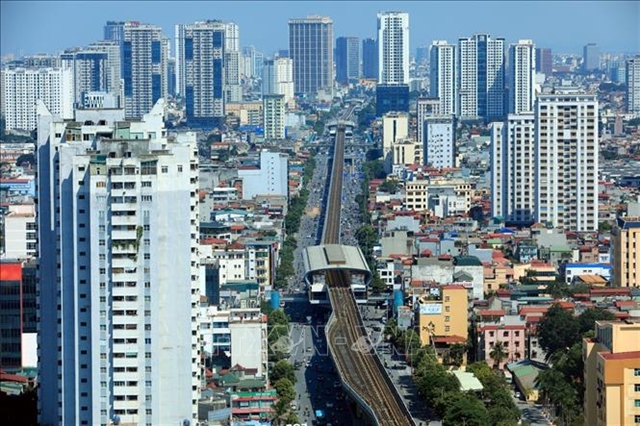 |
| According to SSI, outstanding loans to real estate developers have increased by approximately VNĐ1 trillion since the end of 2023. VNA/VNS Photo |
A recent report from the Shinhan Securities Company also showed signals that need to be monitored. The NPL ratio across the banking industry inched up again after a restructuring at the end of 2025, and was estimated at around 1.9 per cent in the first quarter of 2026.
According to the report, Group 2 loans were trending upwards, reflecting initial signs of a decline in customers' repayment capacity and potentially putting pressure on asset quality in subsequent quarters.
A Saigon Securities Incorporation (SSI) report also noted that the scale of risk in the banking sector has expanded compared to the end of last year, but has not yet reached a level creating systemic risk. The SSI report said the NPL ratio for the entire industry at the end of 2026 could be around 1.8 per cent, slightly higher than the 1.76 per cent posted at the end of 2025, while Group 2 loans are expected to increase to around 1.4 per cent.
SSI noted in the report that one major factor to monitor is home loan disbursements during 2023-2024. After a preferential period of two to three years, many loans will enter a floating interest rate phase. If deposit interest rates continue to remain high, the debt repayment pressure on borrowers may increase in the third and fourth quarters of this year, affecting the credit quality of some banks with a large proportion of home loan lending.
In addition, the refinancing needs of real estate businesses are also considered a noteworthy factor. According to SSI, outstanding loans to real estate developers have increased by approximately VNĐ1 trillion since the end of 2023.
In addition, about VNĐ76 trillion and VNĐ108 trillion in corporate bonds (excluding bank bonds) will mature in the second half of 2026 and 2027, respectively. The pressure to repay these bonds will largely depend on developments in the real estate market and the ability of businesses to improve their cash flow.
SSI also noted that adjustments to urban planning in some localities, especially Hà Nội, may impact the value of collateral for real estate loans in the medium term.
Although this may not immediately affect the business results of banks, it is a factor that needs to be included in risk management plans, reassessment of collateral and provisioning policies in the future. — BIZHUB/VNS
Economy
 Economy
 Economy
 Economy
 Economy
 Economy
 Economy
 Economy
 Economy
 Economy
 Economy
 Economy
 Economy
 Economy
 Economy