 Economy



Vietnamese Prime Minister meets Cambodian National Assembly President
1.
 |
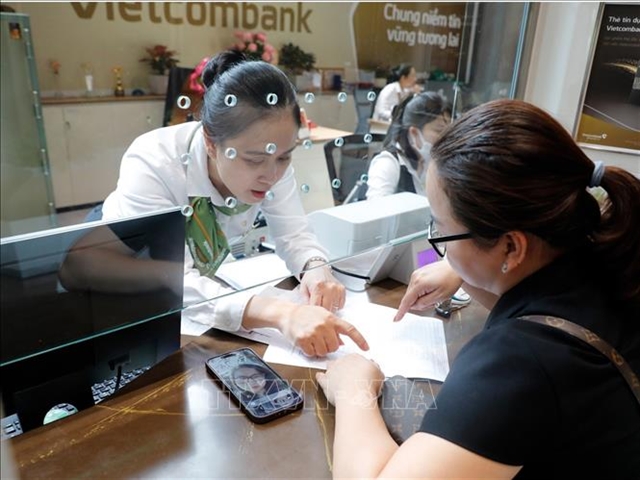
| 76 per cent of of respondents preferred real estate or gold. VNA/VNS Photo |
HÀ NỘI — Investors are gradually moving beyond simply accumulating wealth toward a more comprehensive approach to asset management, although traditional assets such as bank deposits, real estate and gold continue to dominate portfolios.
This is according to the 2026 Financial Health and Investment Confidence Report released by Thien Viet Securities (TVS).
The report, based on a survey of 1,000 individual investors with accumulated assets of at least VNĐ500 million (US$19,047) across five major cities, indicates that investment thinking is evolving, albeit at a relatively slow pace.
Despite global market volatility and rising living costs, financial resilience has become an increasingly important measure alongside total wealth.
The survey found that Vietnamese investors have become more active in diversifying their investments, with 55 per cent holding assets across two to three investment channels and 39 per cent investing in four to five channels.
Despite broader participation, traditional assets remain overwhelmingly dominant. Bank deposits, real estate and gold account for 87 per cent of the total asset allocation among surveyed investors.
The concentration becomes more pronounced among wealthier individuals.
For investors with assets ranging from VNĐ500 million to under VNĐ1 billion, real estate represents 29 per cent of portfolios. That proportion rises to 46 per cent among those with assets exceeding VNĐ2 billion.
Meanwhile, modern financial instruments, including equities, bonds, mutual funds and foreign currencies, each account for less than 10 per cent of portfolios across all wealth groups.
The survey also highlights a gap between investors' understanding of diversification and their actual investment behaviour.
While 86 per cent of respondents agreed that most assets should not be concentrated in a single investment channel, 76 per cent still preferred real estate or gold because they felt more familiar with those assets than with alternative investment products.
TVS report notes that financial resilience depends not only on the size of an investor's portfolio but also on liquidity, risk diversification, household cash flow and the ability to adapt to changing market conditions.
Although 85 per cent of respondents believed they could access cash quickly in the event of financial need, nearly half said they would be able to liquidate no more than 40 per cent of their assets within 30 days.
The report also points to growing demand for professional financial guidance, mirroring global trends. A 2025 survey by Natixis Investment Managers covering more than 7,000 retail investors worldwide showed that 73 per cent prioritised investment safety over returns, 66 per cent were saving less because of higher living costs, and 91 per cent trusted financial advisers when making investment decisions.
In Việt Nam, however, paid financial advisory services remain largely untapped. According to the survey, 95 per cent of respondents have never used fee-based financial advisory services.
The primary barriers are not cost but perception: 55 per cent said they did not see the need for such services, 41 per cent believed they could manage their wealth independently, and 36 per cent were reluctant to share personal financial information.
Even so, investor confidence in financial institutions is evolving rather than diminishing. Among respondents who have used or are currently using paid advisory services, 75 per cent expect advisers to clarify financial goals, explain risks and help them make informed decisions independently, while only 25 per cent prefer advisers to provide a ready-made investment strategy.
"When investors become more proactive in managing their wealth, the role of financial institutions is no longer limited to offering products or investment recommendations," said Trần Vinh Quang, CEO of Thien Viet Asset Management (TVAM).
"Instead, they need to build a transparent advisory process supported by data and tailored to each client's objectives. Trust is built when investors clearly recognise the practical value of professional advice in understanding risks, validating decisions and maintaining long-term financial discipline."
The survey also reveals that long-term financial planning remains underdeveloped. Only 27 per cent of respondents said they had established a clear long-term financial plan for themselves and their families, while the remaining 73 per cent had either not started planning, had yet to define specific objectives or lacked a concrete roadmap. — BIZHUB/VNS
Economy
 Economy
 Economy
 Economy
 Economy
 Economy
 Economy
 Economy
 Economy
 Economy
 Economy
 Economy
 Economy
 Economy
 Economy