 Economy



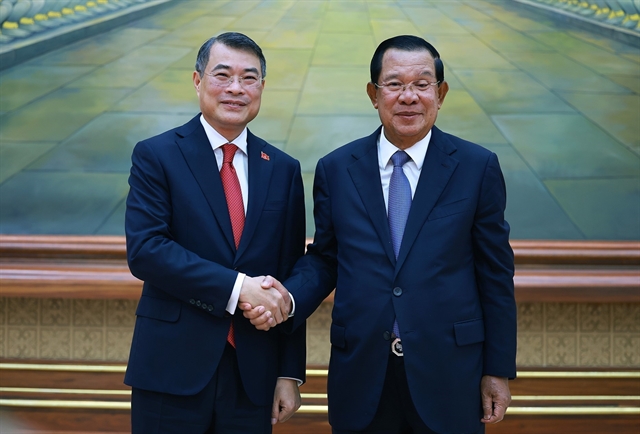
Vietnamese Prime Minister meets Cambodian National Assembly President
1.
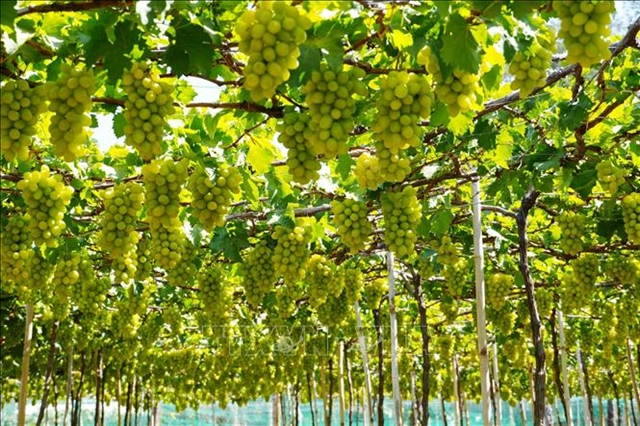 |
| A vineyard in Lâm Đồng Province. The decree also stipulates criteria for investment projects in high-tech agricultural zones. VNA/VNS Photo |
HÀ NỘI — High-tech agricultural zones can benefit from many preferential mechanisms to promote research, innovation and attract investment, according to a new decree.
Under Decree No. 263/2026/NĐ-CP, qualified projects are given priority to participate in State support programmes as well as funds and policies on research and development, technological innovation, technology transfer, human resource training, investment promotion and trade promotion.
The State may aid up to 100 per cent of costs for scientific, technological and innovative tasks serving the development of high-tech agricultural zones through direct contracting or public-private partnerships.
Qualified projects can also receive all costs for the purchase of technology and know-how for the development of strategic technologies.
In addition, the State also provides full support for registering intellectual property rights domestically and 50 per cent of costs for registering abroad.
Besides preferential mechanisms, the decree also clearly stipulates criteria for investment projects in high-tech agricultural zones.
Projects must be consistent with the objectives, functions, and development orientation of the zone; apply or serve research and transfer of technologies belonging to the list of high-tech or strategic technologies; and meet the requirements of national defence, security, environmental protection, emission reduction, biosafety, and food safety.
For each group of projects, the decree also stipulates separate criteria to ensure the selection of projects with high scientific and technological content.
The decree is expected to create a strong impetus to promote the development of high-tech agriculture, enhance research capacity, innovation and technology transfer, and open up many opportunities to attract businesses to invest in modern agriculture, green agriculture and circular agriculture. — BIZHUB/VNS
Economy
 Economy
 Economy
 Economy
 Economy
 Economy
 Economy
 Economy
 Economy
 Economy
 Economy
 Economy
 Economy
 Economy
 Economy