 Economy



Sơn La holds second coffee festival, targeting stronger businesses in future
1.

|
| A part of HCM City. — VNA/VNS Photos |
HÀ NỘI — Việt Nam should amend its Land Law with a more market-oriented and transparent approach to unlock land resources for socio-economic development while maintaining effective State oversight, participants at a workshop on legal policy in Hà Nội said on Wednesday.
The workshop examined key issues in the implementation of land legislation, including shortcomings in existing policies, legal provisions and enforcement. Participants discussed proposals to reform land-use planning, land classification and land-use regulations, as well as rules governing land acquisition for projects serving national and public interests, compensation, support and resettlement.
The discussions also covered reforms to land finance, land valuation and the land-use rights market, alongside proposed changes to regulations on land allocation, land leasing, bidding, auctions and agreements on land-use rights. Participants also called for greater decentralisation in land management, stronger oversight and power control, and wider use of digital technologies and administrative reforms to improve services for citizens and businesses.
In a keynote address at the workshop, National Assembly Vice Chairman Nguyễn Hồng Diên said legislative reform should be driven by practical needs, place citizens and businesses at the centre of policymaking, and ensure land resources are allocated and used efficiently, transparently and effectively to support Việt Nam's long-term development goals.
Diên said each legal regulation only truly has value when it is put into practice, and each policy only becomes effective when it simultaneously ensures State management requirements, creates momentum for development, encourages innovation, protects the legitimate rights and interests of stakeholders, and serves national interests.
He said amendments to the Land Law and related legislation should adopt a more innovative approach, recognising land as a strategic national resource and land-use rights as a key production input for socio-economic investment.
Diên also called for clarifying the State's role in representing land ownership while ensuring that reforms unlock land resources without weakening oversight or increasing inequality.
He said institutional reform should shift the Government's role from administrative management to facilitating development and should focus not only on removing existing obstacles but also on creating conditions for future growth.
On land acquisition, Diên said policymakers should move beyond a compensation-based approach towards one centred on rebuilding livelihoods for people whose land is recovered.
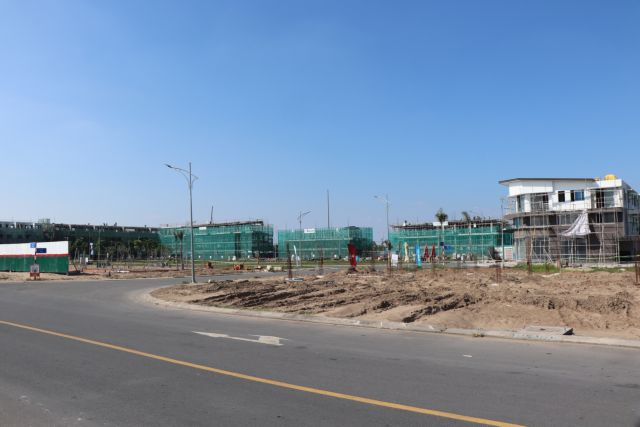
|
| Amendments to the Land Law and related legislation should adopt a more innovative approach, recognising land as a strategic national resource and land-use rights as a key production input for socio-economic investment. |
To prepare the proposed amendments to the Land Law, Diên instructed the Committee for Economic and Financial Affairs to work with the Ethnic Council, other National Assembly committees, the Ministry of Agriculture and Environment and relevant ministries to review policy proposals, incorporate feedback from lawmakers, experts, businesses and local authorities, and strengthen legislative scrutiny before submitting the draft law to the National Assembly and its Standing Committee.
He also directed the National Assembly's Ethnic Council and specialised committees to coordinate closely in reviewing the draft legislation to ensure it is assessed from economic, financial, legal, environmental, agricultural, planning, investment and construction perspectives.
At the workshop, the Ho Chi Minh City Real Estate Association (HoREA) called for more flexible rules on land valuation and land-use duration, saying the changes were needed to help unlock land resources as Việt Nam enters a new phase of economic development.
The association also proposed allowing investors to request extensions or adjustments to land-use terms based on business needs, rather than waiting until the final year of the land-use period.
HoREA said the proposed changes would help businesses expand operations, attract investment and revive long-delayed projects, contributing to more efficient land use and unlocking land resources. — VNS
Economy
 Economy
 Economy
 Economy
 Economy
 Economy
 Economy
 Economy
 Economy
 Economy
 Economy
 Economy
 Economy
 Economy
 Economy