 Economy


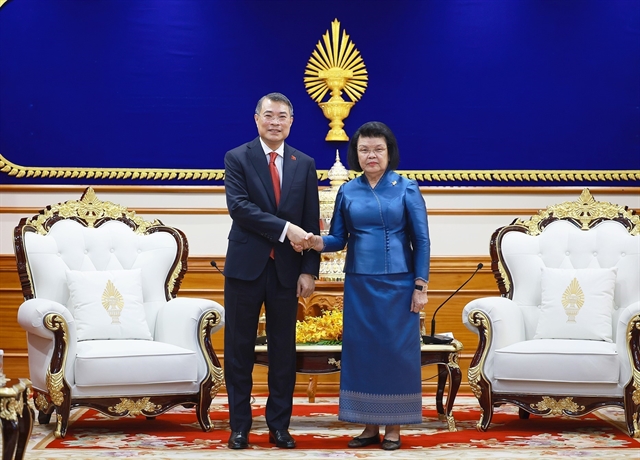
Vietnamese Prime Minister meets Cambodian National Assembly President
1.
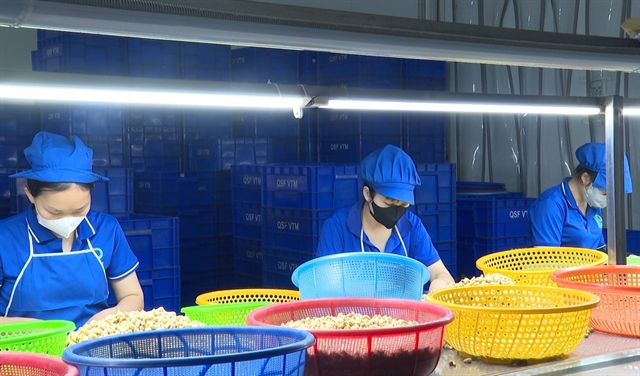 |
| Workers are processing cashew nuts at a company in Đồng Nai Province. Việt Nam spent nearly US$943 million importing raw cashew nuts in April alone, the highest monthly import value ever recorded. — VNA/VNS Photo Đậu Tất Thành |
Compiled by Mai Linh
HÀ NỘI — Despite retaining its position as the world’s leading exporter of cashew nuts, Việt Nam’s cashew industry is under growing pressure to restructure its value chain as heavy reliance on imported raw materials raises concerns over long-term sustainability and competitiveness, even as record import volumes underline the sector’s rapid expansion.
Statistics from the Ministry of Agriculture and Environment show Việt Nam spent nearly US$943 million importing raw cashew nuts in April alone, the highest monthly import value ever recorded.
Record imports in the first months of 2026 reflect not only expanding processing capacity but also the urgent need for the industry to shift towards higher value-added production and a more resilient supply chain model.
From January to April, imports exceeded 1.3 million tonnes worth around $2.17 billion, rising sharply from the same period last year.
In 2025, the country imported around 3.12 million tonnes of raw cashew nuts worth $4.66 billion while exporting nearly 798,000 tonnes of cashew kernels valued at more than $5.4 billion.
According to Bạch Khánh Nhựt, permanent deputy president of the Vietnam Cashew Association (VINACAS), Việt Nam’s biggest competitive advantage lies in its processing technology and deep-processing techniques, which many raw material supplying countries have yet to match.
However, the industry’s heavy dependence on imported raw materials is becoming a strategic vulnerability amid fluctuations in the global market.
VINACAS has warned that several African countries, including Côte d’Ivoire, Benin and Burkina Faso, are shifting from exporting raw cashew nuts to developing domestic processing industries to retain more added value.
The association cited figures showing imports of semi-processed cashew kernels from Africa to Việt Nam have risen sharply from around 10,000–15,000 tonnes in 2020 to approximately 150,000 tonnes by the end of 2025.
Some countries have also imposed higher taxes on raw cashew exports while others have restricted exports early in the harvest season to prioritise domestic processors.
The trend has pushed up raw material prices and squeezed profit margins for Vietnamese processors.
According to the Đồng Nai Cashew Association, raw cashew prices have risen sharply since the start of the harvest season, partly due to concerns over supply shortages, prompting companies to accelerate purchases and intensify competition for raw materials.
The industry is also facing pressure from rising logistics costs linked to instability in the Middle East and disruptions along Red Sea and Suez shipping routes, while higher interest rates and tighter credit conditions have increased financial strain on processors during the raw material purchasing season.
Stricter regulations on environmental standards, sustainability, food safety and traceability in the EU and China are also raising compliance costs for Vietnamese businesses.
Against this backdrop, VINACAS has lowered its 2026 export target to $5 billion, below the more than $5.43 billion recorded in 2025.
Needs to move up the value chain
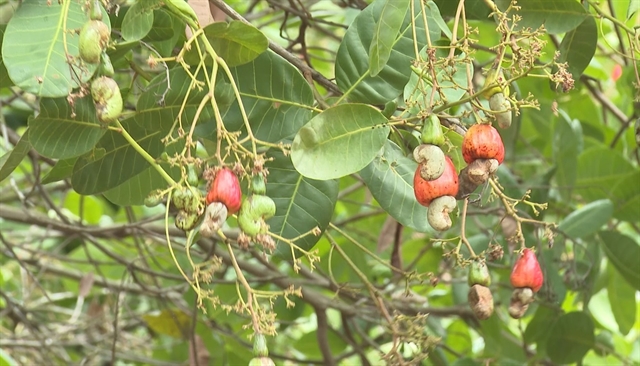 |
| Việt Nam needs to develop domestic raw material areas to reduce dependence on imported cashew nuts in the long run. — VNA/VNS Photo |
Deputy Minister of Agriculture and Environment Phùng Đức Tiến said the agricultural sector should focus on improving processing quality, diversifying export markets and strengthening resilience against global trade volatility.
Analysts say the key challenge for the industry is not reducing imports in the short term, which is considered unrealistic, but shifting towards a higher-value model based on technology, branding and deep-processed products.
To maintain competitiveness, the cashew industry needs to strengthen efforts to diversify products and improve quality.
Products such as branded roasted cashews, cashew butter, cashew milk, cashew oil and cosmetics made from cashew by-products are seen as offering significantly higher added value.
VINACAS has also proposed strengthening long-term trade cooperation agreements with African suppliers to build more stable supply chains instead of depending heavily on seasonal spot market transactions.
Investing in raw material regions in Africa is considered a long-term solution to secure supply. Several Vietnamese companies have begun exploring opportunities to develop plantations and processing facilities in countries including Côte d’Ivoire, Tanzania and Ghana.
Still, it was important to develop domestic raw material areas to reduce dependence on imported cashew nuts in the long run, VINACAS said, urging support for zoning production areas, improving agricultural extension programmes and providing technical guidance to farmers.
The association also called on the State Bank of Vietnam and commercial lenders to continue offering credit support policies, including debt rescheduling and preferential loan packages for cashew processors and exporters.
In addition, VINACAS urged efforts to stabilise freight costs, prioritise transport capacity for agricultural exports and explore alternative shipping routes amid ongoing disruptions. — VNS
Economy
 Economy
 Economy
 Economy
 Economy
 Economy
 Economy
 Economy
 Economy
 Economy
 Economy
 Economy
 Economy
 Economy
 Economy