 Economy


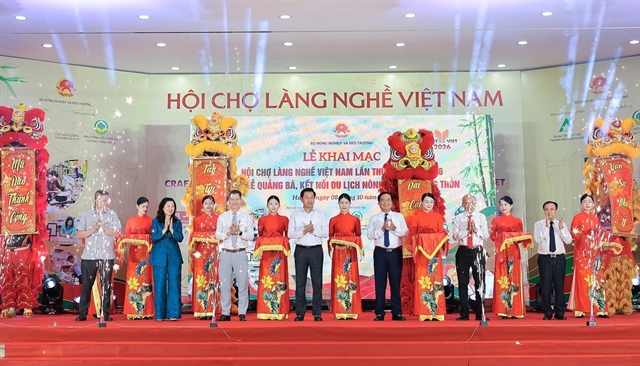
Vietnam Craft Village Fair opens in Hà Nội
1.
|
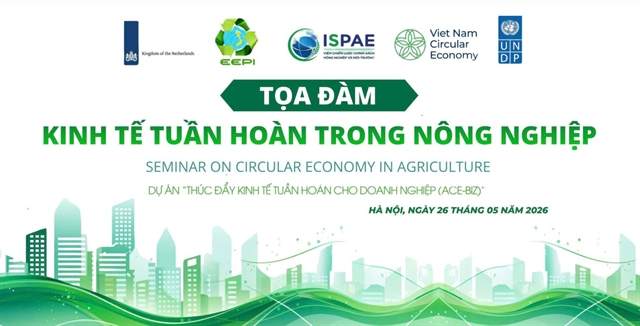
HÀ NỘI — A seminar on how to apply the circular economy in agriculture will be held on May 26 in Hà Nội by the Institute of Environmental Economics Policy under the Vietnam Association of Environmental Economics.
The seminar is held in collaboration with the United Nations Development Programme (UNDP) Vietnam and the Institute of Strategy and Policy on Agriculture and Environment (ISPAE).
At the event, experts will hold discussions and assessments of the current implementation of circular economy practices in the agricultural sector, while identifying challenges and bottlenecks related to institutional frameworks, policies, technology, finance and market links.
Participants will share practical experiences, successful models and best practices, while proposing solutions to promote the adoption of circular economy principles in agricultural production in a manner that is efficient, sustainable and suited to Việt Nam’s conditions.
The seminar will also explore international experiences, propose criteria for identifying green and circular projects, and discuss the application of Environmental, Social and Governance standards in agriculture.
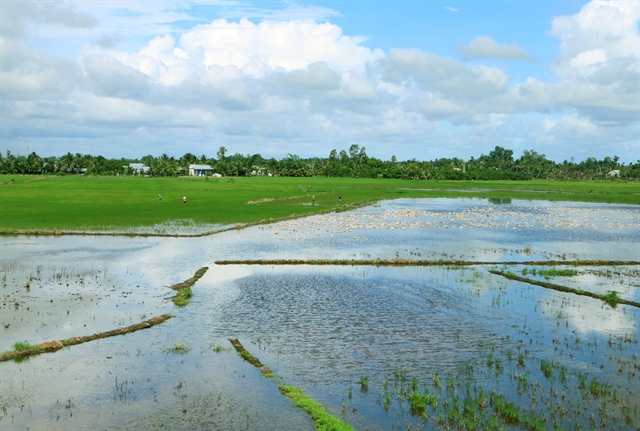
Việt Nam has a longstanding farming tradition and remains a country with strong agricultural advantages. The Party and the State have consistently introduced policies and strategic directions aimed at developing agriculture, supporting farmers and improving rural areas.
At the same time, Việt Nam has joined numerous new-generation free trade agreements with countries and economic regions worldwide, many of which include commitments related to environmental and ecological safety standards.
Against the backdrop of the increasingly profound impact of the Fourth Industrial Revolution, both the opportunities and pressures associated with prioritising advanced technologies in smart agricultural production have become more urgent. As a result, developing a circular economy in agriculture is considered an inevitable step for Việt Nam.
However, the country continues to face significant challenges. Rates of recycling and reuse remain low and are largely limited to small-scale, fragmented operations, contributing to emissions and environmental pollution.
In addition, the absence of comprehensive national processes, standards and regulations – including labelling and certification systems for circular agricultural products – has increased risks and reduced investment efficiency for businesses and cooperatives.
Furthermore, Việt Nam still lacks supportive policies on green credit, risk insurance and incentives for investment in by-product processing technologies.
There is also a shortage of data and mapping systems related to agricultural by-products, supply chains and emissions, while digital platforms to support enterprises remain underdeveloped. — VNS
Economy
 Economy
 Economy
 Economy
 Economy
 Economy
 Economy
 Economy
 Economy
 Economy
 Economy
 Economy
 Economy
 Economy
 Economy