 Economy

Vietnamese scientist wins ASEAN-US Science Prize for Women
1.
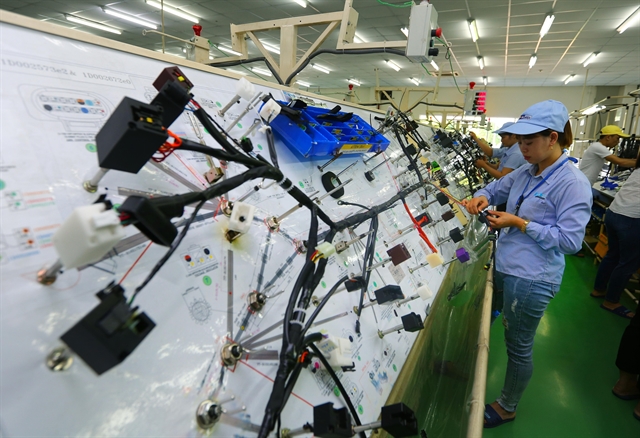 |
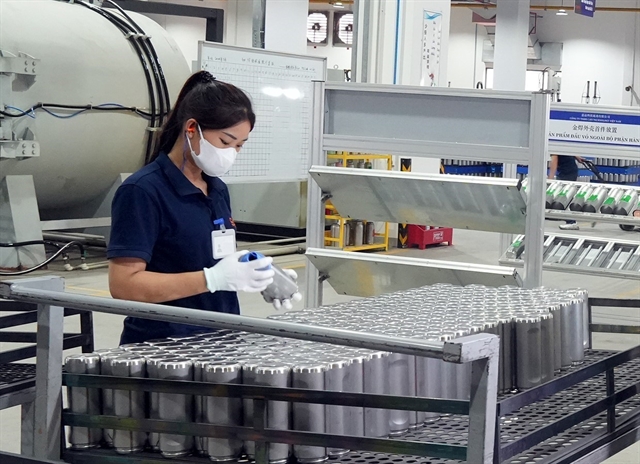
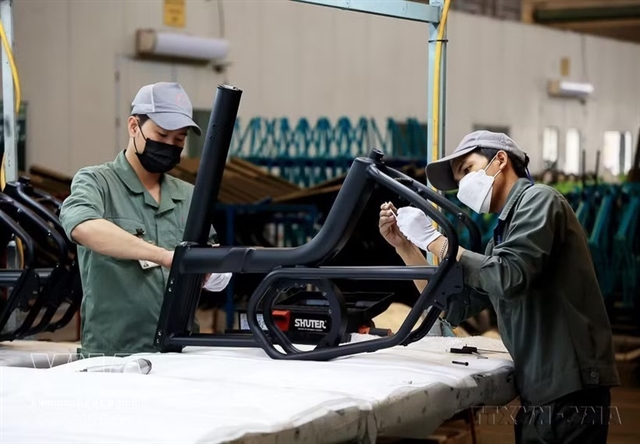
| Manufacturing electrical and electronic components at Minda Vietnam Automotive Co., Ltd, an Indian-invested company in Phú Thọ Province. — VNA/VNS Photo Danh Lam |
HÀ NỘI — The state visit to India by Party General Secretary and State President Tô Lâm is expected to create momentum helping the two countries shape the framework for bilateral cooperation in a new development phase.
The visit comes as the two countries continue to deepen their Comprehensive Strategic Partnership, which was established in 2016. Over the past decade, Việt Nam and India have continuously strengthened political trust while expanding practical cooperation across all spheres, including trade, investment, digital technology, energy, innovation and manufacturing.
Economic complementarity
The Vietnamese Ministry of Industry and Trade reported that bilateral trade has maintained strong growth in recent years, tripling from US$5.4 billion in 2016 to $16.46 billion in 2025, the highest level recorded so far.
In 2025 alone, their trade turnover reached $16.46 billion, up 10.5 per cent compared with 2024. Việt Nam’s exports to India rose by 14.2 per cent to $10.3 billion while imports increased by 4.9 per cent to $6.1 billion.
The upward trend has continued in 2026. In the first quarter, bilateral trade hit $4.8 billion, up 28 per cent year-on-year. Việt Nam shipped $2.9 billion worth of goods to India, up 25 per cent, while its imports from the latter climbed 34 per cent to $1.8 billion.
Việt Nam’s exports to India are dominated by manufactured and processed products, accounting for more than 70 per cent of total shipments. Major items include electronics, machinery, agricultural and aquatic products, rubber, pepper, iron and steel products. Meanwhile, imports from the South Asian country mainly include textile materials, plastics, steel, seafood and pharmaceuticals serving domestic production and export.
Specialists say one of the most notable features of current economic ties is the increasing complementarity of the two economies. India boasts advantages in market scale, raw materials, software, pharmaceuticals and supporting industries, while Việt Nam has developed strong manufacturing and export capacity and is deeply integrated into global markets through a network of new-generation free trade agreements.
This complementarity has reduced direct competition and increasingly shifted cooperation towards supply-chain integration, production linkages and market expansion. As global manufacturers diversify production bases beyond traditional centres, Việt Nam and India are emerging as important links in regional supply-chain restructuring.
Investment collaboration is also broadening. India is currently running projects in 20 of Việt Nam’s 34 provinces and cities. HCM City is the top destination of Indian investments, followed by Đắk Lắk, Khánh Hòa, Thanh Hóa, Tây Ninh, Nghệ An and Phú Thọ.
Meanwhile, Việt Nam has 30 investment projects in India with total registered capital of nearly $150.5 million. A notable development is Vingroup’s plan to build an electric vehicle factory in Tamil Nadu.
Vast room for cooperation expansion
Textiles and footwear are becoming major areas for deeper industrial cooperation. As global textile supply chains are being reconfigured, Việt Nam’s strengths in manufacturing and exports complement India’s advantages in cotton, natural fibres, dyeing and raw materials. Besides, specialised fairs such as Bharat Tex 2026 and MEET AT AGRA 2026 are expected to further bridge their businesses operating in leather, production technology and supporting industries.
Digital technology is also emerging as a new growth driver. A memorandum of understanding on cooperation between the Việt Nam Software and IT Services Association and India’s Services Export Promotion Council has strengthened business links in digital services, software outsourcing, artificial intelligence, the Internet of Things and digital transformation.
Retail distribution is opening up further opportunities. On April 24, the Việt Nam Trade Office in India held talks with Reliance Retail on expanding the presence of Vietnamese products in the SMART Bazaar network, including fresh fruits, coffee, cashew nuts, processed seafood and fast-moving consumer goods.
Experts say direct access to India’s modern retail system will help Vietnamese goods move beyond traditional intermediary channels, thus raising added value and strengthening brand recognition in one of the world’s largest consumer markets.
Further momentum is expected from the review and upgrade of the ASEAN – India Trade in Goods Agreement (AITIGA). At the 12th meeting of the AITIGA Joint Committee in Jakarta in late March, ASEAN and India agreed to work towards substantially concluding negotiations in 2026.
Experts believe that the target of 20 billion in trade between Việt Nam and India is no longer a distant milestone if both sides continue to maintain their current growth rate and further promote business connectivity, logistics, payments, investment promotion, and technology cooperation.
More importantly, the Việt Nam – India economic relationship is now not only bilateral but also linked to the shaping of new supply chains in the Indo-Pacific region. In the context of a volatile global economy, strengthening relations with a highly complementary partner like India will help Vietnamese businesses enhance their resilience, diversify markets, and expand their long-term development opportunities. — VNA/VNS
Economy
 Economy
 Economy
 Economy
 Economy
 Economy
 Economy
 Economy
 Economy
 Economy
 Economy
 Economy
 Economy
 Economy
 Economy