 Economy


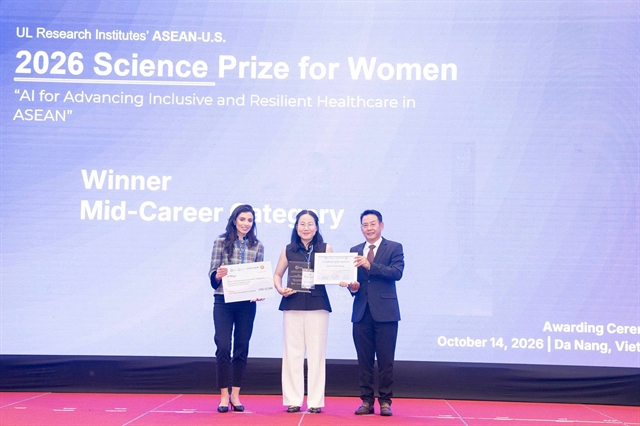
Vietnamese scientist wins ASEAN-US Science Prize for Women
1.
|
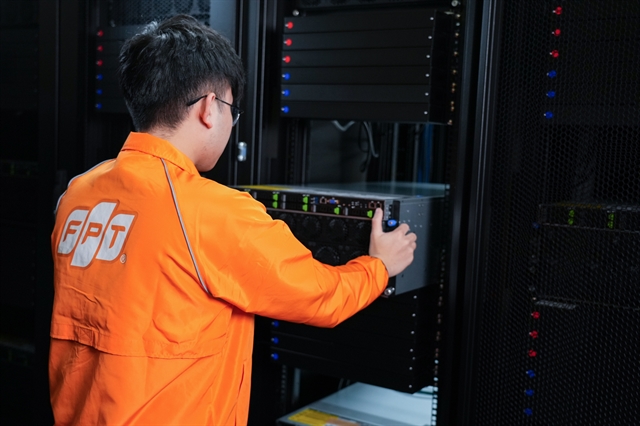
| FPT possesses AI supercomputing infrastructure that ranks among the top 500 most powerful supercomputers in the world. — Photo courtesy of FPT |
HÀ NỘI — FPT Corporation has signed a contract worth tens of millions of US dollars with a leading global materials manufacturing group, marking a significant milestone in its strategy to expand AI services in the European market.
Under the agreement, FPT will deploy applications and services powered by its comprehensive AI platform, FleziPT, developed in-house to enhance operational efficiency for the client. The AI transformation is expected to help reduce costs by up to 40 per cent within three years, while improving service reliability and accelerating the modernisation of core technology systems.
The initiative also provides a critical foundation for enterprise-wide AI adoption, enabling the client to move toward an Agentic AI model where AI systems can autonomously operate, make decisions and optimise performance in real time.
With its AI-first strategy, flexible deployment model combining on-site and best-shore resources, and an AI-augmented engineering workforce, FPT is well-positioned to support European enterprises in executing complex transformation programs faster, more efficiently, and with measurable impact.
“AI is transitioning from experimentation to enterprise-wide deployment, and its adoption will be essential to sustaining long-term competitiveness, particularly for manufacturing companies in Europe,” said Trần Văn Dũng, Director of FPT Europe, FPT Group.
Amid the rapid growth of autonomous AI, global AI spending is also accelerating. According to Gartner, worldwide AI spending is projected to reach approximately $1.757 trillion in 2025, an increase of more than 50 per cent compared to 2024, and is expected to rise to $2.525 trillion in 2026 and $3.335 trillion by 2027. — VNS
Economy
 Economy
 Economy
 Economy
 Economy
 Economy
 Economy
 Economy
 Economy
 Economy
 Economy
 Economy
 Economy
 Economy
 Economy