 Economy



PMs pay tribute to late Vietnamese, Lao leaders in Vientiane
1.
|
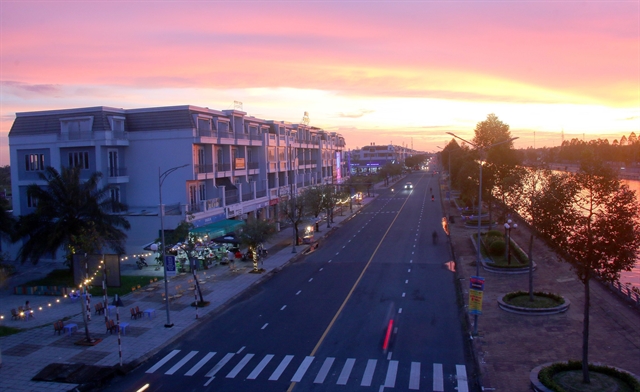
| An urban view of Vị Tân Ward, Cần Thơ City. — VNA/VNS Photo |
MEKONG DELTA — The real estate market in Việt Nam’s Mekong Delta is entering a new development cycle after a period of rigorous consolidation, with Cần Thơ City emerging as the focal point of recovery and restructuring.
Following a prolonged slowdown marked by tightening credit, legal bottlenecks and declining investor confidence, the market is now showing clear signs of revival.
Improvements in infrastructure, stronger regulatory frameworks and a gradual shift in investment strategy are paving the way for a more transparent and sustainable trajectory.
According to the city’s Real Estate Association, the local market has officially passed its most challenging phase.
This transition period is considered pivotal, as investor sentiment stabilises, risks are brought under control and transaction activity begins to pick up again.
Cần Thơ leads regional recovery
As the economic and cultural centre of the Mekong Delta, Cần Thơ is widely seen as a barometer of the region’s real estate market.
In the first quarter of 2026, the city recorded notable growth, particularly in land plots and individual housing segments.
Authorities approved investment policies for three new projects while continuing to accelerate the national social housing programme, aiming to deliver 16,900 units by 2030.
Local officials noted that while land and low rise housing segments have rebounded strongly, the apartment segment remains relatively subdued, reflecting cautious demand and a market still in transition.
The recovery of the Mekong Delta property market is closely tied to the Government’s push for strategic infrastructure investment.
A network of expressways running across north-south and east-west axes is being developed at pace, significantly improving regional connectivity and reducing logistics barriers that have long constrained growth.
A major turning point came with a decision issued on April 4 by the Government approving adjustments to the Mekong Delta regional master plan towards 2030.
Under the revised framework, the region will be reorganised into strategic sub-regions, forming new growth clusters.
These include key localities such as Cần Thơ, An Giang, Đồng Tháp, Cà Mau and Vĩnh Long, which together are expected to act as new economic engines driving urbanisation, labour mobility and investment flows.
Market segmentation becomes clearer
Recent market activity shows that three core segments are now shaping the market.
Affordable land plots priced below VNĐ2 billion (US$80,000) continue to dominate, appealing to individual buyers and small scale investors due to their accessibility and relatively low financial risk.
Shophouses priced between VNĐ3 billion and VNĐ6 billion ($120,000–240,000), especially in central districts such as Ninh Kiều and Cái Răng wards, are gaining traction among buyers seeking combined residential and commercial use.
Meanwhile, higher end developments are gradually defining new standards of urban living, catering to middle and high income residents as well as professionals working in the region’s expanding service and industrial sectors.
Market observers note that a clear shift towards real value is taking place.
Buyers are increasingly prioritising projects with transparent legal status, completed infrastructure and immediate usability rather than speculative opportunities.
|
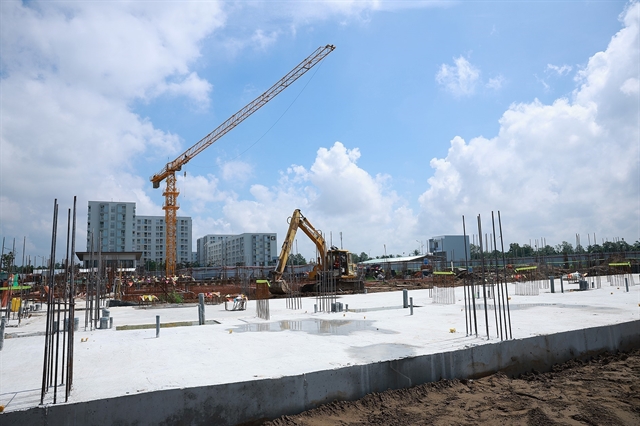
| A social housing project in Cần Thơ City.— VNA/VNS Photo |
Addressing bottlenecks and improving transparency
Despite encouraging signs, the market continues to face structural challenges, including a shortage of cleared land, incomplete zoning plans and fluctuations in interest rates.
To tackle these issues, the Cần Thơ People’s Committee has rolled out a series of coordinated measures.
These include accelerating administrative reforms, implementing new laws on land, housing and real estate business from 2026, and deploying a VNĐ120 trillion ($4.8 billion) credit package offering interest rates 1.5 to 2 percentage points below market levels.
In parallel, authorities have enhanced transparency by publicly operating the national housing and real estate information system, enabling citizens and investors to access planning data and project details more easily.
This move is expected to reduce speculative activity and foster a more disciplined market environment.
Strengthening market discipline
Local authorities are also intensifying efforts to clean up the market by withdrawing delayed or non compliant projects while prioritising reputable developers with proven capacity.
Major corporations such as Vingroup, T&T Group and Sao Mai Group are among those expected to lead large-scale, well-planned developments.
At the same time, adjustments to the city’s master plan towards 2050, along with public consultations on key urban and cultural projects, reflect a broader ambition to transform Cần Thơ into a model ecological urban centre.
Shift towards long-term investment strategies
Experts say one of the most significant changes in the current cycle is the transformation in investor behaviour.
Instead of short-term speculation, investors are increasingly adopting long-term strategies focused on value creation and stable cash flow.
Properties that can generate immediate income, such as shophouses or rental apartments, are becoming more attractive.
The concept of “two in one” real estate, combining residential use with income generating potential, is gaining popularity.
At the same time, investors are exploring satellite areas and infrastructure corridors where land prices remain relatively low, allowing for greater upside potential over time.
With infrastructure development accelerating, legal frameworks becoming more robust and investor expectations shifting towards sustainability, the Mekong Delta real estate market is entering a new phase defined by stability and long-term growth. — VNS
Economy
 Economy
 Economy
 Economy
 Economy
 Economy
 Economy
 Economy
 Economy
 Economy
 Economy
 Economy
 Economy
 Economy
 Economy