 Economy


PMs pay tribute to late Vietnamese, Lao leaders in Vientiane
1.
|
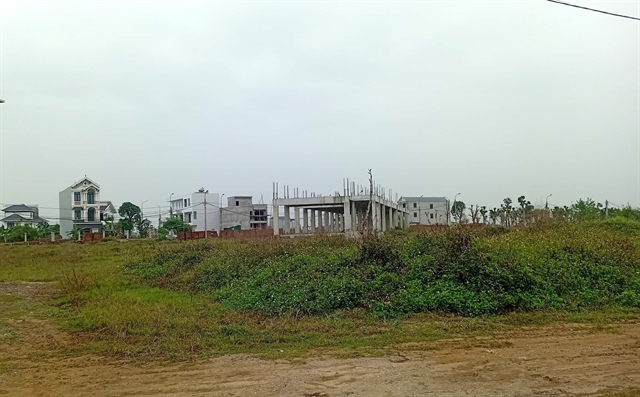
| A stagnant project in Thanh Hoá Province. The Ministry of Agriculture and Environment is working to finalise a draft decree outlining special mechanisms to remove legal bottlenecks for thousands of long-delayed projects. — VNA/VNS Photo Nguyễn Nam |
HÀ NỘI — A draft decree aimed at clearing legal bottlenecks for thousands of delayed projects could unlock vast idle capital and land resources, as Việt Nam seeks to achieve double-digit economic growth from 2026 onward.
The Ministry of Justice has published an appraisal dossier for the draft, while the Ministry of Agriculture and Environment (MAE) is finalising it for submission to the Government for approval.
The draft decree is intended to implement Resolution No. 29/2006 adopted by the National Assembly (NA) on April 24, addressing violations in land management that occurred before the Law on Land 2024 took effect and removing obstacles facing stalled projects.
According to the MAE, as of March 30, 2025, about 4,489 projects nationwide remain entangled in legal and administrative difficulties, covering more than 198,000ha with total registered investment of roughly VNĐ3.35 quadrillion (US$130 billion).
Authorities have so far resolved 1,151 projects under their jurisdiction, with combined investment of about VNĐ804.9 trillion. However, 3,338 projects remain stalled, accounting for more than 145,000ha and over VNĐ2.5 quadrillion in investment.
Among unresolved cases, 1,814 projects fall under the authority of local governments, while 1,524 are subject to review by the NA.
The draft decree sets out procedures to review projects granted land-use rights certificates in breach of regulations, including mechanisms to reassess conditions, adjust legal status and determine additional financial obligations.
It also proposes frameworks to continue land allocation or leases for projects with violations linked to investor selection or land management, as well as to handle cases where land was recovered outside legal provisions.
Experts say the proposed mechanisms could help unlock trillions of đồng tied up in delayed projects and trigger a new cycle of economic growth.
According to Phạm Thị Hồng Yến, a member of the NA’s Economic and Financial Committee, the resolution establishes a unified framework to assess violations comprehensively and objectively, helping address long-delayed projects and mobilise resources for growth.
It is also expected to help protect and encourage officials who act in the public interest without engaging in corruption.
Unlock resource
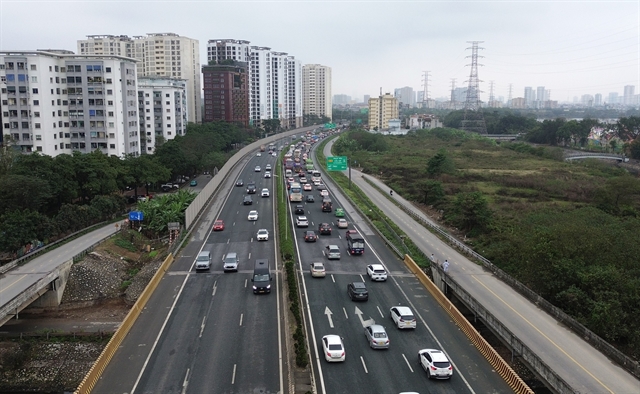
|
| Student housing projects in Pháp Vân, Hà Nội, left abandoned for over a decade, have been converted into social housing developments. — VNA/VNS Photo Quốc Khánh |
Tô Hoài Nam, Deputy President of the Vietnam Association of Small and Medium Enterprises, was quoted by Pháp Luật TP.HCM (HCM City Law) newspaper as saying that unlocking the estimated VNĐ3.3 quadrillion in stalled projects would activate a new growth cycle with broad spillover effects across the economy.
He said stalled projects represent not just idle assets but a blockage of economic flows, as payment chains are disrupted, supply networks stall and businesses’ access to credit weakens, with unfinished assets turning into non-performing loans.
Resolving legal bottlenecks would restore cash flow, ease bad debt pressures and boost investor confidence, he said, adding that the resumption of projects would generate jobs and stimulate related sectors such as construction, transport and services.
Nam added that the bottleneck stems from inconsistent regulations and fragmented authority, which leave officials without a clear legal basis to make decisions.
He called for special mechanisms that would allow authorities to make decisions under a single final conclusion principle and establish a lead agency with binding timelines to ensure decisive and consistent outcomes.
It is also critical to enhance the accountability of leaders, especially at the local level, linking their responsibility to publicly disclosed progress indicators for each project, together with independent monitoring mechanisms and results-based evaluation.
“Resolving project bottlenecks should be seen not only as removing legal obstacles but as a broader step toward improving economic governance and creating a more transparent business environment,” Nam said.
Economist Lê Bá Chí Nhân said unlocking these projects could immediately activate private investment and credit flows without requiring additional state spending. The capital inflow would also help revive sectors such as real estate, construction, materials and labour.
Nguyễn Duy Thành, chief executive of Global Home, said resolving stalled projects would provide a major boost to the property market by improving housing supply, particularly in affordable and social housing segments.
He said key priorities include simplifying project approval procedures, standardising land valuation mechanisms and establishing one-stop administrative processes to reduce delays and legal risks.
Lê Hoàng Châu, chairman of the Ho Chi Minh City Real Estate Association, said the proposed mechanisms would help unlock significant land and project resources to support economic growth and achieve double-digit GDP expansion targets in 2026 and beyond. — VNS
Economy
 Economy
 Economy
 Economy
 Economy
 Economy
 Economy
 Economy
 Economy
 Economy
 Economy
 Economy
 Economy
 Economy
 Economy