 Economy



LANDMARK Launches ‘Destination CENTRAL’: A District-Wide Invitation to Explore the Dynamism, Luxury, and Soul of Central
1.
|
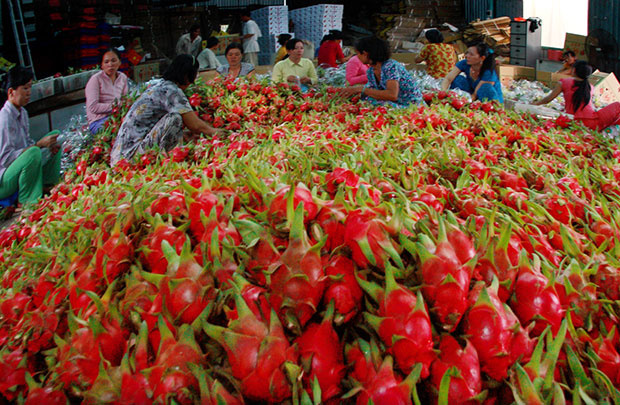
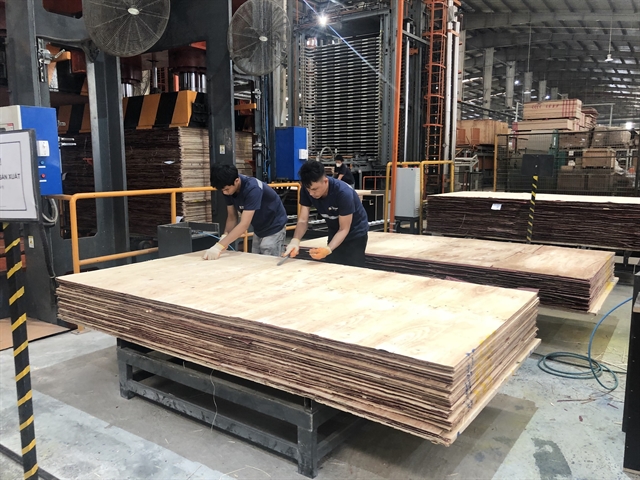
| Việt Nam’s exports largely consist of agricultural products. — Photo doanhnhansaigon.vn |
HÀ NỘI — Bilateral trade between Việt Nam and China is well on its way to reaching the US$300 billion milestone in the near future, supported by strengthened strategic exchanges, high-level engagement and ongoing efforts to remove trade bottlenecks.
China is currently Việt Nam’s second-largest export market and largest import market, with trade between the two countries reaching a record $256.4 billion last year.
In the first quarter of this year, bilateral trade continued to grow, reaching nearly $67 billion. Việt Nam’s exports totalled $16.8 billion, up 26.4 per cent year-on-year, while imports reached $50.1 billion, up 31.6 per cent, according to the National Statistics Office under the Ministry of Finance.
The strong recovery in trade has driven significant growth in import-export activities, especially in imports of raw materials, machinery and equipment from China serving domestic production.
Many Vietnamese products, particularly agricultural and aquatic products as well as processed and manufactured goods like coffee, wood products, footwear, electronics and textiles, are increasingly penetrating the Chinese market.
Bilateral ties have strengthened, supported by frequent high-level exchanges that open up cooperation opportunities, particularly in trade and investment.
Although trade with the billion-consumer market has grown rapidly, the trade structure remains imbalanced, with Việt Nam’s trade deficit with China continuing to widen.
The deficit reached nearly $33.3 billion in the first quarter alone, while it stood at $116 billion last year.
Despite improvements, Việt Nam’s exports largely consist of agricultural products, which have lower value compared to industrial goods.
Meanwhile, imports mainly include high-tech products like machinery, equipment, electronic components and production materials, which are essential for domestic manufacturing and exports and typically cost more.
Trade experts say imported goods from China, especially production materials, are of good quality and competitively priced. Combined with convenient transportation due to geographic proximity, Vietnamese businesses prioritise sourcing from this market.
With a population of 1.4 billion, strong purchasing power and diverse demand, China is an attractive destination for exporters worldwide.
China remains a key market for Vietnamese exports, including agricultural products, textiles, footwear, electronics and seafood.
One positive signal is that China regained its position as the largest importer of Việt Nam’s agricultural products in Q1.
Export turnover of agro-forestry-fishery products reached $16.7 billion, up 6 per cent, with China accounting for over 22 per cent, surpassing the US and Japan.
Notably, exports to China rose by 37.6 per cent, showing the highest growth among major markets.
However, to ensure sustainable growth, production sectors – especially agriculture – must upgrade processing technologies, invest in standardised raw material areas and ensure compliance throughout the production chain.
The Đầu tư (Investment) online newspaper quoted Trần Thanh Hải, deputy director of the Agency for Foreign Trade, as saying that with stricter quality standards, China was no longer an 'easy' market and Vietnamese businesses must continuously update information and adapt their production mindset.
China is reviewing procedures to open its market to more Vietnamese agricultural and aquatic products through official channels, including frozen fruits, citrus, avocado, custard apple, wax apple, herbal medicines and beef, pork and livestock products.
More Vietnamese agricultural products are expected to gain access to this vast market in the near future.
The Ministry of Industry and Trade believes that bilateral trade still has significant room for growth, supported by bilateral agreements and multilateral frameworks such as the ASEAN–China Free Trade Agreement and the Regional Comprehensive Economic Partnership. — BIZHUB/VNS
Economy
 Economy
 Economy
 Economy
 Economy
 Economy
 Economy
 Economy
 Economy
 Economy
 Economy
 Economy
 Economy
 Economy
 Economy