 Economy


LANDMARK Launches ‘Destination CENTRAL’: A District-Wide Invitation to Explore the Dynamism, Luxury, and Soul of Central
1.
By Ly Ly Cao
HÀ NỘI — Việt Nam is seeking to redefine its national brand as a core strategic asset tied directly to enterprise capability and economic strength, as policymakers and businesses gather for the 2026 Vietnam National Brand Week and Forum.
The event, which the Ministry of Industry and Trade officially kicked off on April 16, runs through April 23 nationwide under the theme 'Vietnam's National Brand in the New Era'. It comes at a pivotal moment, as 2026 marks the first year of implementing the country's new five-year socio-economic development plan.
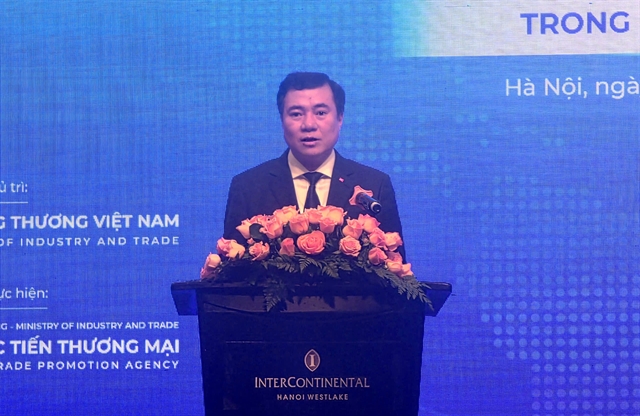 |
| Deputy Minister of Industry and Trade Nguyễn Sinh Nhật Tân at the event. — VNS Photo Ly Ly Cao |
Speaking at the opening session, Deputy Minister of Industry and Trade Nguyễn Sinh Nhật Tân emphasised a shift in thinking.
"The National Brand is no longer merely about image promotion or traditional trade facilitation. It must be defined as a strategic asset reflecting Việt Nam's overall competitiveness and reputation in the global value chain," he said.
According to Tân, brand-building in an era of deep integration is inseparable from strengthening national credibility and enhancing soft power internationally.
He pointed to the urgent need to transition growth models toward productivity, quality and autonomy to elevate the position of Vietnamese goods.
The message resonates against a backdrop of intensifying global standards, particularly in green growth, digital transformation and corporate social responsibility.
While Việt Nam has made notable progress, officials acknowledged that the country must move beyond low-value processing toward greater control of technology and branding, with businesses expected to adopt artificial intelligence and big data while complying with sustainability benchmarks.
After more than two decades of implementation, the National Brand Programme has expanded significantly. From just 30 participating enterprises in 2003, the number has risen to 190 in 2026. Việt Nam's national brand value climbed to US$519.6 billion in 2025, ranking 32nd globally.
Several Vietnamese companies have secured international recognition, including Vietcombank, BIDV and VietinBank among the world's 500 most valuable banking brands, while Vinamilk ranks in the global top 50 dairy brands and Viettel leads Southeast Asia's telecommunications sector.
However, data pointed to a persistent imbalance. Despite the growing number of recognised products, brand quality and value creation remain limited.
The combined value of Việt Nam's top 100 corporate brands stood at $38.4 billion in 2025, down 14 per cent from the previous period, highlighting continued reliance on low-value segments such as original equipment manufacturer (OEM) production, while capabilities in original design manufacturer (ODM) and original brand manufacturer (OBM) sectors remain constrained.
"This shows that the national brand cannot merely serve as an external face, but must become a real lever for competitiveness," said Hoàng Minh Chiến, Deputy Director General of the Trade Promotion Agency.
To address these bottlenecks, Chiến has proposed a long-term strategy through 2035. The roadmap outlines a foundational phase from 2026 to 2030 focused on structural transformation, targeting 1,000 National Brand products and a gradual shift from OEM to ODM.
In the following phase, Việt Nam aims to see up to 10 domestic brands enter the global top 500 and to elevate its national brand value into the world's top 25.
By 2045, the vision extends beyond export value to embedding Vietnamese identity, design thinking and sustainability standards into products entering global markets.
 |
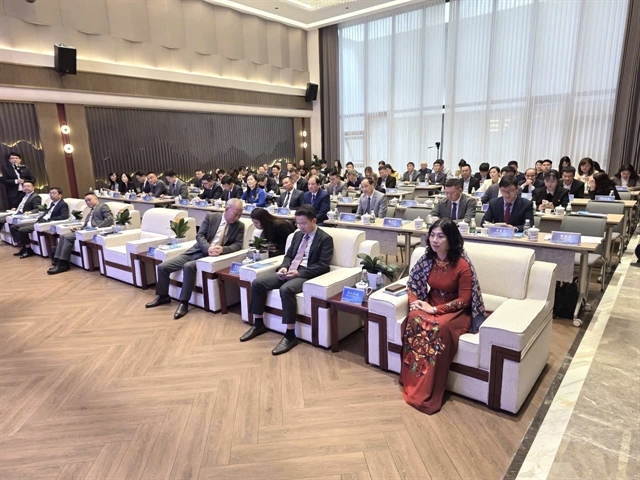
| Delegates attend the Vietnam National Brand Forum 2026 on April 16. — VNS Photo Ly Ly Cao |
Businesses view the National Brand certification as both recognition and expectation.
MISA Group CEO Lê Hồng Quang said the designation enhances market visibility and trust among customers and partners, while opening paths for international promotion.
"It helps strengthen confidence in product quality and business operations, while also requiring enterprises to continuously improve to maintain the title," he said, adding that competitiveness is reinforced both domestically and globally.
Quang noted that MISA aligns its development with the programme's core pillars of quality, innovation and pioneering capacity, with an additional focus on applying artificial intelligence and digital transformation.
The company is shifting from software-as-a-service models toward building self-operating enterprises, where human workers collaborate with AI agents to significantly enhance productivity.
Echoing the need for a deeper approach, Dr Santiago Velasquez of RMIT Việt Nam said the essence of a national brand lies not in current perceptions, but in the standards a country consistently upholds over time.
Sustainable trust in international markets is built on long-term consistency in quality and capability rather than short-term image, he noted.
The renewed emphasis on substance over symbolism aligns with broader policy directions, including Resolution 59-NQ/TW issued in January 2025, which calls for more effective and coordinated international integration while strengthening economic independence and resilience. — BIZHUB/VNS
Economy
 Economy
 Economy
 Economy
 Economy
 Economy
 Economy
 Economy
 Economy
 Economy
 Economy
.jpg) Economy
Economy
 Economy
 Economy
 Economy