 Economy


Việt Nam steps up fight against counterfeits, IP violations
1.
|
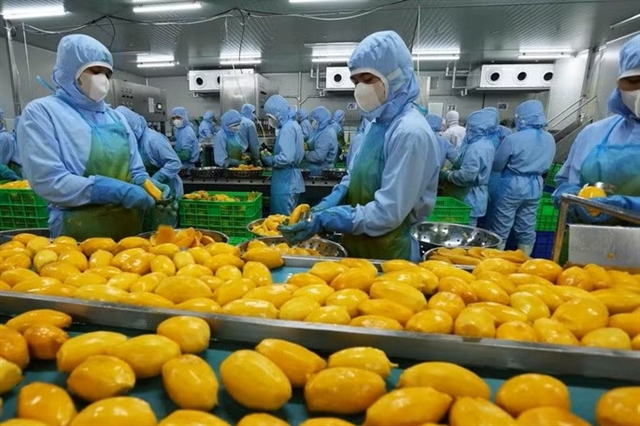
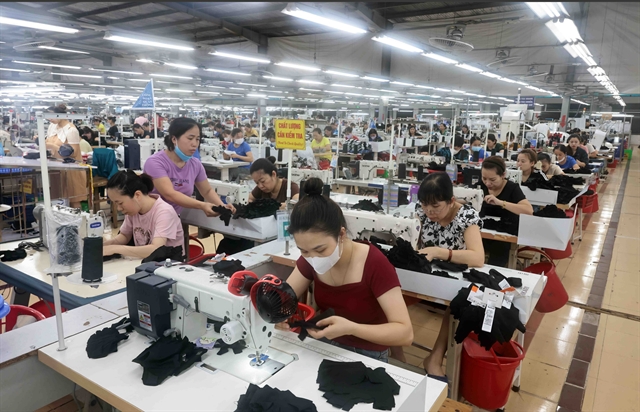
| Workers at a food processing company in Đồng Nai Province. — VNA/VNS Photo |
HÀ NỘI — As growth across East Asia and the Pacific slows amid mounting global uncertainty, Việt Nam continues to stand out for its ability to adapt and turn challenges into opportunities for reform, according to the World Bank.
In its regional economic update released on April 8, the World Bank said the region faces increasing pressure from global uncertainties, including an energy shock linked to tensions in the Middle East, rising trade barriers and policy volatility worldwide.
These factors are expected to weigh on growth in East Asia and the Pacific in the coming years.
The World Bank forecasts regional growth will ease from 5 per cent in 2025 to about 4.2 per cent in 2026, largely due to a weaker global environment and a continued slowdown in China.
China’s economy is projected to grow by around 4.2 per cent in 2026 and 4.3 per cent in 2027, down from 5 per cent in 2025, as it continues to face structural challenges including weak domestic demand, a sluggish property market and export pressures amid softer global growth.
For other economies in East Asia and the Pacific, growth is expected to slow to around 4.1 per cent in 2026 before recovering to about 5 per cent in 2027 as geopolitical tensions ease and uncertainty declines.
Against this backdrop, Việt Nam is projected to remain one of the fastest-growing economies in the region. The World Bank expects the country’s economy to expand by 6.3 per cent in 2026 and 7.7 per cent in 2027.
According to the report, strong economic performance in 2025 will serve as an important buffer, helping Việt Nam mitigate the impact of global headwinds.
The World Bank also highlighted the country’s efforts to increase investment in infrastructure and education, while improving institutional quality. These measures have helped targeted policy support deliver more visible results than in many other regional economies.
Earlier assessments had suggested Việt Nam could be among the countries most exposed to new United States tariff barriers, potentially reducing growth by about one percentage point. However, recent developments indicate the country’s ability to adjust has been stronger than expected.
Aaditya Mattoo, chief economist for the World Bank’s East Asia and Pacific region, said that while some economies in the region are losing reform momentum, Việt Nam is emerging as an example of proactive policy adjustment.
He noted that gains from domestic reform can outweigh losses caused by trade protectionism. In Việt Nam’s case, ongoing reforms in services and manufacturing have contributed to improved labour productivity.
Rather than focusing solely on US tariffs or Chinese subsidies, policy adjustments at home have helped the country better withstand external trade shocks, Mattoo said.
The report also warned that the economic impact of Middle East tensions will vary across countries depending on their reliance on imported energy, domestic vulnerabilities and the flexibility of government policy responses.
A prolonged escalation could further weaken economic prospects across the region.
If global fuel prices remain 50 per cent higher for an extended period, household incomes in the region could fall by 3 to 4 per cent. Governments are therefore advised to implement targeted support measures for vulnerable groups and small- and medium-sized enterprises to cushion the impact without placing excessive pressure on public finances.
“Growth in East Asia and the Pacific remains higher than in most other regions of the world, even amid uncertainty,” said Carlos Felipe Jaramillo, the World Bank’s vice president for the region.
However, sustaining that momentum will require countries to address structural challenges and harness opportunities from the digital era to boost productivity and create jobs, he added. — VNS
Economy
 Economy
 Economy
 Economy
 Economy
 Economy
 Economy
 Economy
 Economy
 Economy
 Economy
 Economy
 Economy
 Economy
 Economy