 Economy



Việt Nam, Switzerland to turn education, sci-tech, innovation into cooperation focus
1.
 |
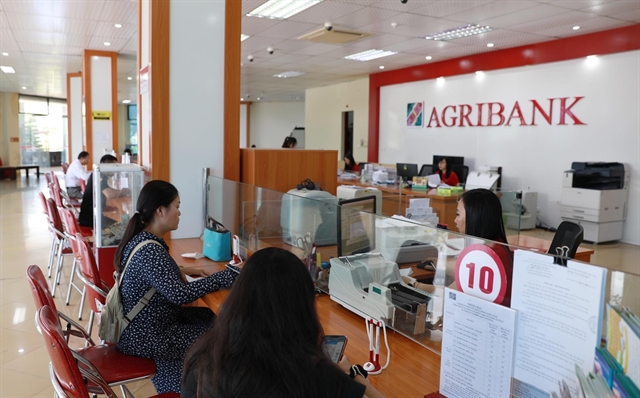
| CASA of the banking system saw many positive signs in 2025. —VNA/VNS Photo Photo |
HÀ NỘI — The rising share of non-term deposits, known as Current Account Savings Account or CASA, highlights how banks are racing to build digital ecosystems and enhance customer experience to secure low-cost funding in an increasingly competitive market.
Financial statements show CASA ratios across the banking system recorded positive momentum in 2025. Amid pressure from higher interest rates and narrowing net interest margins, CASA has become a key indicator of competitiveness, digital transformation and customer engagement at individual banks.
Among lenders leading in CASA are Techcombank, MB, MSB and VietinBank, which are regarded as typical examples of low-cost capital mobilisation strategies closely linked to digital banking and integrated financial service ecosystems.
Although their operating models differ, they share a common approach: positioning payment transactions as the operational lifeblood of the bank rather than merely a short-term source of funds.
Techcombank maintained its position among banks with the highest CASA ratios in the system. By the end of 2025, total deposits had reached VNĐ665.6 trillion (US$25.3 billion), up 17.9 per cent from the start of the year, with non-term deposits accounting for 40.4 per cent.
The bank attributed the growth to its digital platforms and cash flow optimisation products such as Auto-earning 2.0, along with financial solutions for business households. These contributed to a 17.7 per cent increase in CASA from individual customers and a 14.8 per cent rise from corporate clients.
MB also sustained a CASA ratio of around 36 per cent, among the highest in the system. With more than 33 million customers, largely payroll clients and large enterprises, the bank has built a stable source of low-cost capital, helping reduce funding costs. Its total assets are estimated to reach nearly VNĐ1.5 quadrillion by the end of 2025, up 33 per cent year on year, reflecting the effectiveness of its long-term digitalisation and customer expansion strategy.
A common feature among CASA leaders is strong investment in digital transformation and data governance. Techcombank attracted 62.3 per cent of new customers through online channels, while MB maintained a cost-to-income ratio of around 32 per cent, below the industry average.
MSB has standardised and automated key processes, and VietinBank has implemented nearly 100 digital transformation initiatives, shifting 99 per cent of payment transactions to digital channels.
According to Trần Minh Bình, Chairman of the Board of Directors of VietinBank, the establishment of the bank’s Data and Artificial Intelligence Division has laid a foundation for strengthening AI applications and comprehensive data management. Streamlining more than 100 transaction branches has helped optimise operational efficiency in line with its digital strategy.
Experts say a high CASA ratio not only lowers capital costs but also reflects customer loyalty.
Banking expert Nguyễn Trí Hiếu said banks with high CASA had become the centre of their customers’ daily financial transactions, making it a more meaningful measure of loyalty than deposit mobilisation alone.
CASA also has a direct impact on funding costs. Non-term deposits typically carry very low interest rates, giving banks with high CASA access to cheaper and more stable funding than those relying heavily on term deposits. As net interest margins face pressure from interest rate movements, credit competition and efforts to reduce lending rates to support the economy, a strong CASA base helps lenders protect profit margins and manage lending and deposit rates more flexibly.
In addition, CASA reflects the depth of customer engagement. Non-term deposits largely stem from personal and business current accounts, payroll services and payments for goods and services, including e-commerce.
This indicates customers are not simply depositing funds to earn interest but are using banks as everyday financial platforms. Institutions that offer strong service ecosystems, seamless digital experiences, convenient payment solutions and multi-channel connectivity tend to record higher and more sustainable CASA ratios. — BIZHUB/VNS
Economy
 Economy
 Economy
 Economy
 Economy
 Economy
 Economy
 Economy
 Economy
 Economy
 Economy
 Economy
 Economy
 Economy
 Economy