 Economy



Free surgery brings smiles to children with cleft lip, palate deformities
1.
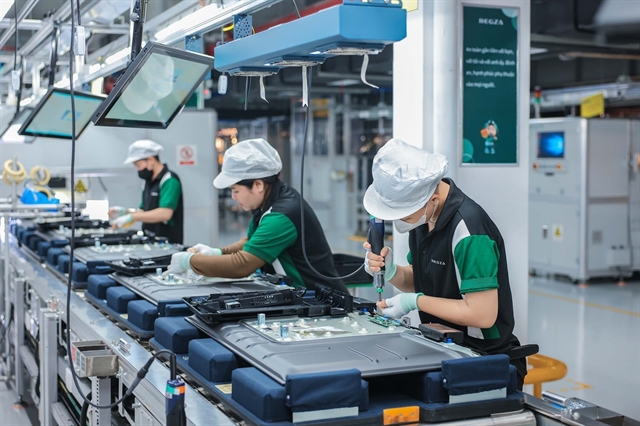 |
| Workers assemble televisions at Regza Vietnam Electronics, a Taiwan-invested manufacturer in Đồng Nai Province. — VNA/VNS Photo Hoàng Hiếu |
HÀ NỘI — Việt Nam’s amended Investment Law, which took effect this month, is expected to strengthen the country’s ability to attract foreign capital by streamlining procedures and improving the investment climate, experts and business representatives said.
The 2025 revision introduces a number of reforms, including reducing the number of conditional investment and business sectors and easing requirements for foreign investors establishing companies in Việt Nam.
Bùi Quý Thuấn, head of the General Research Department of the Vietnam Industrial Park Finance Association, said the law cuts and revises several sectors previously subject to conditional business requirements compared with the 2020 Investment Law.
These include areas such as tax procedure services, customs clearance services, insurance auxiliary services, labour leasing services, commercial inspection activities and certain temporary import-re-export activities involving frozen food and used goods.
Under Article 7 of the new law, the Government will publish lists of conditional investment sectors that require licensing and certification prior to operation.
Another notable change allows foreign investors to establish companies in Việt Nam without first having an approved investment project.
Thuấn told congthuong.vn that the previous regulations required investors to have a project before establishing a business. However, the new law allows them to establish a company first, provided market access conditions are met.
Regulatory reforms
Legal experts also applauded the amended investment law, saying that the changes could significantly improve Việt Nam’s competitiveness as a destination for foreign capital.
According to Nguyễn Hồng Chung, chairman of DVL Law Firm and an investment policy expert, the reforms reflect a shift from administrative procedures toward governance based on standards, data and post-inspection mechanisms.
The law also promotes decentralisation to accelerate decision-making and introduces a 'green channel" aimed at fast-tracking strategic investment projects.
Chung said the opportunity for Việt Nam to attract investment through the amended law would be very large because it addresses key bottlenecks such as time, predictability and compliance costs.
However, he said the effectiveness of the reform would depend heavily on implementation, including detailed guidance, coordination among state agencies, post-inspection enforcement and the capacity of local authorities.
Chung added that when these elements work effectively together, the 2025 Investment Law could help Việt Nam unlock capital flows and improve project quality in the next cycle of global competition.
Support from investors
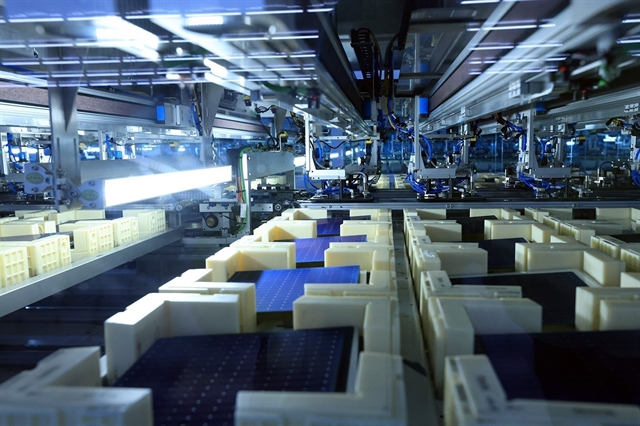 |
| Solar panels are produced at a plant operated by Toyo Solar in Phú Thọ Province. — VNA/VNS Photo Tuấn Anh |
At the same time, foreign business representatives have also welcomed the changes.
Hong Sun, honorary chairman of the Korean Chamber of Commerce in Việt Nam, said the adoption of the amended law was a timely move.
Speaking to congthuong.vn, Hong praised provisions that simplify post-inspection procedures and introduce special incentives for large-scale projects and research and development activities.
The law also establishes new support mechanisms to replace traditional tax incentives in response to Global Minimum Tax rules, which he said could help Việt Nam retain major investors.
Meanwhile, Hoàng Mạnh Phương, deputy director of the Legal Department of the Ministry of Finance, said the law, introduced alongside broader amendments to regulations governing investment and business activities, would facilitate the elimination of institutional and legal barriers.
The changes were expected to create a more transparent and attractive investment environment, helping unlock resources for investment and economic development, Phương said.
FDI trends
Foreign investment disbursements in Việt Nam rose to a five-year high in the first two months of the year, reaching US$3.21 billion as manufacturing continued to attract the bulk of capital, according to the National Statistics Office (NSO) under the Ministry of Finance.
Realised foreign investment increased by 8.8 per cent in January-February from a year earlier.
Manufacturing remained the largest recipient of investment, drawing $2.65 billion, or 82.7 per cent of total disbursed capital. Real estate received $223.5 million, equivalent to 7 per cent, while electricity and gas production and distribution attracted $119.2 million, or 3.7 per cent.
Despite the increase in disbursed capital, newly registered foreign investment in Việt Nam fell by 12.6 per cent year on year to just over $6 billion, the NSO noted.
It added that 620 new foreign-invested projects worth $3.54 billion were licensed during the period, representing an increase of 20.2 per cent in the number of projects and 61.5 per cent in registered capital compared with the same period last year.
The manufacturing sector accounted for the largest share of newly registered investment at $2.63 billion, representing 74.3 per cent of new commitments. It was followed by wholesale, retail and repair of automobiles, motorcycles and motorbikes with $358.6 million, accounting for 10.1 per cent.
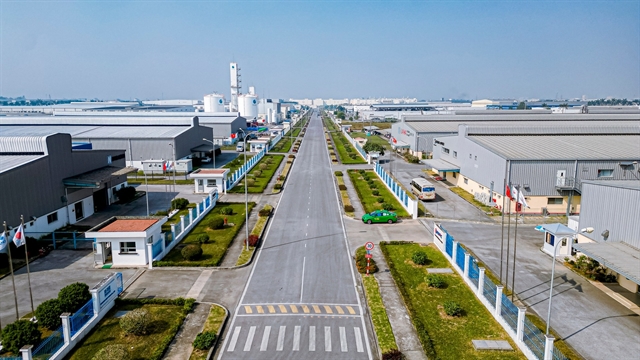 |
| An industrial park in Thái Nguyên Province, the country’s leading destination for foreign investment in the first two months of the year.-- Photo diendandoanhnghiep.vn |
Among 44 countries and territories with newly approved projects, South Korea ranked as the largest investor with $1.34 billion, accounting for 37.8 per cent of newly registered capital. Singapore followed with $1.1 billion, ahead of the Chinese mainland, Japan and Hong Kong.
According to the NSO, additional capital for 180 existing foreign-invested projects fell by 52 per cent year on year to $1.99 billion.
During the period, foreign investors also carried out 492 capital contribution and share purchase transactions worth $499.5 million, down 5.7 per cent from the same period last year.
By location, the northern province of Thái Nguyên led the country with nearly $1.7 billion in registered foreign investment in the first two months of the year. It was followed by HCM City, Bắc Ninh and Hà Nội. — VNS
Error: Please check your e-mail and password in the settingsError: Please check your e-mail and password in the settings
Economy
 Economy
 Economy
 Economy
 Economy
 Economy
 Economy
 Economy
 Economy
 Economy
 Economy
 Economy
 Economy
 Economy
 Economy