 Economy


Market expected to recover this week: experts
1.
|
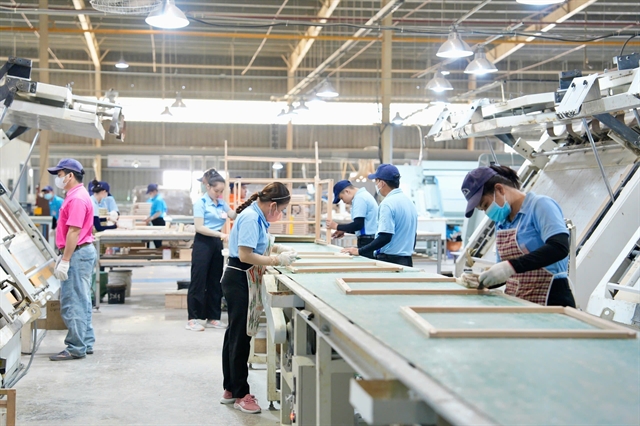
| A factory in HCM City. The health of Việt Nam's manufacturing sector has now strengthened in seven successive months. — VNA/VNS Photo |
HÀ NỘI — Output growth strengthened in Việt Nam’s manufacturing sector at the start of 2026, with the Vietnam Manufacturing Purchasing Managers' Index at 52.5 in January, easing from 53.0 in December but remaining comfortably above the 50.0 no-change mark, signalling a solid monthly improvement in business conditions, according to a report released on February 2 by S&P Global.
The sector has now recorded strengthening health for seven consecutive months.
The slight softening in the headline PMI came despite a sharp and accelerated rise in manufacturing production during January.
Respondents largely attributed the marked increase in output to stronger new orders, which grew at a faster pace than in December amid improving customer demand.
Total new business was also supported by a renewed expansion in new export orders. This was the third increase in the past four months, albeit modest overall, with panellists reporting new demand from other Asian economies including India.
Rising production was underpinned by continued job creation. Employment increased for a fourth successive month, with the pace of hiring accelerating to its fastest since June 2024, although some firms noted that workers were hired on a temporary basis.
Manufacturers also stepped up purchasing activity to meet higher output requirements, extending the current growth sequence to seven months.
Stocks of inputs declined for the first time since last September as purchased items were used to support production growth.
Inventories of finished goods also fell, and at the fastest pace in four months, as firms reported shipping products promptly to customers.
Timely deliveries and increased production helped manufacturers keep workloads under control in January. Backlogs of work fell for a second consecutive month, though only marginally.
Suppliers’ delivery times continued to lengthen, but to the least pronounced extent in eight months. Respondents linked delays to stronger demand for inputs and shortages of materials.
These pressures also drove input costs higher, with prices rising sharply again at the start of 2026. The pace of inflation eased only slightly from the three-and-a-half-year high recorded in December.
In response, firms continued to raise selling prices rapidly, with charge inflation accelerating to its fastest rate since April 2022.
Confidence in the 12-month outlook for production strengthened further, improving for a fourth consecutive month to its highest level since March 2024.
Exactly 55 per cent of respondents forecast higher output over the coming year, citing expectations of continued growth in new orders amid improving market conditions.
Andrew Harker, Economics Director at S&P Global Market Intelligence, said: “It was a solid start to the year for the Vietnamese manufacturing sector as firms ramped up output in response to greater new orders and as part of efforts to meet client needs in a timely manner. Carrying on the momentum built towards the end of 2025, the sector looks to be in good shape for a successful 2026.
“The one potential headwind for firms, however, is the strength of inflationary pressures. Supply shortages of materials pushed up prices sharply again in January and firms responded accordingly by hiking their selling prices to a greater extent.
“So far demand has remained resilient in the face of these pressures, but we will need to keep an eye out for any softening of new order growth in the months ahead.” — VNS
Economy
 Economy
 Economy
 Economy
 Economy
 Economy
 Economy
 Economy
 Economy
 Economy
 Economy
 Economy
 Economy
 Economy
.jpg) Economy
Economy