 Sci-Tech
SBV to curb property price inflation, enforce lending rate rules
1.
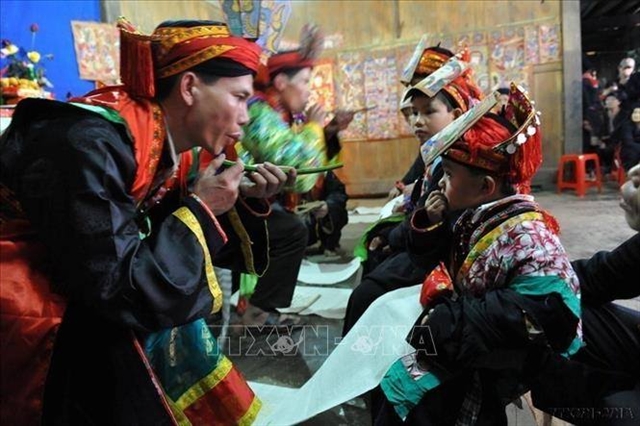 |
| A shaman performs the ritual of bestowing weapons upon an apprentice at the Coming-of-Age Festival, an important ceremony of the Red Dao people. — VNA/VNS Photo |
HÀ NỘI — Strengthening the cultural industry through effective innovations is essential for achieving the goals outlined in a resolution aiming to spur economic growth and promote Vietnamese culture on a global scale.
Resolution 57-NQ/TW is focused on breakthroughs in science, technology, innovation and national digital transformation.
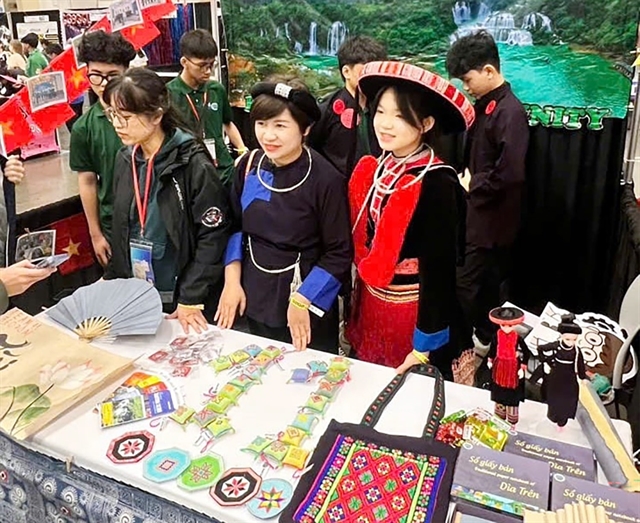
Experts have said that Việt Nam's diverse and unique traditional culture serves as a fertile ground for entrepreneurship and innovation. Currently, numerous cultural values remain underutilised, presenting opportunities for further investment and development.
Trần Thị Ngọc Minh from the Academy of Journalism and Communication emphasised the significance of integrating culture with entrepreneurship. Sustainable entrepreneurship relies heavily on cultural aspects, while culture can serve as a valuable product and service in the entrepreneurial landscape. By leveraging cultural values, Việt Nam can generate income and effectively preserve traditional heritage.
Associate Professor Đỗ Hương Lan from Việt Nam National University identified the cultural industry as a sector with immense economic potential, especially in the context of rapid digital transformation. She argued that entrepreneurship and innovation should not only focus on business start-ups, but also on new ideas that connect tradition with modernity.
The rich cultural heritage of Việt Nam positions it well for development in this area, provided that a creative and timely approach is adopted, she said.
From a strategic viewpoint, Associate Professor Dr Bùi Hoài Sơn of the National Assembly’s Committee on Culture and Education said that various cultural industries, such as film, fine arts, music, design, advertising, fashion, video games, publishing, television, performing arts and handicrafts, depend significantly on creativity.
This element cannot be replaced merely by capital investment or technology. Cultural industries are thus seen as fertile ground for innovation, where emotion, identity, art and technology converge to create new values.
Sơn said that innovations in content and expression are critical for Vietnamese culture to integrate into the global landscape without losing its identity. When cultural values are articulated in contemporary language, they resonate more with audiences and avoid becoming outdated. Innovations are crucial for ensuring that culture remains relevant and impactful.
A representative from the HCM City Department of Tourism highlighted the success of the recent HCM City River Festival, which won multiple awards, including international recognition for art, entertainment and public festivals and cultural events.
The festival combines cultural, tourism, artistic, sporting and commercial products, illustrating the innovative spirit behind its offerings, such as a musical performance that tells the story of Việt Nam's history along the Saigon River.
To further entrepreneurship and innovation in Việt Nam's cultural sector, Minh suggested implementing coordinated solutions that will create new momentum for development while promoting cultural values and the identity of the Vietnamese people.
This includes enhancing the legal framework to support entrepreneurship and innovation in the cultural sector during international integration.
Minh said that a vibrant cultural market relies on the interaction between supply and demand. Successful entrepreneurs and innovators in this sector must foster a healthy and fair competitive environment for cultural products and services. — VNS
Sci-Tech
 Sci-Tech
 Sci-Tech
 Sci-Tech
 Sci-Tech
 Sci-Tech
 Sci-Tech
 Sci-Tech
 Sci-Tech
 Sci-Tech
 Sci-Tech
 Sci-Tech
 Sci-Tech
 Sci-Tech
 Sci-Tech