 Sports
Sang proves talent in virtual taekwondo
1.
By Thanh Nga
As Việt Nam marks the 80th anniversary of its sports sector (27 March 1946 – 2026), football’s story is written not only in victories and celebrations, but in the stadiums – silent witnesses to generations of triumph, heartbreak and memory.
Three stadiums stand out across the years: Hàng Đẫy, Thống Nhất and Mỹ Đình. Each carries its own story, and together they paint a vivid portrait of Việt Nam’s football history.
|
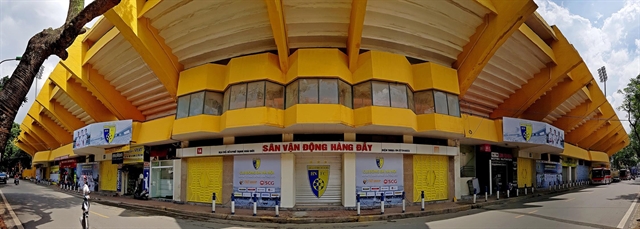
| Built in 1937 during the French colonial era as SEPTO, Hàng Đẫy Stadium began as a simple pitch with minimal facilities. — Photo petrotimes.vn |
Hàng Đẫy: the northern cradle
Few venues in Việt Nam carry the historical weight of Hàng Đẫy. Built in 1937 during the French colonial era as SEPTO, it began as a simple pitch with minimal facilities. From that modest start grew one of Hà Nội’s first football centres.
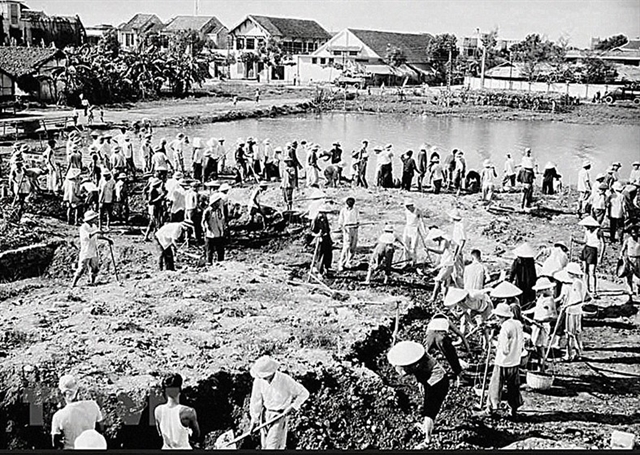
After Hà Nội’s liberation from French occupation in 1954, the city entered a phase of reconstruction, and Hàng Đẫy was rebuilt on a grand scale. Construction began in 1957 and was completed in just over a year, a remarkable feat achieved through more than 100,000 days of voluntary labour from the people of Hà Nội, including children who helped plant the grass. The stadium became more than a sports facility; it became a symbol of solidarity and aspiration.
Its inauguration on 24 August 1958, attended by President Hồ Chí Minh, blended sport with political meaning. A mass performance on the field conveyed unity, reflecting national hopes at a time of division. From then on, Hàng Đẫy became the north’s football heart, hosting international matches and remaining central as Vietnamese football integrated regionally, notably during the 1998 Tiger Cup.
|
| Hàng Đẫy Stadium serves as a shared home for multiple teams. — Photo kenh14.vn |
Unlike stadiums tied to a single club, Hàng Đẫy has long been a common home for many teams. From the subsidy era’s Thể Công of the military, Hà Nội Police and the General Department of Railways to the professional era’s Hà Nội FC and Viettel, the ground belongs to Hà Nội football’s shared history.
On its pitch, generations became legends – Nguyễn Thế Anh, Nguyễn Cao Cường, Nguyễn Hồng Sơn, Thạch Bảo Khanh – and today players such as Nguyễn Văn Quyết, Đỗ Hùng Dũng and Nguyễn Quang Hải carry the tradition. Images of packed stands, fans crowding the steps and railings, capture Hà Nội’s enduring intergenerational love for the game.
|
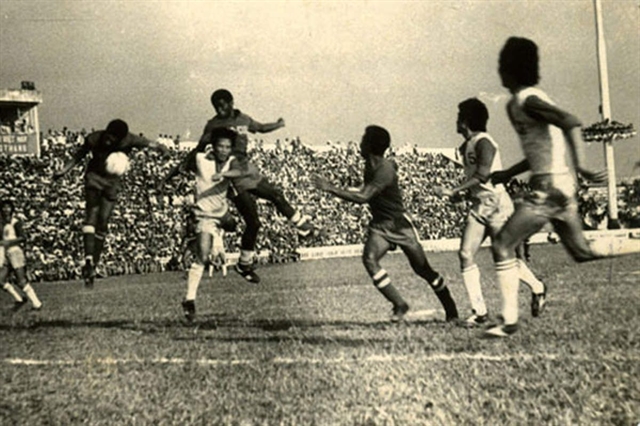
| The reunion match between the General Department of Railways and Sài Gòn Port at Thống Nhất Stadium on November 7, 1976. — Photo thethaovanhoa.vn |
Thống Nhất: the bridge between north and south
If Hàng Đẫy is about roots, Thống Nhất is about reunion. After 30 April 1975, football became a soft bridge for a nation healing from division. Thống Nhất hosted a defining moment on 7 November 1976, when the General Department of Railways (north) faced Sài Gòn Port (south) before more than 30,000 spectators. By midday, the stadium resembled a festival as fans came to witness two football cultures reunite.
The northern side won 2–0, with goals from Mai Đức Chung and Lê Thụy Hải, but the score mattered less than the emotion of reunion. Fans crowded the track, scaled lampposts and trees to watch – images that became iconic symbols of a nation seeking a shared heartbeat after years apart.
|
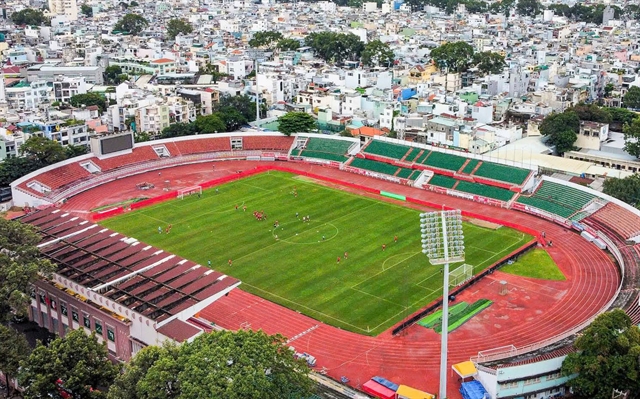
| Thống Nhất Stadium is currently home to HCM City Police FC in V.League 1. — Photo nld.com.vn |
Thống Nhất has also nurtured many southern stars. Before 1975, figures such as Phạm Huỳnh Tam Lang and Phạm Văn Rạng laid the groundwork, followed by the golden generation of Lê Huỳnh Đức, Võ Hoàng Bửu and Trần Minh Chiến, and V.League 1 standouts like Nguyễn Minh Phương and Phan Văn Tài Em.
For millions of people in HCM City, Thống Nhất holds memories – high-stakes matches, euphoric nights and lingering regret, that form indispensable chapters of Vietnamese football history.
|
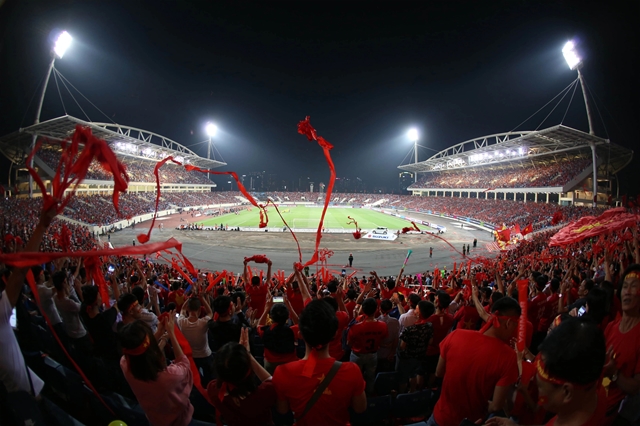
| Mỹ Đình National Stadium remains central to Vietnamese football. — Photo courtesy of thethaovanhoa.vn |
Mỹ Đình: aspiration and modern identity
The 21st century brought transformation, and the Mỹ Đình National Stadium embodies that ambition. Built from 2002 and opened in 2003, it became Việt Nam’s most modern arena, seating over 40,000, with architecture inspired by bronze drums. As the centrepiece of the 22nd SEA Games, Mỹ Đình announced Việt Nam’s ability to host major regional events.
Its deepest associations, however, are with the national team’s historic moments. In 2008, Lê Công Vinh’s last-minute header in the AFF Cup final secured Việt Nam’s first Southeast Asian title and sent Mỹ Đình into rapturous celebration. Ten years later, Việt Nam reclaimed regional glory in the 2018 AFF Cup, turning Mỹ Đình into a cauldron of fire once more.
Stands draped in red, flares lighting the night and embraces between players and fans have become part of Mỹ Đình’s modern mythology. Despite debates and intermittent dips in form, the stadium remains the national team’s emotional core. Whenever the team plays, tens of thousands gather and feel part of something larger.
These three stadiums are more than concrete and steel; they are memory machines. Hàng Đẫy recalls post‑colonial rebuilding and Hà Nội’s steady football pulse. Thống Nhất holds the echoes of reunification and the first steps towards a unified league. Mỹ Đình embodies modern ambition and the moments when a country dared to believe in its regional standing.
As Việt Nam builds larger, more modern venues with the Trống Đồng and Rạch Chiếc projects in the pipeline, Hàng Đẫy, Thống Nhất and Mỹ Đình will not be eclipsed so much as reframed.
And as new stadiums rise and the game continues to evolve, these arenas will remain — holding the echoes of past triumphs while bearing witness to the next chapter of Vietnamese football’s journey. — VNS
Sports
.jpg) Sports
Sports
 Sports
 Sports
 Sports
 Sports
 Sports
 Sports
 Sports
 Sports
 Sports
 Sports
 Sports
 Sports
 Sports