 Society

OPPO Reaches the Next Level of Making with Find X10 Series
1.
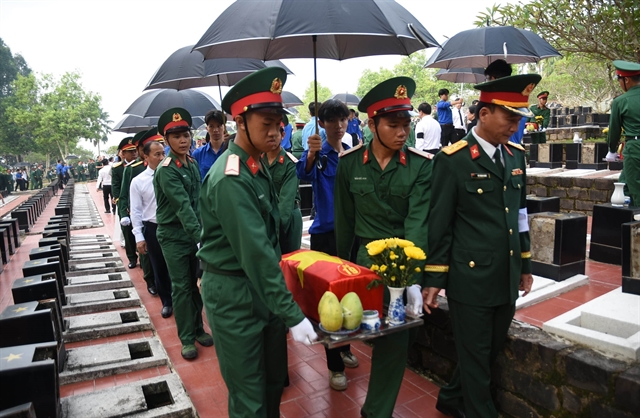 |
| Đồng Nai City holds a ceremony on July 11 to pay tribute to and bury the recovered remains of 63 martyrs who died during wartime in Việt Nam and Cambodia. — VNA/VNS Photo |
ĐỒNG NAI — The southern city of Đồng Nai has recovered 220 sets of martyrs’ remains from early 2026 to October as search efforts intensified.
Of the 220 sets of remains, the K72 Team under the Đồng Nai City Military Command recovered 154, including 120 in Cambodia. The K76 Team under the Đồng Nai City Military Command recovered 66 sets in the three communes of Lộc Quang, Lộc Thạnh, Tân Lợi and Lộc Ninh.
During searches, excavations and DNA sampling to identify fallen soldiers, the teams also found personal belongings that could provide valuable information about those who died during the war.
The city’s Steering Committee for the Search, Recovery and Identification of Martyrs’ Remains (the city Steering Committee 515) reported the results at a conference on October 27 to review the 2026 mission.
The conference reviewed the first phase of the ongoing “500 Days and Nights Campaign to Accelerate the Search, Recovery and Identification of Martyrs’ Remains”, launched in preparation for the 80th anniversary of War Invalids and Martyrs’ Day on July 27, 2027.
It also set tasks for 2027 and the campaign’s second phase.
The southern city met or exceeded several key targets set by central authorities and Military Region 7.
It has collected samples from more than 7,400 unidentified graves at martyrs’ cemeteries for DNA identification. Of these, nearly 4,600 met the requirements for DNA sampling, while more than 2,800 did not.
The city has also collected 2,705 of the 2,952 biological samples targeted from martyrs’ relatives, achieving 91.63 per cent of the target, to build a DNA database for comparison.
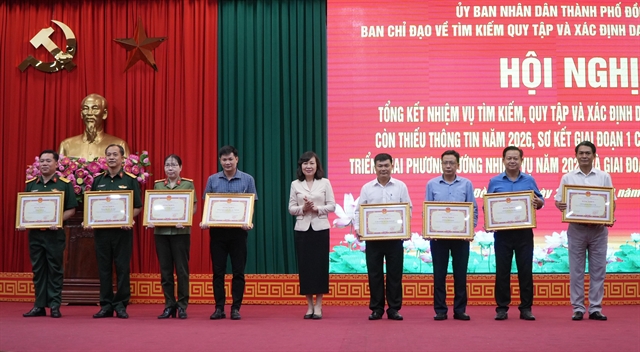 |
| Collectives and individuals receive Certificates of Merit from the Chairman of the Đồng Nai City People’s Committee on October 27 for their outstanding contributions to the search for, recovery and identification of martyrs’ remains. — VNA/VNS Photo |
Lieutenant Colonel Tống Ngọc Trường, political officer of the K76 Team, said the unit has faced several challenges since its establishment.
These include limited experience among its newly formed personnel, inadequate facilities, a large search area and terrain that has changed considerably since the war.
Many historical witnesses are elderly and have declining memories, while residents in remote areas have limited access to information, making data collection difficult.
To address these challenges, the K76 Team has worked with local authorities, veterans, historical witnesses and press agencies to broaden its information sources, verify reports, narrow search areas and develop appropriate plans.
The team will continue to strengthen co-ordination, raise public awareness and conduct field surveys to recover more remains.
During the second phase of the 500 Days and Nights Campaign, the city aims to recover about 200 more sets of martyrs’ remains by May 2027.
The city also plans to verify information and documents about Vietnamese servicemen who died during the war, using information supplied by foreign countries.
It will investigate all information provided by organisations and individuals about martyrs and their graves.
Major General Lê Ngọc Hải, deputy chief of staff of Military Region 7, called on the city Steering Committee 515 to strengthen leadership and accountability in implementing the campaign’s second phase.
He urged agencies and units to set clear targets and deadlines for each area and month, with responsibilities assigned to individual organisations, units and their heads.
He also identified improving the quality of information as a decisive factor in the campaign’s success.
Units should review, classify and verify reports by consulting archival records, unit histories, battle records, operational maps, historical witnesses, veterans and long-term local residents, he said.
Searches should focus on priority areas where remains are likely to be found, he said.
He stressed that accuracy and verification must take precedence over the number of remains recovered. — VNS
Society
 Society
 Society
 Society
 Society
 Society
 Society
 Society
 Society
 Society
 Society
 Society
 Society
 Society
 Society