 Society
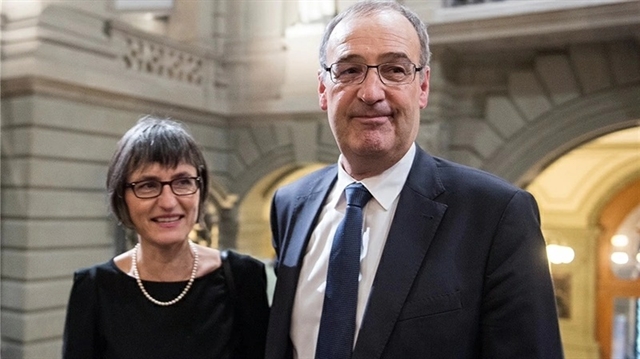
Swiss President to visit Việt Nam on October 17–18
1.
|
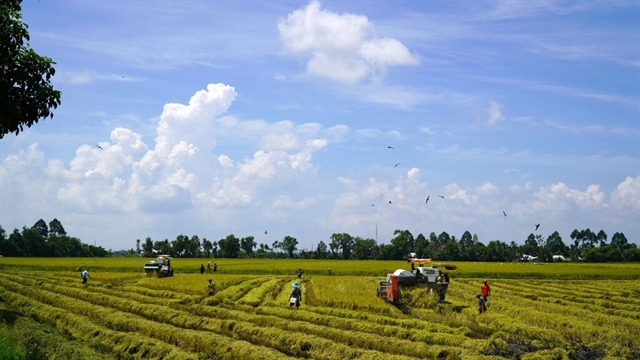
| Farmers harvest summer-autumn rice in the Mekong Delta province of An Giang, where a national scheme aims to transform one million hectares into high-quality, low-emission specialised rice production by 2030. — VNA/VNS Photos |
HCM CITY — Việt Nam is shifting its agricultural paradigm from volume-driven production to high-quality, low-emission, and green-growth farming, with a strong focus on shared benefits for farmers and robust international partnerships.
The strategy was highlighted at the World Food Day 2026 Conference held in HCM City on October 15.
The event was co-hosted by Việt Nam’s Ministry of Agriculture and Environment and the Food and Agriculture Organisation of the United Nations (FAO).
It focused on international cooperation to implement the national scheme for developing one million hectares of high-quality, low-emission specialised rice production linked with green growth in the Cửu Long (Mekong) Delta region by 2030.
The conference attracted nearly 200 delegates from government agencies, international organisations, research institutes, cooperatives, and agribusinesses.
Shift to quality, innovation, and international resources
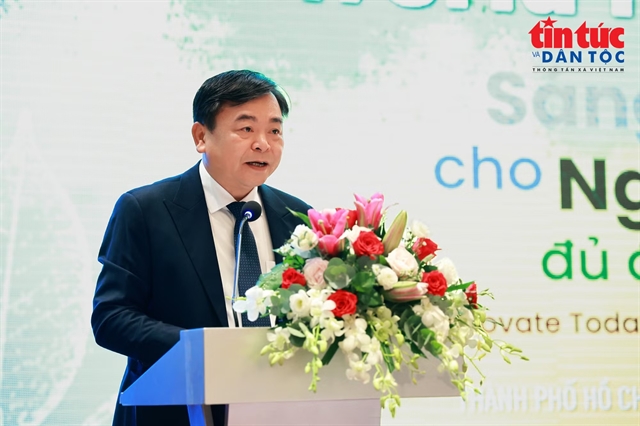
Speaking at the conference, Deputy Minister of Agriculture and Environment Nguyễn Hoàng Hiệp said that in the face of climate change, natural resource pressures, and evolving market demands, ensuring food security can no longer rely solely on increasing yields.
"The agricultural sector must make a decisive transition towards enhancing quality, value, and production efficiency; utilising resources efficiently; reducing environmental impacts; and guaranteeing sustainable livelihoods for farmers," Hiệp said.
The flagship One-Million-Hectare Low-Emission Rice Scheme represents a major structural transformation.
“Its significance lies not merely in target coverage area, but in large-scale changes to farming practices, scientific applications, production organisation, and stronger linkages between farmers and enterprises.”
From now until 2030, the sector must refine implementation mechanisms, adopt suitable technologies, improve emission-measuring capacity, and mobilise resources for green transformation.
“Success will be evaluated through grain quality, farmer income, verifiable emission reductions, and sustainable competitiveness.”
|
| Nguyễn Hoàng Hiệp, deputy minister of Agriculture and Environment, delivers the opening speech at the World Food Day 2026 Conference in HCM City on October 15, emphasising the transition towards high-quality, low-emission agricultural production. |
Trần Trung Tính, deputy minister of Science and Technology, underlined the critical role of science, technology, and innovation in driving sustainable, green agriculture.
"Technological solutions must be effectively applied to practical production, closely linking research with the needs of farmers and the market to enhance agricultural value, reduce emissions, and improve producers' livelihoods," Tính said.
Delegates agreed that large-scale transformation requires diversifying resources by combining the State budget, Official Development Assistance, private corporate investments, and green climate finance.
Resource mobilisation must go hand-in-hand with reorganising production and market development.
International partners reaffirmed their commitment to supporting Việt Nam's sustainable farming goals.
Australian Consul-General in HCM City, Kate Wallace, confirmed Australia’s support for the scheme, notably through the Climate-Resilient and Sustainable Rice Value Chain Transformation Project in the Mekong Delta, funded by Australia’s Department of Foreign Affairs and Trade via SNV Việt Nam.
The TRVC project has applied Process 4043 across approximately 240,000 hectares, serving as a practical model to scale up low-emission practices and strengthen rice branding.
Other key initiatives introduced included STAR-FARM, which promotes experience sharing and youth and women participation; GoRice, which supports climate-resilient value chains; and VnAdapt, which promotes nature-based solutions and private sector engagement.
|
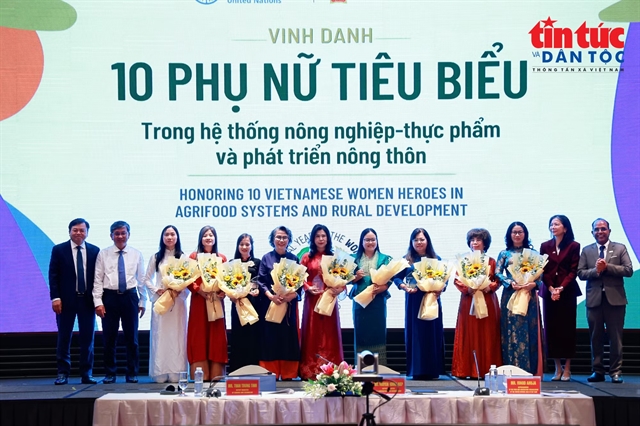
| Outstanding female leaders, researchers, and entrepreneurs are honoured for their significant contributions to Việt Nam’s agrifood systems and rural development at the conference in HCM City on October 15. |
For the scheme to succeed, farmers cannot be left alone in the fields, Deputy Minister Hiệp said.
"Green transformation must ensure that farmers share the benefits rather than bearing all the technical costs and market risks alone," he said.
"The future of Việt Nam's rice industry depends not only on output, but on how we organise production, develop markets, and share responsibility for the environment and farmers' livelihoods," he added.
Empowering women in agrifood transformation
FAO representative in Việt Nam Dr. Vinod Ahuja highlighted the vital role of women in agriculture.
“When women enjoy equal opportunities in accessing land, capital, knowledge, and markets, crop yields increase, child nutrition improves, and local communities build stronger resilience.”
As part of the conference, 10 outstanding women were honoured for their exceptional contributions to the country’s agriculture, agrifood systems, and rural development across diverse fields including direct farm production, enterprise development, scientific research, technological application, agricultural extension, and management. — VNS
Society
 Society
 Society
 Society
 Society
 Society
 Society
 Society
 Society
 Society
 Society
 Society
 Society
 Society
 Society