 Society
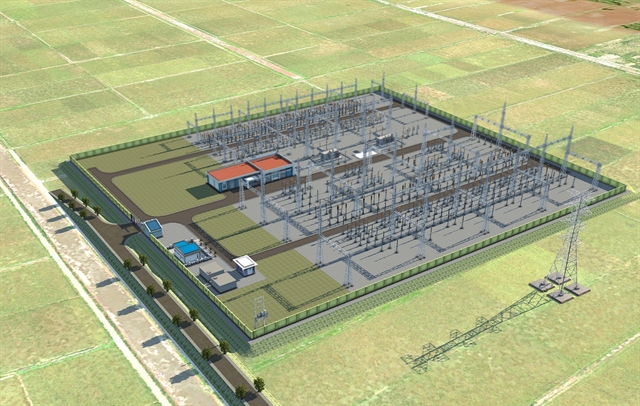
EVNNPT seeks over $224 mln in bank loans for grid expansion
1.
|
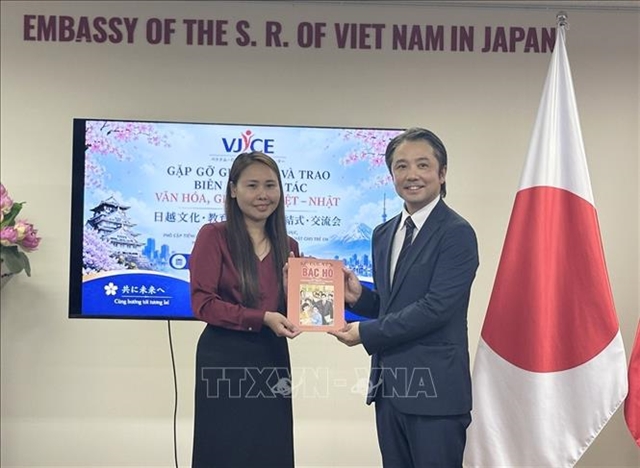
| Representatives of VJCE and Aoyama Japanese Language School exchange a signed agreement. — VNA/VNS Photo |
TOKYO — Việt Nam and Japan have taken a further step to strengthen educational ties following the signing of a cooperation agreement aimed at expanding Japanese-language education, academic exchanges and high-quality human resources development.
The agreement was signed on Friday at the Vietnamese Embassy in Japan between the Việt Nam – Japan Centre for Cultural and Educational Cooperation Promotion (VJCE) and the Aoyama School of Japanese.
Under the document, the Aoyama School of Japanese authorised the VJCE to serve as its representative in Việt Nam to coordinate educational cooperation activities, connect partners, develop training programmes, and promote educational exchange projects between the two countries.
The parties agreed to jointly implement Japanese language programmes for Vietnamese students, study the development of a Japanese-language proficiency assessment system for children, organise cultural and educational exchanges, and strengthen links between Vietnamese and Japanese educational institutions.
Addressing the event, Vũ Thị Liên Hương, a representative of the education division of the Vietnamese Embassy in Japan, spoke highly of the efforts by the participating organisations and expressed her hope that the cooperation programmes will help further deepen the Việt Nam – Japan Comprehensive Strategic Partnership.
Participants also discussed directions for expanding educational cooperation in the time to come, with a focus on Japanese-language training, academic exchanges, linkages between educational institutions and the development of high-quality human resources.
The agreement marks a new stride in bilateral educational cooperation, aiming to improve the quality of human resources, broaden international learning opportunities for young people and further strengthen people-to-people interactions between the two nations. — VNA/VNS
Society
 Society
 Society
 Society
 Society
 Society
 Society
 Society
 Society
 Society
 Society
 Society
 Society
 Society
 Society