 Society
84 individuals investigated for transnational online frauds
1.
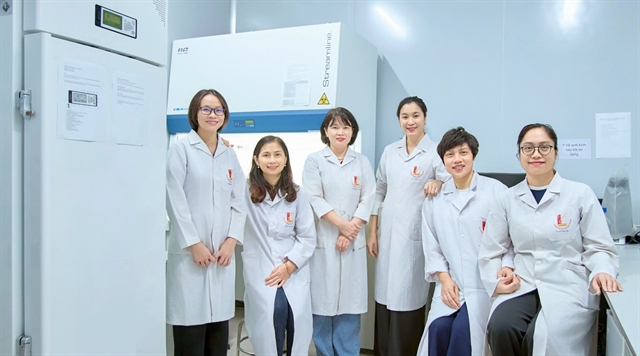 |
| Female scientists at the Food Microbiology Laboratory, Chemistry and Life Sciences School, Hanoi University of Science and Technology. — Photos phunuvietnam.vn |
HÀ NỘI — Nine women at Hanoi University of Science and Technology are quietly leading a food revolution in Việt Nam, turning rice, cassava, mushrooms, meat and even kitchen and industry residues into nutritious, low‑waste products that could reach kitchens both at home and overseas.
In labs usually reserved for precise experiments, enzymes, beneficial microbes and careful engineering combine to reshape textures, flavours and nutritional profiles, a mix of tradition and science that recently won the 2025 Kovalevskaia Prize, one of the country’s top awards for female scientists.
The team, part of HUST’s School of Chemistry and Life Sciences, includes Associate Professor Dr Vũ Thu Trang, Phan Thanh Tâm, Hồ Phú Hà, Lương Hồng Nga, Dr Đỗ Thị Yến, Dr Nguyễn Thị Hạnh, Dr Nguyễn Hải Vân, and MSc. Bùi Uyển Diễm and MSc. Nguyễn Thị Hoài Đức.
United by a practical mission, they use biocatalysis, enzymes and selected microorganisms to create foods suited to local tastes while meeting the requirements of international markets.
According to Associate Professor Dr Hà, the projects fall into two main categories. One improves nutritional profiles, reduces glycaemic impact and supports gut health. The other turns agricultural byproducts into valuable ingredients, cutting waste and boosting farmers’ incomes.
“We start with familiar raw materials, rice paddies, maize fields, cassava farms, mushroom beds, fisheries and orchards, but the difference is in how we process them,” Dr Hà said. Tailored enzymes reshape carbohydrates, textures and flavours while beneficial microbes guide fermentation and preservation.
For starchy crops, enzymatic processes partially convert starch into functional oligosaccharides and slowly digestible carbohydrates suitable for people with metabolic disorders.
These form the basis for grain‑based health drinks and plant‑based milks, including whole‑grain rice milk and high‑fibre corn milk. The methods liquefy grains while keeping most solids, minimising waste. Enzymes also improve texture in mushroom‑based foods, producing plant‑based meat alternatives designed for Vietnamese palates.
On the microbiology side, the team isolates strains that ferment efficiently, develop desirable flavours and suppress spoilage or pathogenic bacteria. These underpin fermented products that are safe, supportive of digestive health and scalable to industrial production. Controlled enzymes and microbial cultures also extend the shelf life of vegetables, fruits, meat and seafood without compromising quality.
Residues and downgraded materials are put to work too. Cashew byproducts, shrimp shells, eggshells and other waste are reprocessed into ingredients with added nutritional or functional value.
"This approach reduces landfill, produces new income streams and aligns with global demand for sustainable, circular‑economy solutions," Dr Yến said.
Their work goes beyond the lab. The group has helped commercialise more than 40 products. In Thanh Hóa central province, they partnered with a local enterprise to design a fully automated rice milk production line.
From raw rice intake to packaging, they advised on process design, equipment selection and technology transfer. The plant now produces 40 tonnes a day, around 66 million cartons a year, employs 50 workers and secures markets for hundreds of farmers. Each carton reflects careful choices on enzymes, temperature and flow rates that ripple through local livelihoods.
The team has also adapted Việt Nam’s signature dishes for export, including fresh instant phở and ready‑to‑use sauces. Low‑energy production lines preserve authentic flavours using Vietnamese spices while meeting overseas safety and distribution standards. These products have started reaching France and Germany, showing the potential to combine convenience with cultural authenticity.
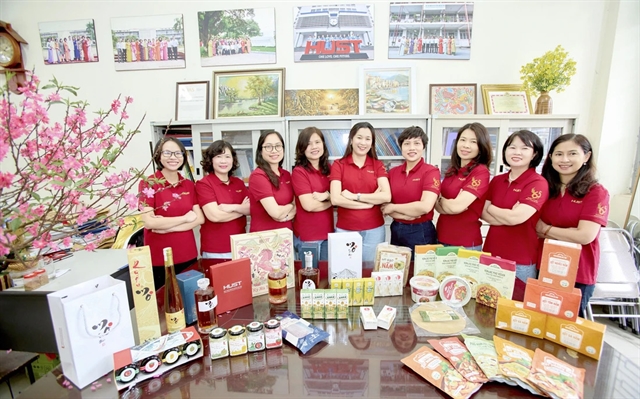 |
Scientists with their research products now on the market. |
Perhaps the most striking achievement is Việt Nam’s home‑grown salami. Fermented sausages have historically required imported expertise, as ripening demands precise control of temperature, humidity and starter cultures.
The HUST team isolated and screened starter strains suited to local meat and climatic conditions that produce the desired aromas while inhibiting pathogens. The result is domestic production of high‑quality fermented sausages, now transferred to industry and embraced by consumers.
Moving from the bench to the factory has not been straightforward.
"Domestic raw materials are inconsistent in quality, forcing frequent adjustments to processes. Scaling up requires pilot facilities to stabilise protocols, yet resources for such intermediary stages are limited," said Dr Tâm.
The team has therefore maximised existing university equipment, creatively adapting instruments to simulate industrial conditions. Despite these constraints, they have completed multiple technology transfers deemed both technically sound and commercially viable.
Their research takes a holistic approach, improving raw ingredients, deep‑processing key agricultural products, and transferring technologies to modern production lines with strict quality control.
Dr Hạnh said the next focus would be nutritious, ready‑to‑eat products made from northern fruits and vegetables, along with long‑shelf‑life industrial foods suited to modern lifestyles.
Dr Yến stressed that the team had always considered the entire value chain, from farmer to factory to consumer.
Beyond market impact, the group sees an important social role, viewing their work as inspiration for young scientists, particularly women.
“Science is not dry work in a closed lab,” Dr Trang said. “It is a journey of discovery and passion, overcoming challenges to create results that matter.”
The Kovalevskaia Prize recognises both scientific excellence and community relevance.
“This is a wonderful gift to the generations of female scientists before us, and a heartfelt tribute to the 70th anniversary of HUST, where the aspiration to conquer science for the people is nurtured,” Dr Trang said.
"We will use this prize to support future female scientists through student research projects and scholarships for outstanding women in the life sciences." — VNS
Society
 Society
 Society
 Society
 Society
 Society
 Society
 Society
 Society
 Society
 Society
 Society
 Society
 Society
 Society