 Society
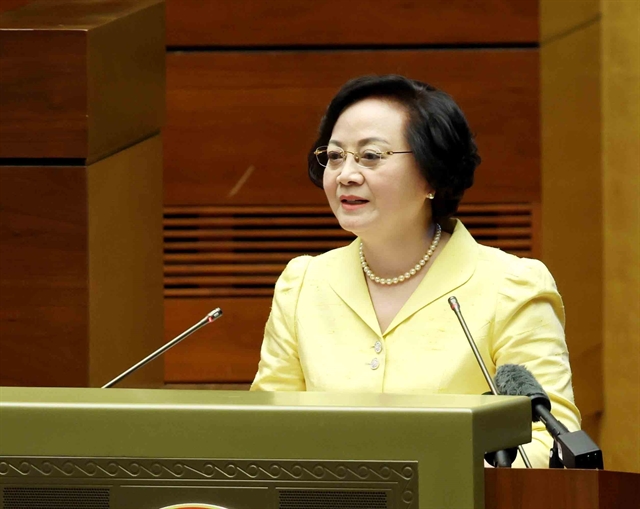
Talent a strategic national resource for development: Deputy PM
1.

HÀ NỘI — Việt Nam has recorded significant breakthroughs in infrastructure development in the new era, with strong gains across transport, urban development and social infrastructure, Minister of Construction Trần Hồng Minh said on Wednesday.
Presenting a paper on behalf of the Party Committee of the Ministry of Construction at the 14th National Party Congress, the minister highlighted what he described as outstanding achievements under the leadership of the Party Central Committee, the Politburo and the Secretariat, alongside oversight by the National Assembly and management by the Government and the Prime Minister.
The construction sector is estimated to have grown by more than 9 per cent, contributing about 17.1 per cent to gross domestic product, equivalent to roughly 1.96 percentage points of the country’s overall GDP growth. Investment in infrastructure has improved markedly in scale, pace and efficiency, reinforcing its central role in socio-economic development, he said.
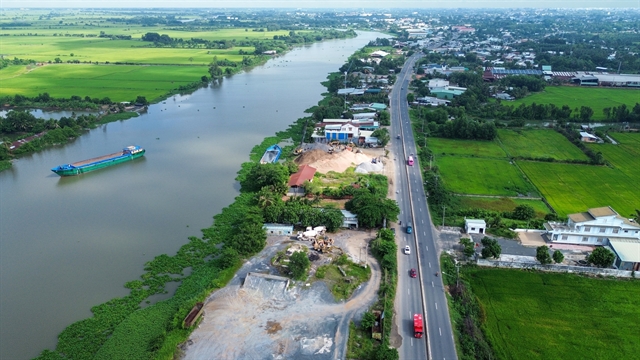
Việt Nam’s transport infrastructure has developed strongly and in a more synchronised manner, with a number of key projects completed ahead of schedule. By the end of 2025, the country is expected to have 3,345 kilometres of main expressways and 458 kilometres of interchanges and access roads in operation. A total of 1,701 kilometres of seaports and 1,584 kilometres of national highways will also have been completed and put into use.
The capacity of the national seaport system has increased 1.3 times compared with 2020, rising from 730 million tonnes to 930 million tonnes. Airport capacity has expanded by more than 1.6 times over the same period, from 92.4 million to 155 million passengers per year. These improvements have helped reduce logistics costs from about 21 per cent in 2018 to around 17 per cent currently, boosting national competitiveness.
Major upgrades and new developments are underway across the aviation, maritime and railway sectors, including the completion of Terminal 2 at Nội Bài International Airport and Terminal 3 at Tân Sơn Nhất International Airport. Projects such as Long Thành Airport, Gia Bình Airport and Phú Quốc Airport are being developed, alongside key rail projects including the North-South high-speed railway and several strategic regional rail links. Urban railway systems in Hà Nội and HCM City are also continuing to expand.
Urban infrastructure, housing and social and technical facilities have grown more rapidly, better meeting the needs of residents and businesses. Urban spaces have expanded, creating new growth poles, while many urban areas, economic zones, industrial parks and tourism and service zones have received more comprehensive investment. Essential systems such as electricity, water supply, drainage, wastewater treatment, solid waste management, lighting and green spaces have been upgraded.
Social housing and worker housing programmes have been strengthened, and urban renewal has accelerated, contributing to improved living standards. Compared with 2020, the urbanisation rate has reached 45 per cent, up 5 per cent, while 94 per cent of urban residents now have access to clean water. Average living space per capita has increased to 30 square metres, up 5.6 square metres, the minister said.

In addition, authorities have implemented more than 687,000 social housing units and jointly eliminated 334,200 temporary and dilapidated houses nationwide. These initiatives are described as special national programmes that reflect the Party’s will and the people’s aspirations.
Despite these achievements, the minister noted that infrastructure development still faces a number of limitations. He said the scale, quality and level of synchronisation of the infrastructure system remain constrained, preventing a uniform breakthrough across regions.
Bottlenecks persist in regional connectivity, including linkages between urban and rural areas, between cities and industrial zones, as well as connections involving seaports and border gates. While infrastructure planning has in many cases preceded investment, it has at times focused more on addressing existing constraints rather than creating new development spaces, he said.
Minister Minh stressed that these shortcomings must be promptly addressed to avoid undermining the goal of achieving breakthroughs in infrastructure development, which he said is critical to the implementation of strategic breakthroughs and the fulfilment of national development objectives in the coming period.
Breakthrough solutions
To accelerate infrastructure development in the new era, based on an assessment of existing shortcomings and constraints, Minh stressed the need to continue renewing and improving the legal and institutional framework to meet the requirements of national development in the new context.
The minister called for further refinement of sectoral planning systems and development indicators with a long-term vision, alongside proactive measures to ensure stability over time. He emphasised the importance of planning for port, airport and inland waterway infrastructure as a basis for guiding investment, improving efficiency and ensuring balanced and coordinated development across sectors.
In addition, he said resources should be prioritised for key infrastructure projects with strong spillover effects and regional connectivity. Such projects would help form new economic corridors and support green construction, low-emission transport, the use of recycled materials, efficient energy consumption, climate change adaptation and social welfare, particularly through the effective implementation of social housing programmes and the development of modern urban areas.
During the current term, the construction sector will focus on a number of key objectives, including completing at least 5,000 kilometres of expressways, raising the capacity of the seaport system to more than 1.2 billion tonnes and increasing airport capacity to over 155 million passengers.
It is also aiming to complete the target of one million social housing units two years ahead of schedule and exceed 1.6 million units by 2030, while increasing the national rate of permanent housing to 85-90 per cent and striving for an urbanisation rate of more than 50 per cent by 2030.
The focus will shift from mobilising resources to unlocking and nurturing new sources of capital for infrastructure investment. The mechanism of using infrastructure to fund infrastructure will be further refined through the effective exploitation of land funds for reinvestment, alongside the development of new financial instruments such as project bonds and infrastructure investment funds to attract idle capital from the public and international financial institutions.
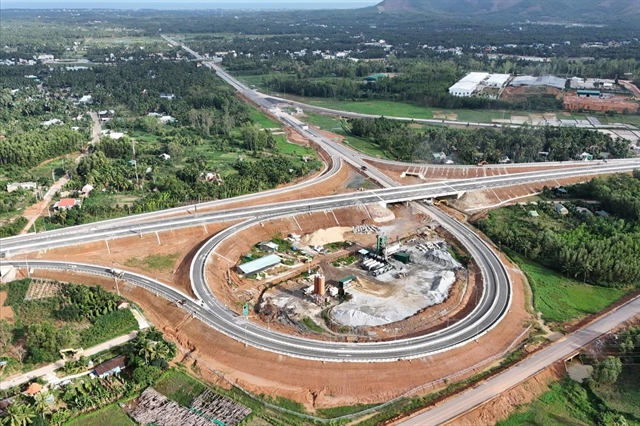
According to Minh, private investment and public-private partnerships will be encouraged, particularly in key sectors such as seaports, airports and urban transport infrastructure.
The minister also underscored the need to achieve breakthroughs in science and technology, innovation and national digital transformation, with the long-term goal of enhancing technological self-reliance. He added that priority will be given to research, technology transfer, application and the development of advanced solutions in infrastructure construction and management.
Furthermore, Vietnamese enterprises are expected to gradually master technologies for the construction of high-speed rail, urban rail systems, airports, terminals and deep-water ports, reducing reliance on foreign contractors. The process will begin with operation and maintenance, before moving towards design capabilities, component and material manufacturing, and the assembly of carriages and locomotives.
At the same time, the development of smart cities and smart transport will be promoted, with a synchronised infrastructure system viewed as a core foundation of the digital economy, he noted.
Strengthening international integration in the new context is also identified as a priority. Việt Nam will seek to participate more actively in regional infrastructure projects to help build a connected and efficient transport network, while effectively mobilising resources from regional connectivity master plans in which the country is a member.
In parallel, the sector will focus on developing human resources, particularly high-quality personnel, to meet the demands of infrastructure development across all fields. — VNS
Society
 Society
 Society
 Society
 Society
 Society
 Society
 Society
 Society
 Society
 Society
 Society
 Society
 Society
 Society