 Society
Việt Nam, Switzerland to turn education, sci-tech, innovation into cooperation focus
1.
|
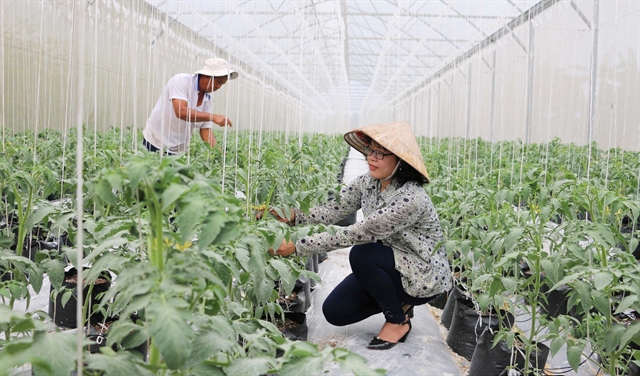
| Growing honey-dew melon in a green house using drip-irrigation technology brings high profits to many farmers in An Giang Province. — VNA/VNS Photo Công Mạo |
AN GIANG — An Giang Province is developing large-scale, advanced and environmentally friendly agriculture to improve productivity, quality and value.
Ngô Công Thức, deputy chairman of the province People’s Committee, said that after merging with the former Kiên Giang Province, An Giang now has the largest farming area in the Cửu Long (Mekong) Delta, with about 1.3 million hectares of rice, producing more than 8.8 million tonnes a year.
“The province aims to develop large-scale, low-emission agriculture, apply high technology, reduce costs, increase value, and become the delta’s centre for rice and freshwater aquaculture,” he said.
As the country’s largest rice producer, An Giang supplies rice nationwide and exports large volumes.
It is participating in the Ministry of Agriculture and Environment’s project “Sustainable Development of One Million Hectares of High-Quality, Low-Emission Rice Associated with Green Growth in the Mekong Delta by 2030,” known as the one-million-hectare rice project.
Rice farming models under the one-million-hectare rice project reduce costs by VNĐ4.12 million (US$155) per hectare, raise yields by 780 kilogrammes per hectare, increase profits by VNĐ5–8 million ($190–302) per hectare, and cut emissions by 7.56–8.11 tonnes of carbon dioxide equivalent per hectare.
In this year’s summer–autumn crop, the Thanh Xuân Agricultural Service Co-operative in Định Hòa Commune piloted growing 50ha of high-quality, low-emission rice with the participation of 11 households. The model used sparse sowing at 70kg per hectare, 50kg less than usual.
Danh Thảo, the co-operative’s deputy director, said: “The sparse sowing method reduces seed use, increases fertiliser efficiency, and improves pest and water management.”
The model reduced nitrogen, potassium and phosphate fertilisers by nearly 50kg per hectare, saving VNĐ1.3 million ($50), while using organic microbial fertilisers to support healthy growth and limit pests, he said.
Yields reached 6.67 tonnes per hectare, 310kg higher than rice grown outside the model, he said, adding that production costs fell by VNĐ1.4 million ($53) and profits rose by VNĐ3.9 million ($150) per hectare.
The province has about 100,000ha of rice meeting Sustainable Rice Platform (SRP), organic, GlobalGAP and VietGAP standards, ensuring residue control for export to the EU, the US, and Japan.
It will continue implementing the one-million-hectare project, expand rural infrastructure, improve product quality, and apply technology in production, processing and preservation.
It aims to build strong agricultural product brands, develop product chains, shift to large-scale production and establish sustainable raw-material areas.
Sustainable growth
Lê Hữu Toàn, director of the Provincial Department of Agriculture and Environment, said that in the 2025–30 period, the province targets annual growth of at least 4 per cent in agricultural, forestry and aquaculture value, and aims to produce more than 8 million tonnes of rice per year.
According to the official, the province will focus on high-tech agriculture and digital transformation.
“The province will develop large-scale specialised farming areas along value chains, and farming areas meeting VietGAP, GlobalGAP and SRP standards,” Toàn said.
“It will expand the ‘one must, five reductions’ method to over 60 per cent of rice land, develop fragrant and high-quality varieties, promote production–consumption links, boost exports, and support co-operatives to access capital, technology and markets,” he said.
The “one must, five reductions” method requires the use of certified seeds and reductions in seeds, nitrogen fertilisers, pesticides, water and post-harvest losses.
An Giang has proactively adapted to climate change, shifting from volume to value and low emissions. Farming models such as rice-fish, rice-shrimp, VietGAP vegetables, and drip-irrigated fruit trees save 30 per cent of water, reduce fertiliser and pesticide use, and increase value.
In livestock farming, the province develops concentrated farms, links with major companies and uses biogas systems to reduce pollution and support greener production.
Aquaculture remains a key sector, with output estimated at 1.56 million tonnes this year, valued at more than VNĐ52 trillion ($1.97 billion). Tra fish accounts for 600,000 tonnes.
Toàn said: “Adaptation to climate change is not only about living with it but about taking the initiative to transform, develop circular and environmentally friendly agriculture, and improve farmers’ livelihoods.”
|
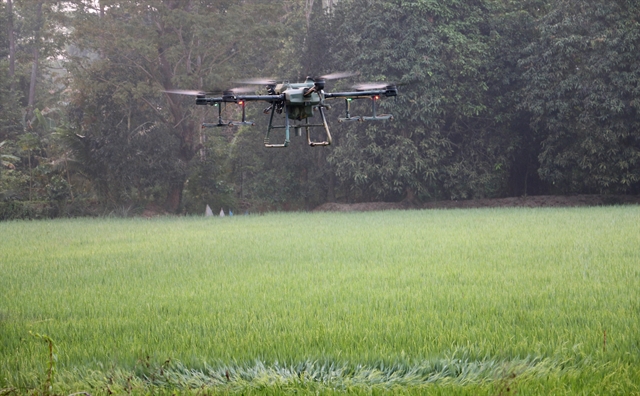
| A drone is used to spray chemicals in An Giang Province, helping reduce costs, labour and time. |
Smart fields, biotechnology, automation and mechanisation are now used widely across the province.
Farmers are changing their mindset and adopting modern equipment and processes.
The province diversifies crops based on soil and terrain, increases efficiency and develops co-operatives for large-scale, high-quality production.
An Giang has 690 co-operatives with more than 43,500 members.
Farmers are encouraged to work with co-operatives and enterprises to develop agricultural and eco-tourism models. New vocational training supports labour shifts to processing and services.
Disaster prevention
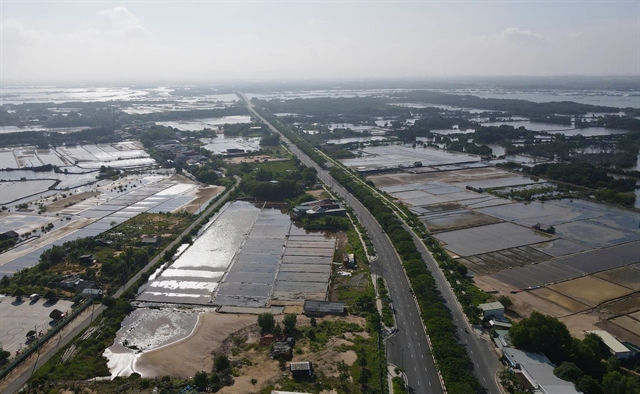
An Giang is strengthening disaster-risk management and taking various measures to mitigate the impacts of climate change, saltwater intrusion and erosion.
The province invests in irrigation systems, water-storage reservoirs, saltwater–freshwater control structures and warning systems.
During 2020–25, it implemented 39 projects to prevent saltwater intrusion and erosion, with funding exceeding VNĐ5.83 trillion ($221 million).
Of the projects, 32 are completed and the remaining works will be finished in 2026–27.
These projects include saltwater control sluices, sea and river dykes, erosion-control projects along Vĩnh Tế Canal, canal upgrades, mangrove planting and coastal-ecosystem protection.
Erosion along rivers, canals and streams is becoming more complex.
Since early 2025, the province has recorded 51 cases of cracking and erosion affecting 2,272 metres and 41 houses, causing VNĐ8.15 billion ($308,000) in damage.
The province has implemented various solutions to cope with erosion, including resettling high-risk households, investing in anti-erosion works, planting protective forests, regulating sand mining, monitoring water flow and improving forecasting.
|
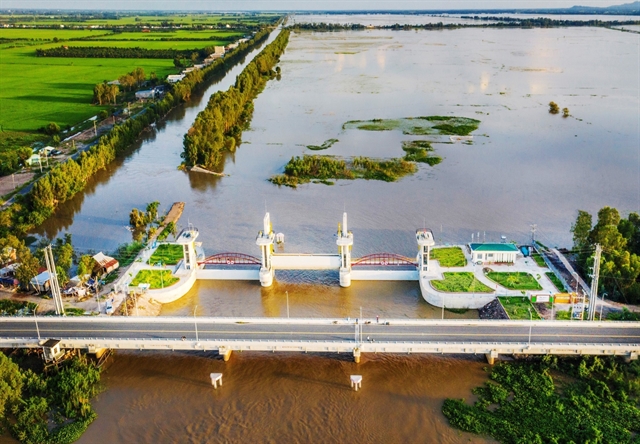
| Tha La Sluice in An Giang Province’s Thới Sơn Ward helps regulate and control floodwaters between upstream Cambodia and the Mekong Delta’s coasts. It secures safe production on more than 498,141ha of agricultural land in An Giang and Cần Thơ City. |
With Government support, the province has expanded and strengthened its irrigation and dyke systems, gradually forming a complete network.
It now has 4,035 sluices, 6,314 canal routes totalling 18,343km, 33 reservoirs, 2,802 pumping stations, 3,128 embankment rings and more than 8,800km of flood-control dykes.
It also has 234 sea and river revetment works extending 87.84km and 133km of coastal dykes along the western sea.
Major irrigation works such as the Cái Lớn-Cái Bé Sluice system, the delta’s largest, and the western coastal sluice system ensure flexible saltwater–freshwater control, protecting hundreds of thousands of hectares of rice and vegetables.
During the 2024-25 dry season, the province faced no water shortages thanks to effective irrigation operations.
Lương Duy Khanh, deputy head of the province Irrigation Sub-department, said the system not only controls floods but also ensures rapid drainage during heavy rain. Major pumping stations and sluices are staffed around the clock and can respond immediately to unusual conditions.
The Tân Phú Agricultural Co-operative in Châu Thành Commune grows nearly 300 hectares of rice under farm contracts with export companies and now produces rice year-round thanks to irrigation works.
Nguyễn Văn Tùng, the co-operative’s director, said: “We no longer worry about flooding in the rainy season, and there is enough water for the fields in the dry season. Rice productivity has increased by 10–15 per cent, pumping costs have fallen, and farmers’ incomes are much higher than before.” — VNS
Society
 Society
 Society
 Society
 Society
 Society
 Society
 (1).JPG) Society
Society
 Society
 Society
 Society
 Society
 Society
.jpg) Society
Society
 Society