 Society
Việt Nam, Switzerland to turn education, sci-tech, innovation into cooperation focus
1.
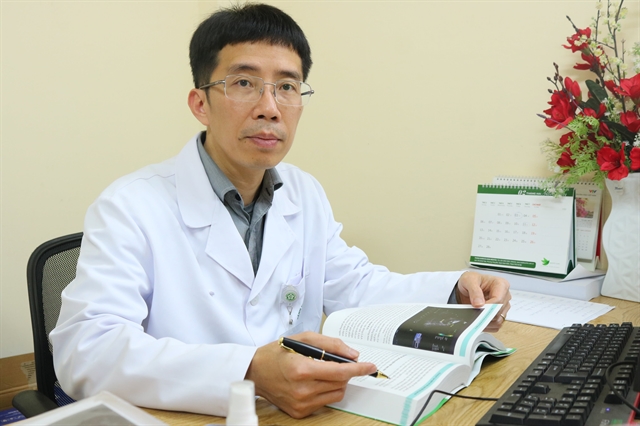 |
| Professor Doctor Mai Duy Tôn, director of Bạch Mai Hospital's Stroke Centre. — Photos nhandan.vn |
HÀ NỘI — Once a barely mentioned name in global stroke care, Việt Nam is now earning greater attention and much of that shift can be traced to the work of Professor Doctor Mai Duy Tôn and the Stroke Centre at Bạch Mai Hospital.
For Prof Dr Tôn, director of the Stroke Centre, sustainable improvement begins at the grassroots. Under his direction, the centre has taken an active role in guiding and training lower-level hospitals.
Hundreds of training programmes and technology-transfer sessions have been delivered to facilities from Hà Giang and Điện Biên to Thanh Hóa and Quảng Ninh provinces, helping local doctors manage severe stroke cases that previously had to be referred to central hospitals.
"In stroke care, every minute is critical, and effective emergency intervention depends on the presence of dedicated specialist units," Dr Tôn said.
With a population of over 100 million, Việt Nam sees an estimated 200,000 new stroke cases each year, underscoring the need for strong systems to manage and monitor patients.
"The country needs nearly 400 stroke departments or centres to meet demand," Dr Tôn said.
"Yet, as of 2022, only 125 hospitals had such units. The need to expand stroke services nationwide remains pressing if patients are to receive timely, life-saving care."
Prof Dr Tôn has also contributed significantly to national clinical policy. Working with the Ministry of Health, he helped develop the 'Guidelines for diagnosis and treatment of cerebral stroke', a document that now underpins unified, transparent and modern stroke care across the country.
Strengthening central-level capacity is only one part of the equation, he said. His aim is to shorten the survival gap between major cities and remote districts. In many mountainous regions, the critical treatment window was historically missed. With the establishment of a structured national network, thousands of patients are now receiving life-saving intervention in time.
He has championed the creation of stroke units not only in provincial hospitals but also at district-level facilities, where emergency capacity was once extremely limited. Medical teams in Hà Giang, Móng Cái and other remote areas can now carry out standard stroke protocols, thanks to continuous hands-on training and updated treatment pathways.
This multi-layered approach has sparked a marked shift. Patients in remote areas, who once faced long and perilous journeys for treatment, now have a real chance of survival close to home.
"Previously, only around 25 per cent of stroke patients made a meaningful recovery, another 25 per cent did not survive, and half were left with permanent disability," Tôn told Nhân Dân (The People) newspaper.
"The introduction of modern techniques, comparable to those used in developed countries, has transformed these outcomes.
"Patients who receive timely reperfusion during the golden hour now regain near-normal function in more than half of cases, with some centres reporting rates as high as 60 to 70 per cent."
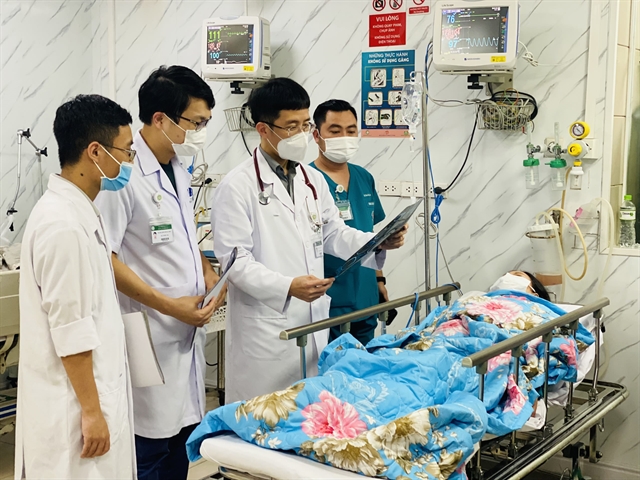 |
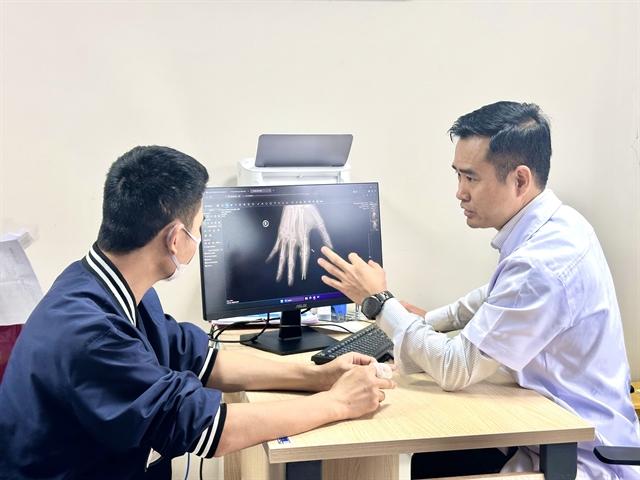
| Prof Dr Tôn (second from right) and other doctors review a patient’s medical record. |
Even for those who arrive late, specialised treatment at dedicated stroke units has sharply reduced the risks of death and long-term impairment. Today, many patients benefit from a combination of intensive care and early rehabilitation, leading to far better recovery than was possible in earlier years.
His efforts reach beyond the confines of Bạch Mai Hospital. He has devoted years to building a comprehensive national stroke-care ecosystem and to developing professional guidelines that steer clinical practice at every level of the health system.
He is consistent in saying that his work is part of a wider collective effort involving the Ministry of Health, Bạch Mai Hospital’s Board of Directors, collaborating departments and the stroke centre’s staff.
What motivates him most is not recognition but the gratitude of patients who recover, the progress of young clinicians and the steady growth of Việt Nam’s stroke-care network.
From refining international protocols to trekking through mountainous provinces, he has carried forward a single mission – ensuring that no stroke patient is denied the chance to live because of distance or limited local capacity.
Thanks to sustained commitment and a clear vision, Việt Nam now holds a much stronger position on the global map of stroke care and millions more people stand to benefit. — VNS
Society
 Society
 Society
 Society
 Society
 Society
 Society
 Society
 Society
.jpg) Society
Society
 Society
 Society
 Society
 Society
 Society